Key points
- Cities are complex systems shaped by continuous interactions and patterns.
- Models help explore how simple rules can generate complex urban forms.
- Simulations reveal possible relationships without replacing real urban experiences.
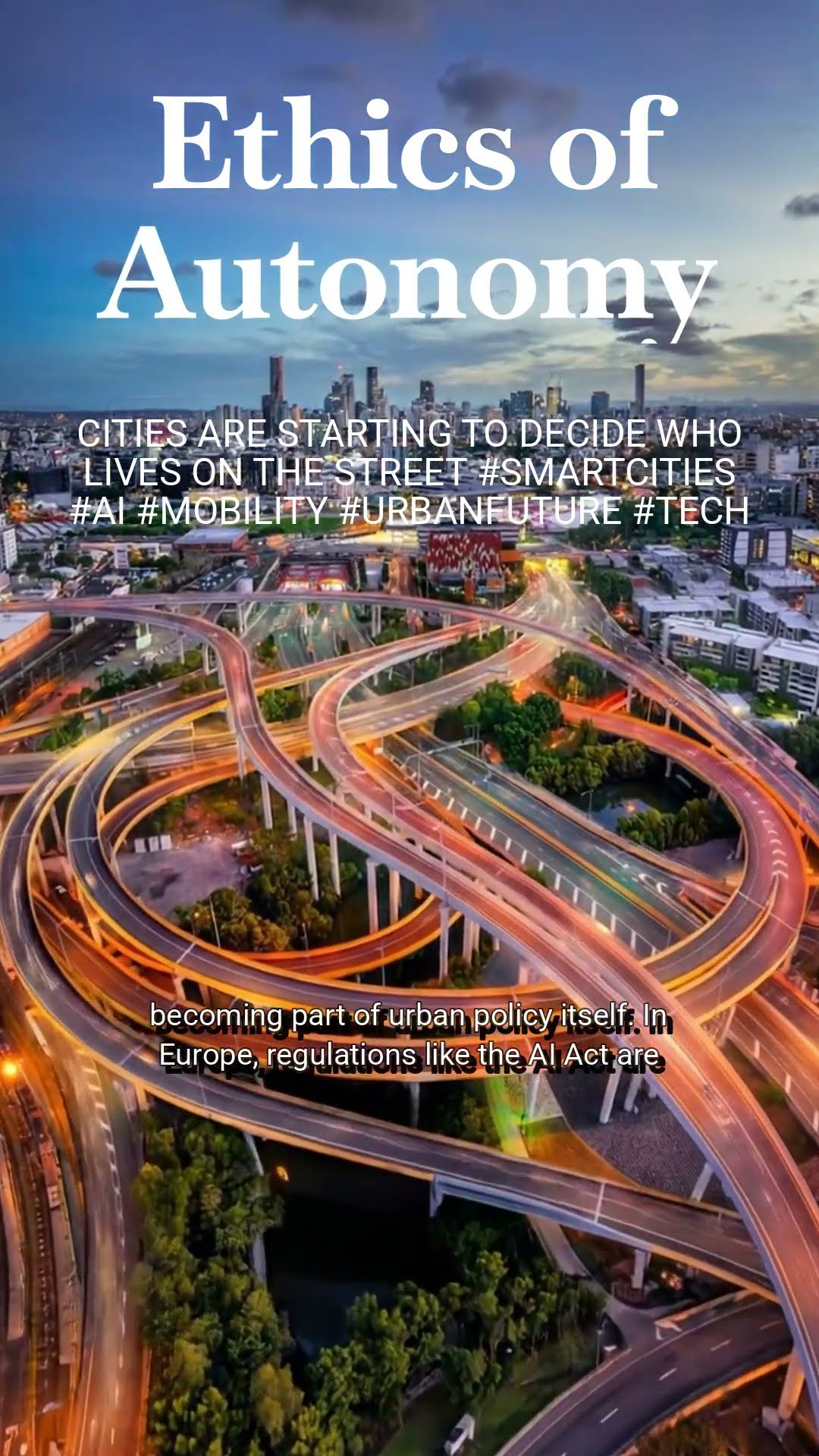
Look at a city from above throughout an entire day. Streets that appeared motionless begin to fill, empty and change their functions. People and activities produce patterns that no static plan can completely show. Michael Batty begins from a similar idea and raises a central question. How can we understand a city when millions of interactions continually transform it? His answer treats the urban world as a complex system of flows, networks and relationships. The city stops looking like a finished object. It becomes a process. To study that process, Batty uses computational models, fractals and simulations. These tools search for regularities within behaviors that seem too dispersed to form recognizable structures when examined individually.
Understanding cities as complex systems
The mechanism begins with simple interactions that accumulate and produce larger patterns. One person chooses a route. An activity occupies a particular location. Other movements respond to those decisions. Over time, many similar relationships can change urban flows and forms. A complex system works in precisely this way. The overall result does not depend on one central action capable of controlling the entire system. It emerges from numerous relationships influencing one another. According to Batty, studying cities requires attention to these processes. Networks represent connections. Flows show movement through them. Models help explore which patterns can emerge when those interactions repeat. The mechanism comes first. We then observe the urban form that the mechanism may produce.
Models as conceptual laboratories
Consider a first case. A street network remains physically unchanged for several hours, but its uses change continuously. Some connections concentrate movement while others lose activity. If we observe every journey separately, we obtain thousands of individual decisions. A computational model allows us to experiment with these relationships together. It does not reproduce every detail of the city. It builds a simplified version for examining how particular rules may generate patterns. This can be read as a conceptual laboratory. We can change conditions and observe which consequences appear within the simulation. Its value does not come from claiming that the outcome will happen exactly this way. For Batty, the model works as a thought experiment. It helps reveal mechanisms that are difficult to isolate directly within the real city.
A second case appears through urban growth. Imagine a city adding new areas while certain connections attract more activities than others. Growth may look irregular when viewed fragment by fragment. Batty uses concepts such as fractals to study regularities within urban form. A fractal helps us think about patterns where certain structures appear repeatedly across different scales. The supplied material does not support claiming that every city follows the same geometry. It does show Batty searching for regularities through mathematical and computational tools. This can be read as a question about order within apparent irregularity. The city changes, yet some patterns may repeat. Identifying them helps explain how distributed processes produce spatial forms that no single actor completely designed from the beginning.
The third case begins with a simulation. We construct a simplified city inside a model and establish relationships between activities, movement and networks. Then we change one condition. The outcome changes in several places because the system is connected. This reaction helps explain why Batty rejects treating cities as collections of independent objects. An intervention can affect relationships far from its starting point. Data show connections and regularities. Simulation allows us to experiment with possible mechanisms. Our interpretation is that an important difference appears here between modeling and absolute prediction. A model does not necessarily tell us what must happen. It allows us to ask what might happen under particular relationships. Its usefulness lies in producing better questions about processes that are difficult to observe directly.
There is a strong counterargument. A city contains history, politics, inequality and human decisions that no computational model can capture completely. Simplifying behavior through rules can create an appearance of precision greater than our actual knowledge. This objection deserves a fair presentation. The approach described in the supplied material already limits that ambition. For Batty, models are not final truths. They are thought experiments. This distinction changes how we should use them. A simulation can reveal possible relationships without replacing urban experience. It can also be wrong because every simplification leaves elements outside. My interpretation is that problems begin when we confuse the model with the city. Its usefulness increases w
Frequently asked questions
How do models help understand cities?
Models help explore how simple rules can generate complex urban forms and reveal hidden patterns.
Can models predict urban changes accurately?
Models do not predict exact outcomes but help ask what might happen under specific conditions.