Lawrence Vale
1959
American planner who studied how cities recover from disasters and how public housing is demolished in the name of the poor.
Professor of urban design and planning at MIT, where he headed the department of urban studies, Vale began with Architecture, Power, and National Identity (1992), a study of how capitals, from Washington to Brasília and Chandigarh, use architecture to represent power. Since then he has alternated two lines: urban resilience and American public housing.
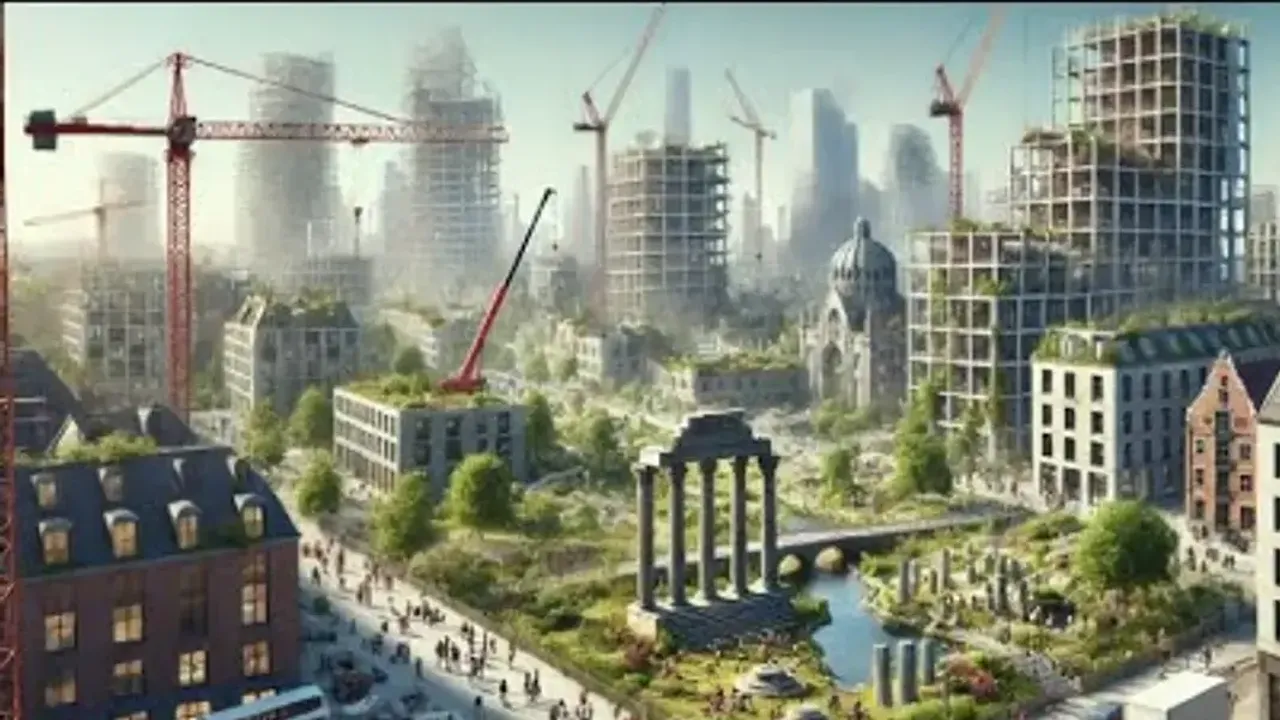
The Resilient City (2005), edited with Thomas Campanella, gathered the cases of Chicago, San Francisco, Warsaw, Hiroshima, Beirut and New York after 2001 and set out twelve axioms on how modern cities recover: narratives of resilience are a political necessity, reconstruction reveals and reinforces inequalities, and memory decides what is rebuilt. It is the book that put resilience into the vocabulary of planning before it became a slogan.
From the Puritans to the Projects (2000), Purging the Poorest (2013) and After the Projects (2019) follow the history of public housing in the United States and show how, in Chicago, Atlanta and New Orleans, demolition and mixed-income programmes were justified by the welfare of the poor they displaced, and how some cities did it better than others. His work is the reference for evaluating the regeneration of social housing estates.
The subtitle of Purging the Poorest names his most useful concept: twice-cleared communities. Many American public housing sites were first emptied of their poor residents between the 1930s and 1950s, in the name of slum clearance, and emptied again from the 1990s under the HOPE VI programme, which demolished those blocks to build mixed-income neighbourhoods with fewer affordable homes. Vale shows that both times the talk was of improving the lives of the poor while their place in the city shrank.
Videos on Lawrence Vale (1)
- Climate change
Vale and Campanella: Who Returns to the City After Disaster
The Resilient City by Lawrence Vale and Thomas Campanella shows that cities almost always rebuild, but resilience…
Lawrence Vale 3 min read
Where Lawrence Vale is cited (2)
- Climate change
Urban Resilience: How Cities Recover After Disaster
The Resilient City (2005) by Vale and Campanella explains how Chicago, Warsaw, Hiroshima or New York rebuilt after…
3 min read - Climate change
Thomas Campanella: Urban Resilience in Times of Crisis
Thomas Campanella argues that a city's resilience is that of its citizens: New Orleans after Katrina, the green dot…
Thomas Campanella 3 min read