Key points
- María Kaika examines how urban infrastructure shapes both the environment and social interactions.
- Urban modernization often leads to ecological degradation and social inequalities.
- Infrastructure is not neutral, but reflects power dynamics and social exclusion.
María Kaika, a Greek architect and geographer, has made fundamental contributions to the study of urban infrastructure and its impact on ecology and social relations. In her most prominent work, “City of Flows” (2005), Kaika analyzes how urban modernization projects have transformed not only the physical environment of cities, but also the way people interact with nature and with one another. Through this analysis, she offers a critical perspective on urbanization processes, highlighting the inherent contradictions of infrastructure projects that, while improving certain aspects of urban life, can also generate inequalities and ecological problems. One of the key points Kaika addresses in her work is how urban infrastructures, such as water supply, electricity, and sewage systems, become so integrated into people’s everyday lives that they are practically invisible.
María Kaika and Urban Infrastructure
However, despite their invisibility, these infrastructures are essential to the functioning of modern cities. Through “City of Flows”, Kaika invites us to reflect on how these systems, often perceived as simple technical services, have profound impacts on the social and environmental configuration of cities. Furthermore, she suggests that these infrastructures are not neutral, but are intrinsically linked to relations of power and control within society. Kaika introduces the concept of the “urbanization of nature”, in which urban infrastructure transforms not only the built environment but also the natural elements that exist within cities.
Urbanization of Nature and Its Consequences
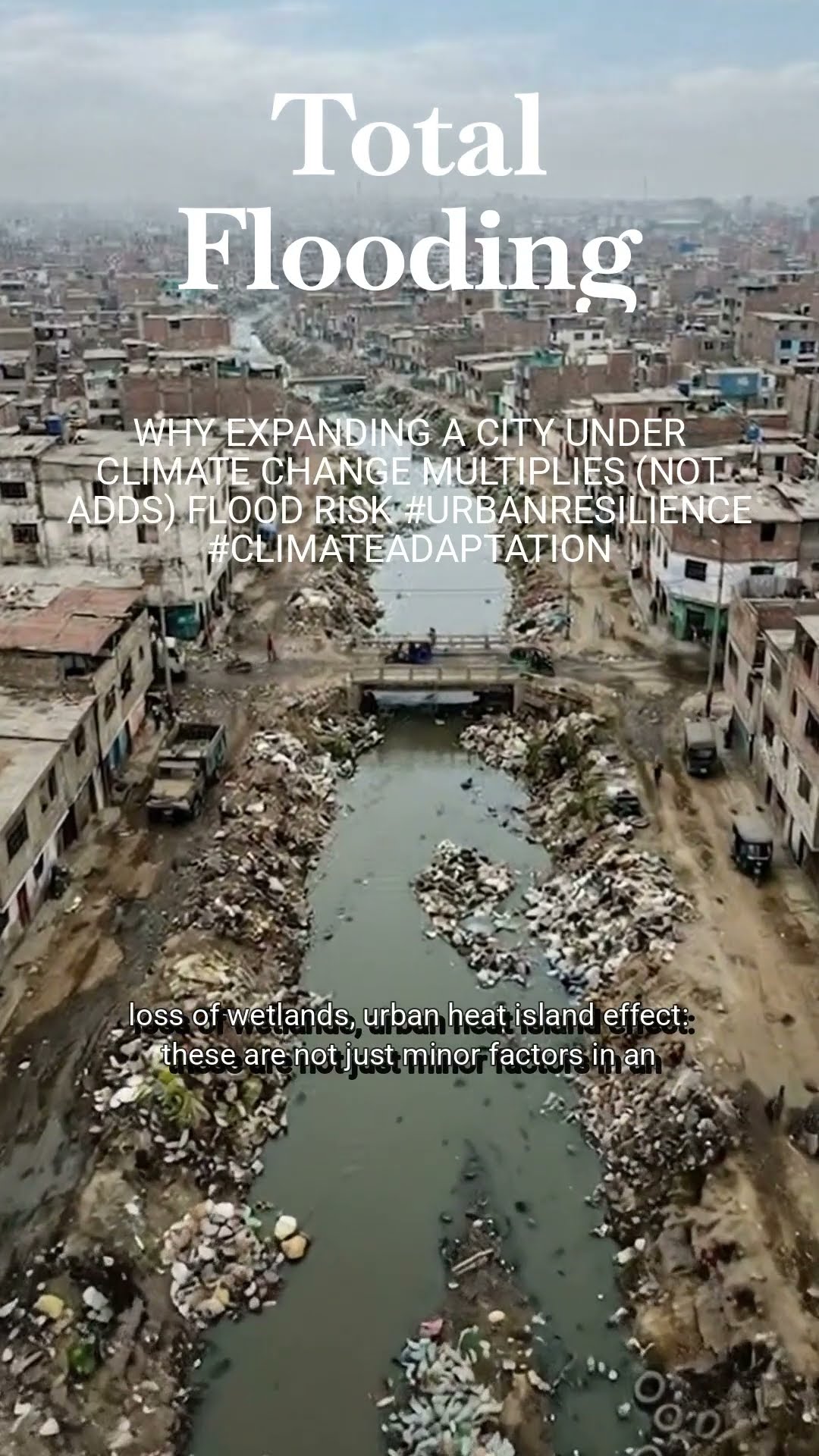
For Kaika, urban modernization involves manipulating nature to make it functional and efficient in serving urban inhabitants. However, this transformation is not without negative consequences. The urbanization of rivers, lakes, and other natural ecosystems, for example, has in many cases led to environmental degradation, creating new tensions between urban residents and their natural surroundings. This urbanization of nature also reflects a growing disconnection between citizens and the natural systems on which they depend.
Another central aspect of Kaika’s work is the idea that urban modernization projects do not affect everyone equally. Inequalities in access to infrastructure services are evident in many cities around the world. In this sense, the benefits of modernization tend to be concentrated in wealthier areas, while disadvantaged areas are neglected or even negatively affected by development projects. Kaika emphasizes that urban infrastructures can act as mechanisms of social exclusion, benefiting certain groups while marginalizing others.
Kaika’s work also highlights the paradoxical nature of infrastructure projects. On the one hand, they are essential to the progress and well-being of modern cities. On the other hand, they can create unforeseen problems that negatively affect both people and the environment. This double-edged nature of modernization is a recurring theme in her writings, where she argues that the drive toward greater efficiency and control over the urban environment can lead to the dehumanization of the city and its inhabitants, distancing them from nature and from more balanced social relationships.
In conclusion, María Kaika offers a profound and nuanced critique of urban infrastructure and its role in contemporary life. Her work “City of Flows” reminds us that urban modernization projects are not merely technical advances, but social and ecological transformations with far-reaching consequences. By questioning the apparent neutrality of infrastructure, Kaika invites us to rethink the relationship between the city, its inhabitants, and the natural environment, seeking fairer and more sustainable forms of urbanization.
Frequently asked questions
What is the main focus of María Kaika's work?
María Kaika focuses on how urban infrastructure impacts ecology and social relations.
How does urbanization affect natural ecosystems?
Urbanization often leads to environmental degradation and disconnection from nature.