At eight in the evening you leave a black bag beside the doorway. By seven in the morning it is gone. That small act of disappearance is the most perfect urban trick there is, because nothing has disappeared. The bag still exists, weighs the same, smells the same, and now sits twenty kilometres away, in a place where other people live. An average resident generates around four hundred and fifty kilos of household waste a year. Multiply that by a whole city and you have a mountain that must be placed somewhere specific, with a postal address and neighbours. The question holding this video together is simple. Where does your rubbish go, and who exactly lives there? Follow the journey. The bag goes into a truck, reaches a transfer station and from there a treatment plant where usable material is separated. Here comes the first uncomfortable figure. In Spain, the municipal recycling rate sits around forty two percent, far below the European target of sixty percent for the end of this decade. In other words, most of what you throw away is not recycled. It carries on towards an incinerator, where it is burned and some energy recovered, or towards a landfill, where it is buried. And burying is the worst climate option: most of the sector's emissions come from precisely there. Now look at the destination by name. The best documented Spanish case sits southeast of Madrid, in a complex the administration calls a technology park and everyone else calls, plainly, the dump. Up to four thousand tonnes are treated there daily, and its incinerator has burned close to three hundred thousand tonnes a year. Around it live tens of thousands of people, across a residential expansion district, a historic informal settlement and several eastern metropolitan municipalities. The distance from the stack to the nearest homes is measured in a few kilometres. The distance from that stack to the districts producing the most rubbish is measured in many more. The consequences are measured, not merely perceived. A study by the city's own public health service found that concentrations of dioxins and furans were around four times higher in districts near the incinerators than elsewhere in the city. On top of that sits the everyday reality: years of neighbourhood complaints about odours, windows that stay shut in summer, residents' associations that built their own reporting forms because nobody else was counting the episodes. A distinction matters here. That there are more dioxins in the air is a fact. That this produces specific harm in a specific population requires epidemiological studies, which almost always arrive late and underfunded. The siting mechanism is the properly urban part, and it works the same way almost everywhere. A waste facility needs a lot of land, heavy access and few restrictions. So cheap land is sought. Cheap land sits where incomes are low, where the landscape is already degraded, or where residents have less capacity to organise and litigate. Once the plant is installed, the surroundings depreciate further, and that depreciation later attracts affordable housing, settlements and industrial uses. The result is a loop: environmental injustice is not decided once, it is reinforced at every plan revision. And language helps, because calling a dump a technology park softens any set of minutes. There is also a problem of scale. Many cities centralise their entire system on a single site. That concentrates efficiency, but it also concentrates the whole impact onto one population, which bears one hundred percent of the burden while the rest of the city bears none. Affected residents' associations tend to ask for exactly this: decentralise treatment, especially of the organic fraction, which causes most of the odour and could be handled in smaller, distributed facilities. This can be read as a technical debate. It is really a debate about sharing burdens, dressed up as logistics. Now the counterargument, and it deserves serious treatment. Waste has to go somewhere, and no city can process it in its main square. Concentration allows economies of scale, better gas cleaning systems and stricter environmental control than twenty small scattered plants would achieve. Energy recovery with modern filters is a better climate option than burying, given how heavily landfill weighs in the sector's emissions. And one honest nuance must be added: in the Madrid case, the city itself reports that landfilling has fallen and that neighbourhood odour complaints have reached a record low. Systems can improve, and sometimes they do. It can still be argued that none of that answers the distributive question. It is true the facility must exist. It is not true that it must always sit in the same kind of neighbourhood. Moreover, the chronological argument sometimes deployed, that the plant was there b
Where does your trash go after you throw it away?
Shorts
 ’s Green Myth One of Europe’s capitals…
 Killer heat
 Sponge Cities The city that stopped fighting water
 Cities Are Hiding SECRET Jungles on Their Walls!
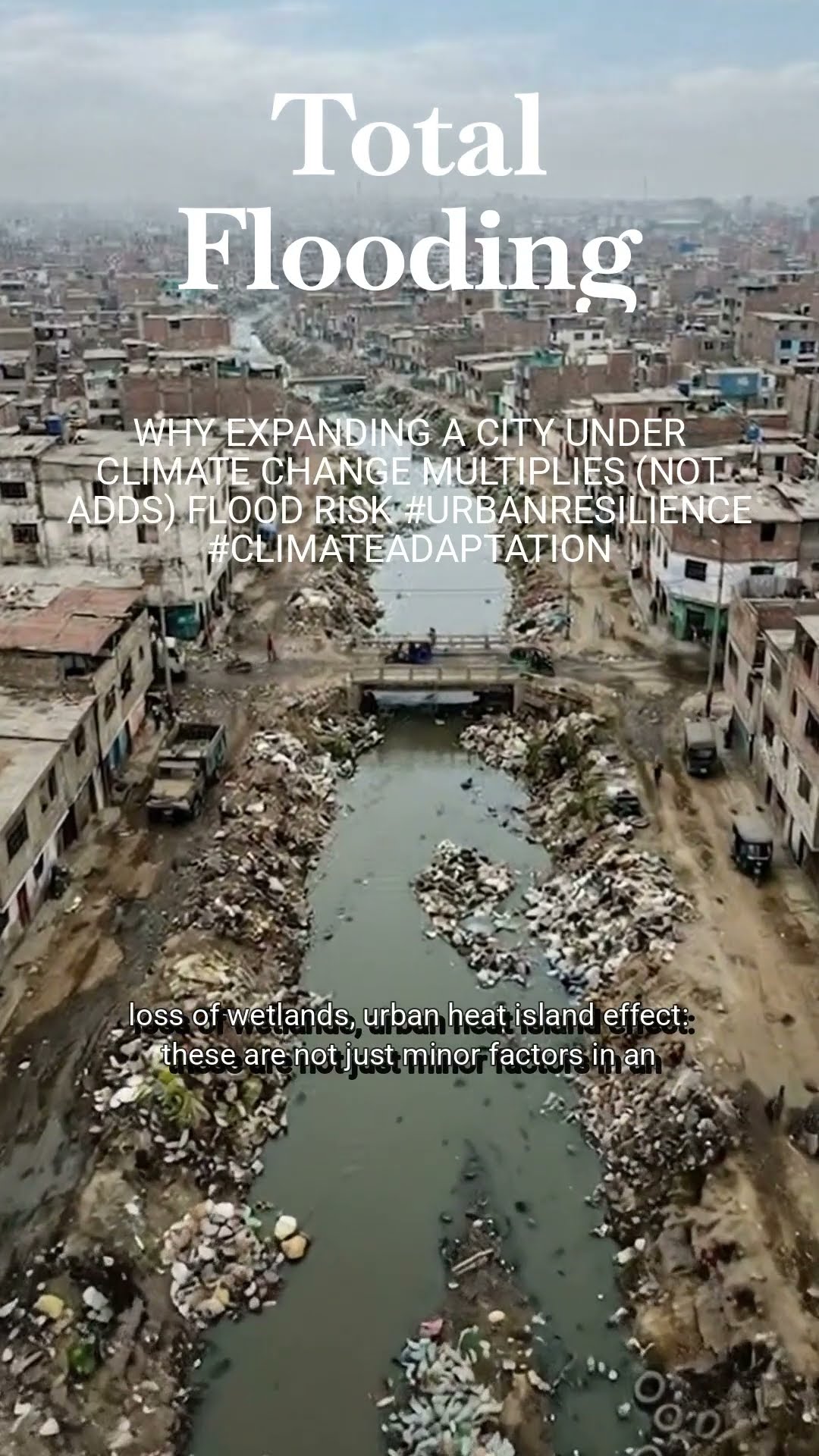 Total flooding. Why expanding a city under climate change multiplies flood risk
 HafenCity. The Futuristic District That Quietly Redefined a City
 Underground Cities. The climate solution isn’t above us… it’s hidden beneath our feet
 Color and Climate. The color that cools cities without air conditioning
 Healing parks. A tree on your street isn't decoration. It's a medical intervention
 Invisible infrastructures. The city’s most powerful highway can’t be seen
 Cities Are Running Out of Land… So They’re Building on Water
 vs Highways. Imagine a highway. Now imagine your city destroys it
More from the channel ↗