Key points
- If expected appreciation exceeds rent, keeping a flat empty is a strategy, not neglect.
- Vancouver's tax halved vacancy and funded social housing, but average rents did not fall: availability is not affordability.
- Forty-five percent of Spain's empty homes are in municipalities under 10,000 people; in pressured cities scarcity is real.
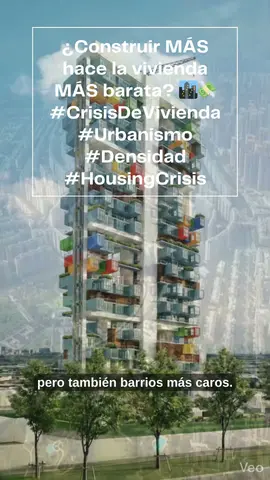
Empty homes and a price crisis coexist in the same city: a newly finished residential tower at night, forty floors, hundreds of windows and three lights on, and ten minutes away a family months into a public housing waiting list and another sharing a flat with strangers because the rent is out of reach. The buildings exist, built, registered and connected to the grid, and nobody lives inside. That image contradicts the usual explanation of the housing problem as a shortage of supply and raises a disconcerting question: why are there homes without people and people without homes at the same time. The answer starts with a mechanism that is financial before it is urban.
Let or hold: the home as a store of value
A home can yield in two ways: by being let for a monthly rent, or by being held while its price rises. If the expected appreciation exceeds what letting would bring, keeping the flat empty stops being carelessness and becomes a strategy: a tenant means wear, management, taxes, regulation and less liquidity to sell fast, while an empty flat sells tomorrow and shows immaculately. For part of the stock, housing is not a service being provided but a store of value being kept.
That is why building more does not lower prices automatically: new construction enters at the top of the market because expensive land forces expensive product, filtering, the process by which a home ages and cheapens toward middle incomes, takes decades rather than electoral terms, and if part of demand is investment demand, every new development is a new asset that feeds it rather than satisfying it.
Vancouver, France and Catalonia: how the market reacts to empty homes taxes
Vancouver shows how the market reacts when a city tries to correct it. Its Empty Homes Tax, in force since 2017 and raised from one to three percent of assessed value, halved the vacancy rate, brought the number of empty flats below a thousand for the first time and raised close to two hundred million Canadian dollars earmarked for social housing; an independent academic study estimated several thousand homes returned to the market that would otherwise have stayed shut. But the same study found that average rents did not fall: availability improved and affordability did not, which are two different problems. France, with its tax on vacant dwellings since 1999, and Catalonia, with its 2015 levy, obtained similar results.
Spain's figures: depopulation, not hoarding
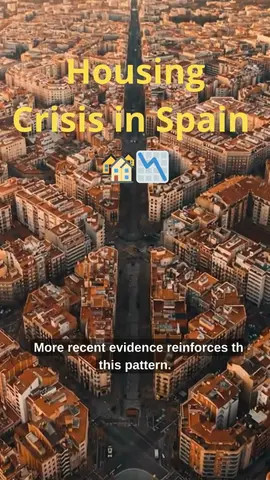
Spanish figures explain the paradox better than any theory. The 2021 census identified about 3.8 million empty homes, around 14 percent of the stock, plus another 2.5 million in occasional use, which sounds like an obvious solution. The counterargument is the most important figure: close to 45 percent of those empty homes lie in municipalities of under ten thousand inhabitants, home to barely a fifth of the population, while cities of more than 250,000, where nearly a quarter of the country lives, hold only about a tenth of the total. Spain's empty housing is above all a symptom of depopulation, not hoarding: a closed flat in a village of three hundred does not compete with one in a pressured city neighbourhood nor house anyone who works there.
Empty without being empty: stock withdrawn from stable use
It follows, uncomfortably for critical discourse, that in genuinely pressured areas vacancy is low and supply scarcity is real, so building matters and building in the right place matters more. Yet that does not close the debate, because inside pressured cities a growing share of the stock is withdrawn from permanent residential use without being empty: let by the season, given to visitors, reserved for occasional use or bought by companies that hold it in portfolio. The practical result is the same: the home exists physically and is unavailable to anyone who needs to register an address, take a child to school and sign a lease for years. The scarcity in those neighbourhoods is not of buildings but of accessible housing on stable terms.
The error lies in treating housing as a single market when there are several: the emptying villages, the neighbourhoods where construction is lacking and the centres where stock withdrawn from stable use is abundant. Each demands its own instrument, repopulation and renovation in the first, public and affordable construction in the second, vacancy taxes, limits on tourist and seasonal use and rent regulation in the third. Adding up a country's empty homes as if they were an available reserve is adding apples and oranges; distinguishing where they are empty, why and for whom is the beginning of any policy that wants the lights in the tower to come on.
Frequently asked questions
How does the market react to an empty homes tax?
Vancouver's experience since 2017 shows that vacancy halves, thousands of homes return to the market and revenue funds social housing, but average rents do not fall, because availability and affordability are different problems that require different instruments.
Why does building more not automatically lower housing prices?
Because new construction enters at the top of the market as expensive land forces expensive product, filtering toward middle incomes takes decades, and if part of demand is investment demand every new development is a new asset that feeds it rather than satisfying it.