A grey wall wakes up covered in colour. Neighbours celebrate it. Someone photographs it and shares it. Months later, a construction notice appears in that same doorway. Later still, rents next door have climbed by a third. The sequence repeats in so many neighbourhoods that it stops looking like coincidence. First comes the fresh paint. Then come the funds. The question holding this video together is simple and uncomfortable. Does street art beautify a neighbourhood, or does it prepare it for someone else to buy? Nobody signs that intention. Nobody hands out instructions. And still the pattern shows up again and again, with the same choreography and the same ending. To understand it, look at the mechanism before the effects. The geographer Neil Smith explained it with one plain idea: the rent gap. In a run down working class neighbourhood, land yields little compared with what it would yield under new ownership and new uses. That distance between today's return and tomorrow's is the engine of the business. But the gap alone is not enough. Someone has to prove the neighbourhood is liveable, desirable, safe for a new public. Someone has to translate stigma into character. That is where culture enters. The mural, the gallery, the festival, the studio in the abandoned warehouse. All of them do the same invisible job: they lower the perceived risk of investing. The sociologist Sharon Zukin described that operation while studying old industrial workshops turned into artist housing. What she identified was an economy of authenticity. Artists look for low rents, high ceilings and surroundings that do not feel manufactured. By moving in, they produce exactly what the market cannot manufacture on its own: local truth, mixture, texture, visible history. That story carries a price. The data show that once studios and cultural venues arrive, property turnover accelerates and the first buyers appear who come not to live, but to wait. The artist is not the villain. He is the first to pay the highest rent of his life, and then the first to leave. It helps to separate two layers of the phenomenon. The first is spontaneous: creative people looking for cheap space who raise its value without meaning to. The second is deliberate, and that is what the term art washing names precisely. Here there is no innocence. A developer sponsors a mural festival on the facades of plots he already owns. A city labels a declining industrial estate a creative district before rezoning it. A gallery opens in a warehouse and works as an undercover sales office for the development to come. Culture then functions as an advance image campaign. It cleans the neighbourhood's record, softens the operation, and turns displacement into something that resembles good news. The best documented case happened in east Los Angeles. In a working class, largely Latino neighbourhood, several commercial galleries appeared along the industrial edge. Residents did not react against art, because that neighbourhood had been producing its own mural tradition for decades. They reacted against an art that did not speak about them and that arrived alongside real estate agents. They organised, applied pressure and forced several spaces to close. Their argument was blunt: art washing makes violence look pretty. This can be read as a fight about taste, but it is not. It is a fight over land, waged on the terrain of symbols, where price is settled before the market settles it. In Spain the script is recognisable. An old industrial fabric in Barcelona is rebranded as a district of innovation and creativity, and the sheds that held workshops and homes become tech offices and short term rental flats. In Madrid, central neighbourhoods with migrant residents and local commerce fill up with small galleries, street art routes and design shops. The artist Rogelio López Cuenca has spent years pointing out how a city's cultural brand is built by erasing the real city underneath it. The mural documents a neighbourhood at the exact moment that neighbourhood stops existing. It becomes its own funeral monument, painted with the best of intentions. Now the counterargument, and it is a serious one. Several studies hold that galleries alone do not push out low income residents. Mapping the distribution of arts institutions shows they cluster mainly in already affluent or already transformed areas, not in the neighbourhoods just beginning to change. On that reading, art would not be the cause but a late indicator of a process already driven by heavier forces: housing scarcity, tourism, financial investment, land policy. Blaming the mural would mean confusing the thermometer with the fever. The objection is legitimate and it forces us to lower the volume of the accusation. Art does not fire the starting gun on its own. It can still be argued that the objection does not close the case. Even if art is not the first cause, i
Painted walls: art, investment, and displacement in Spanish and American cities
Shorts
 Detroit’s Hidden Urban Renewal: The City That Rebuilt Itself… After Losing Thousands of Homes
 Brexit and the City of London
 Verticalization of Informal Settlements
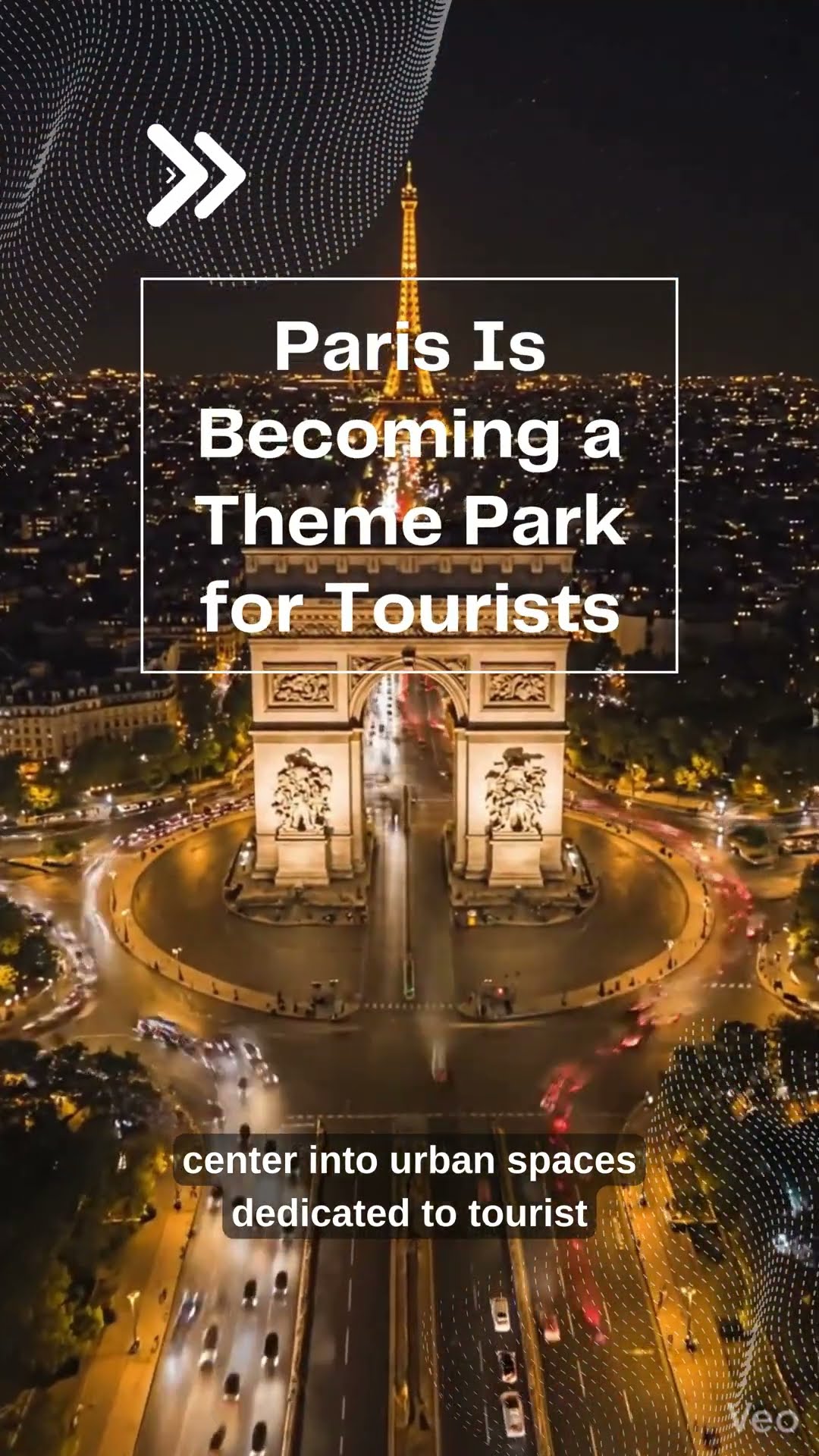 Paris Is Becoming a Theme Park for Tourists
 Japan. Millions of Empty Homes… Where People Still Can’t Find Housing
 Housing Crisis in Spain
 Does Building MORE Housing Actually Make Cities CHEAPER?
 Million dollar park. The financial trick that turns urban trash into gold
 The Working-Class District That Became Prague’s Coolest Neighborhood
 New York. The Night-Time Economy and the Transformation of the City
 Forgotten Millions of square meters lie forgotten
 death. The cities that became famous for nightlife are killing it
More from the channel ↗