Key points
- Urban change is not natural: gentrification, renewal and decline are decisions taken under unequal power.
- Lee: every urban economy is embedded in social relations; losing industry means losing a way of life.
- Land, housing, infrastructure and representation are the four conflicts that draw the map of inequality.
Urban change and social conflict are inseparable: every transformation of a city, a renewal, a new infrastructure, a rezoning, an industrial closure, redistributes advantages and losses among groups and produces dispute. That idea, now common in urban studies, took shape in the United Kingdom in the early 1980s, when deindustrialisation, spending cuts and the 1981 riots in Brixton and Toxteth forced a rethinking of the city as a field of conflict. The volume Urban Change and Conflict: An Interdisciplinary Reader, edited in 1982 by Andrew Blowers, Chris Brook, Patrick Dunleavy and Linda McDowell for the Open University, gathered the texts that fixed that approach, and the economic geography of Roger Lee, a professor at Queen Mary, University of London, supplied one of its keys: urban economies are social relations before they are markets.
Urban change is not natural: decisions, power and inequality
The starting point of that tradition is to reject the idea that urban change is a natural process of growth and adaptation. Gentrification, the renewal of city centres, suburbanisation or the decline of industrial cities are the results of decisions, by developers, governments, banks and households, taken under conditions of unequal power, and that is why they benefit some and harm others. The conflicts that accompany change, protests against demolitions, tenants' struggles, resistance to motorways, are not noise but the political expression of that inequality, and studying them is the way to understand who wins from each transformation.
Roger Lee: ordinary economies and social relations
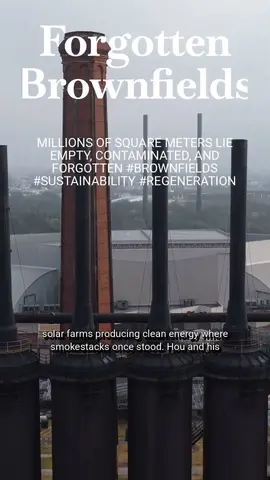
Lee brought that approach into economics. Against an economic geography that describes capital flows and firm location as if they were laws, he argued in Geographies of Economies (1997), edited with Jane Wills, and in his work on ordinary economies that every economy is embedded in social relations, values and concrete places. A city that loses its industry loses not only jobs but a way of life, support networks and an identity, and policies that treat it only as a competitiveness problem ignore that fabric. Urban economic change is, in his reading, a change in social relations that is lived as conflict.
Land, housing, infrastructure and representation: four conflicts
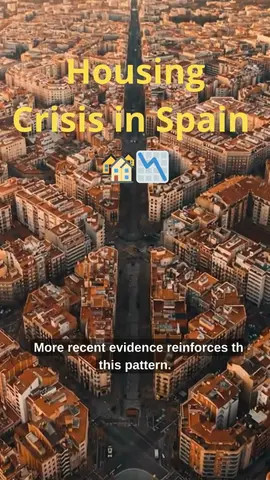
The conflicts the approach identifies recur in every city. Over land: who appropriates the value increase that public decisions produce, and who is expelled by it. Over housing: owners against tenants, developers against residents, public housing policy against the market. Over infrastructure: which neighbourhoods receive transport and facilities and which bear motorways, landfills and pollution. And over representation: who decides, with what information and with what participation. Each has its geography, and the sum of those geographies is the map of urban inequality.
Planning with conflict: sharing costs and benefits
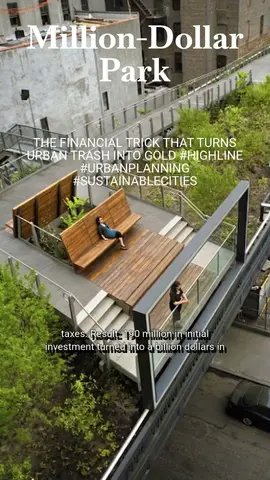
The consequence for planning is that conflict is not eliminated by better technique but managed with more justice. Plans that ignore those who lose produce resistance, delays and, often, failure; those that acknowledge conflict and share costs and benefits, through affordable housing, compensation, the right of return, real participation, produce transformations the city accepts as its own. The British tradition of the 1980s, of which Lee is part, also left instruments: the analysis of who wins and who loses in each project, now routine in social impact assessments.
The relevance of this perspective is evident in today's cities, where the financialisation of housing, tourism, platforms and the ecological transition generate new rounds of change and new conflicts. The lesson of Urban Change and Conflict and of Lee's geography is that the city does not change by itself or equally for everyone, and that the question to ask before every transformation is not whether it is modern or efficient but whom it benefits, whom it harms and who had a voice in deciding it.
Frequently asked questions
Why does urban change produce social conflict?
Because every transformation, a renewal, an infrastructure, a rezoning or an industrial closure, redistributes advantages and losses among groups with unequal power, and protests, tenants' struggles and resistance are the political expression of that redistribution.
What does Roger Lee contribute to the study of cities?
An economic geography that understands urban economies as social relations and not only as markets, so that a city's economic change is a change in ways of life, networks and identities that is lived as conflict.