Affordable housing is housing whose cost, in rent or mortgage payments, leaves a household enough to live on; the most common convention is that it should not exceed 30 % of income, or 45 % when transport is added, as the H+T index of Chicago's Center for Neighborhood Technology proposes. Measured that way, affordable housing is scarce in almost every rich city and in many of the Global South, and its scarcity is the urban problem most people suffer and the one least well explained.
This guide covers the causes of the problem, land prices, financialisation, the lack of public stock, tourist rental and the regulation that restricts supply, and then the models that have worked somewhere: Vienna's public housing, Singapore's public land ownership, use-right cooperatives, community land trusts and rent regulation. At the end it links the channel's videos on rent, social housing, informal housing and land.
What affordable housing means and how it is measured
Affordability is not a price but a relationship between the price of housing and the income of those who need it. That is why a city can have cheap homes in absolute terms and be unaffordable for its workers, and why average price statistics say little: what matters is how many years of gross income it costs to buy, in Spain around seven when the threshold considered sustainable is close to four, and what share of wages rent takes, which in the big European capitals exceeds 40 % for the young.
The 30 % indicator has a catch: it does not count transport. A cheap home in a periphery without a metro forces the household to pay in car, time and care what it saves in rent, and the H+T index, which adds housing and transport and sets the threshold at 45 %, shows that many cheap neighbourhoods stop being cheap once the full account is made. Affordable housing, properly measured, is well-located housing.
It is also worth distinguishing affordable housing, which meets that relationship with income, from social or protected housing, which the state produces or regulates to achieve it. In Spain social housing is barely 2 or 3 % of the stock, against a European average of 9 %, 24 % in Austria or 30 % in the Netherlands; that difference explains much of what follows.
Why it is scarce: land, financialisation, supply and tourism
The price of a home is decided not by bricks but by land, and land is decided by a rule that says what can be built, where and how high. When the city rezones, lays out streets and brings transport, land gains value without its owner having invested anything, and that gain, born of a public decision, almost always stays in private hands. Henry George pointed it out in 1879 and urban economics has repeated it since: where land is scarce and the gain is not recovered, housing is expensive by design.
The second cause is financialisation, which Manuel Aalbers and Raquel Rolnik have described: since the 1980s financial deregulation, mortgage securitisation and the entry of investment funds turned housing into the main asset of the global financial system, bought for its yield and not for its use. Prices stopped following local wages and started following capital looking for a home, and housing that yields as an asset does not need anyone living inside.
The third is supply. Economists such as Edward Glaeser argue that land regulation, low-density zoning and neighbourhood opposition prevent building where there is demand, and that the cities that restrict construction most are the most expensive; critics reply that building more only lowers prices if what is built is affordable and not absorbed by the investment market. And the fourth is tourist rental, which removes whole homes from the residential market in city centres: a flat let by the night yields two or three times more than one let to a neighbour.
Vienna: the public housing model that sets the price of the city
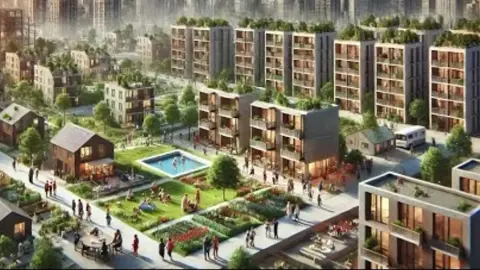
Vienna is the case every city cites. More than half its residents live in municipal housing or in homes built by limited-profit developers, an inheritance of Red Vienna in the 1920s, when the social democratic city council built sixty thousand homes financed by taxes on luxury and property, with the Karl-Marx-Hof as its symbol. The city never stopped building and never sold its stock, as the United Kingdom did with Thatcher's right to buy.
The mechanism has three parts. The city owns a land bank it buys ahead of time and hands to non-profit developers through competitions that score quality, ecology and cost. Limited-profit homes must keep rents based on cost, not on the market, and their surpluses are reinvested in more housing. And access is broad: the income limits for entry are high, so public housing is not a ghetto of the poor but the place where the middle class lives, which guarantees its political support.
The result is that the public stock sets the reference price for the whole city: the free market has to compete with quality affordable rents, and Vienna's prices, despite the pressure of the last decade, remain far below those of Munich, Zurich or Paris. The lesson is not to copy the Karl-Marx-Hof but the scale: a public stock of 5 % sets nothing; one of 40 % governs the market.
Singapore, cooperatives and land trusts: other models that work
Singapore reached a similar result by another road: the state owns almost 90 % of the land and its housing agency, the HDB, has built since 1960 the flats where nearly 80 % of the population lives, bought on 99-year leases financed through the compulsory pension fund. It is ownership, not rental, but on public land and at regulated prices, and it has given a very dense city one of the highest rates of housing access in the world. Critics point to dependence on the state and the exclusion of temporary migrants.
Use-right housing cooperatives, widespread in Denmark, Switzerland and Uruguay and growing in Barcelona, take housing off the market another way: the cooperative owns the building and members hold an indefinite right of use in exchange for a cost-based fee; they cannot sell or speculate, and the home is passed on at cost. In Zurich a quarter of rental housing is cooperative and the city committed by referendum to reach a third by 2050.
Community land trusts, born in the United States in the 1960s, separate ownership of the land, held by a non-profit entity, from ownership of the home, which is bought and sold at a limited price; the largest, Champlain Housing Trust in Vermont, has kept thousands of homes affordable for four decades. And protected rental programmes with income-linked rents, such as France's HLM, show that scale is achieved with stable public funding and not with one-off developments.
Regulating rents: what the evidence says
Rent regulation is the most debated measure. The evidence distinguishes between rigid first-generation controls, which freeze rents and do reduce supply and maintenance, and second- and third-generation regulations, which limit rises within and between leases, protect against eviction and allow cost updates: on these, studies of Berlin, Amsterdam, Catalonia or New York find moderate price falls in regulated areas and side effects, such as flats shifting to seasonal rental, that require closing loopholes.
What the evidence shows most clearly is that regulation works as a brake but not as a solution: it contains prices while affordable stock is built or mobilised, and fails if used alone for years, because supply eventually adapts. Berlin's 2020 cap, struck down by the Constitutional Court in 2021, lowered regulated rents and reduced the supply of new leases at the same time; Spain's 2023 law, with its reference index in strained areas, is under evaluation.
The measures that accompany regulation matter as much as regulation itself: mandatory registration of leases, limits on seasonal and tourist rental, enforceable sanctions, and taxation that penalises empty homes and speculation and rewards stable renting. Regulation without inspection is a poster; with inspection and public stock behind it, it is a housing policy.
Informal housing: the city most people build
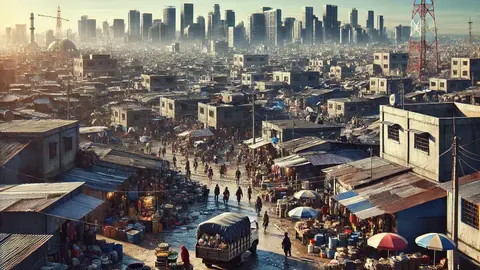
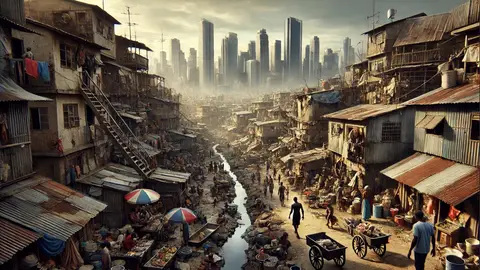
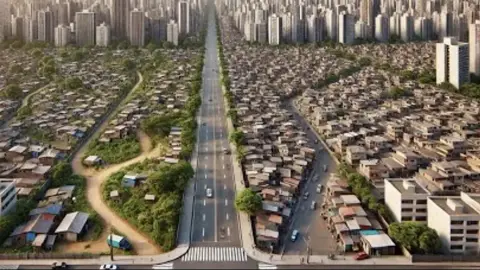
In the Global South affordable housing is, above all, the housing people build themselves. A billion people live in informal settlements, according to UN-Habitat, and in many Latin American, African and Asian cities most new housing is produced outside planning, in self-built peripheries the state first ignores, then represses and finally regularises. James Holston showed in São Paulo how that self-building also produced an insurgent citizenship that claimed services and rights.
Policy toward that city has gone through three phases: eradication and relocation to peripheral blocks, which failed almost everywhere; property titling championed by Hernando de Soto, which gave many families security but also exposed them to the market and to displacement; and integral neighbourhood upgrading, with water, sanitation, streets and facilities without eviction, which Medellín, Rio de Janeiro and many Asian cities have practised with uneven results but better than the alternatives.
Chile offers the opposite lesson: it solved the quantitative deficit by building hundreds of thousands of social homes in peripheries without city, and created what Alfredo Rodríguez and Ana Sugranyes called those with a roof, families with a home of their own but without transport, jobs or services. Affordable housing without an affordable city is half a solution.
What a city can do: seven measures that reinforce each other
Research converges on a package rather than a single measure. First, a public and limited-profit stock that grows every year and is never sold, financed with a stable budget and public land. Second, land value capture: mandatory contributions of protected housing in every development, public participation in the gains produced by rezoning and infrastructure. Third, public land that is leased rather than sold, so the city keeps ownership and control.
Fourth, third-generation rent regulation with inspection and registration. Fifth, limits on tourist and seasonal rental, and taxation on empty homes and speculative purchase. Sixth, support for cooperatives and land trusts, with land and finance, to build a third sector between the market and the state. And seventh, well-located density: allowing more building next to transport, provided part of it is affordable and stays off the market.
None of these measures is enough alone and all reinforce each other. The question that orders the rest is the one David Madden and Peter Marcuse pose in In Defense of Housing: if housing is at once home and commodity, which of the two roles do the city's rules serve. The cities where housing is affordable are those that decided, decades ago, that it is a home first.
Frequently asked questions
- What is affordable housing?
- Housing whose rent or mortgage payment does not exceed around 30 % of household income, or 45 % when transport is added, according to the H+T index. It is not a price but a relationship with the income of those who need it, and a cheap but badly located home may not be affordable once transport is counted.
- Why is housing so expensive?
- Because of land prices, which rise with every public decision without the city recovering the gain; because of financialisation, which turns housing into an asset bought for its yield; because of the scarcity of public stock, in Spain 2 or 3 % of the total; because of regulation that limits building next to transport; and because of tourist rental, which removes homes from the residential market.
- Does the Vienna model work outside Vienna?
- What can be copied is not a building but the scale and the mechanism: a public land bank, limited-profit developers with cost-based rents, broad access that includes the middle class and the decision never to sell the stock. With a small public stock the city's price is not set; with a large one, it is.
- Does rent regulation reduce supply?
- Rigid controls that freeze rents do; modern regulations that limit rises, protect against eviction and allow cost updates produce moderate falls in regulated areas and side effects that must be closed, such as the shift to seasonal rental. They work as a brake while affordable stock is built, not as a solution on their own.
- What is a use-right housing cooperative?
- A cooperative that owns the building and whose members hold an indefinite right of use in exchange for a cost-based fee, without being able to sell or speculate; the home stays off the market for good. It is common in Denmark, Switzerland and Uruguay and growing in Barcelona.