Charles Marohn
1973
American civil engineer, founder of Strong Towns, who argues that the sprawling suburb is a Ponzi scheme: it grows on debt and does not generate what it costs to maintain.
Charles L. Marohn, born in 1973 in Minnesota, is a civil engineer and planner, and in 2009 he founded in his city, Brainerd, the organisation Strong Towns, which has become one of the most widespread urban reform movements in the United States. His starting point was his own experience: as a highway engineer he designed for years wide, fast streets that, he later understood, impoverished the cities that paid for them and killed those who crossed them.
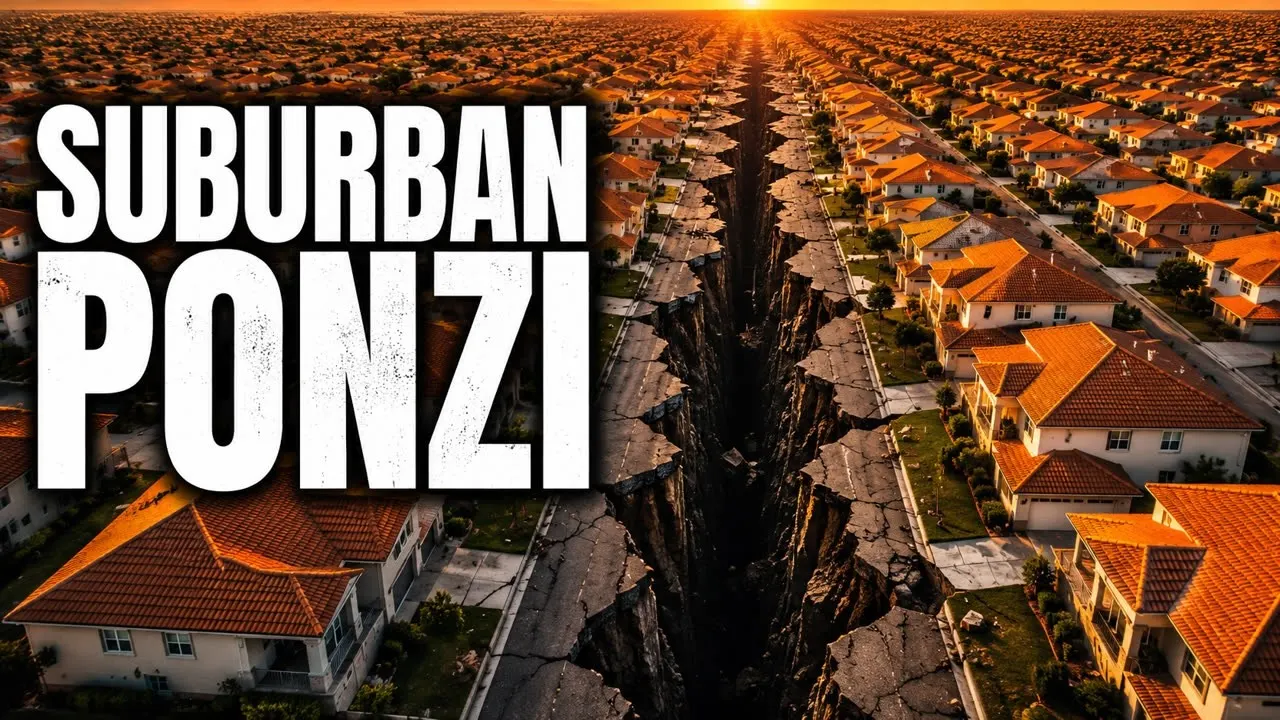
His central thesis is the growth Ponzi scheme of the suburb: sprawling development generates immediate revenue, permits, taxes and federal transfers, but creates miles of streets, pipes and services whose future maintenance exceeds what those low-density neighbourhoods pay in taxes, so that cities need to keep growing to pay for what they have already built, until they cannot. Strong Towns (2019) develops the argument and proposes the alternative: the incremental, dense and financially productive development of the traditional city.
Confessions of a Recovering Engineer (2021) is his critique of traffic engineering, with the concept of the stroad, the hybrid of street and road that serves neither for moving nor for staying, and Escaping the Housing Trap (2024), with Daniel Herriges, addresses housing as a financial investment versus housing as shelter. His critics, from the left and the right, dispute his faith in the local; his influence on small and mid-sized American city councils is enormous.
Strong Towns popularised a simple tool: calculating how much tax each parcel raises per acre. The analyses the movement spread show that an old downtown block, with shops below and homes above, yields several times more per acre than a big-box store with parking on the edge of town, even though the latter looks like the municipality's best deal. Marohn uses that arithmetic to defend traditional density as a matter of fiscal solvency rather than aesthetics.
On Charles Marohn in this archive (1)
- Urban economy
The House With a Yard That Is Quietly Bankrupting Your City
Dispersed detached housing gives municipalities fast revenue and leaves an unpayable maintenance debt: Charles…
3 min read