David Satterthwaite
British researcher who has spent half a century documenting the informal city of the Global South and its residents' capacity to organise and improve their neighbourhoods.
David Satterthwaite is a senior fellow at the International Institute for Environment and Development, IIED, in London, and since 1989 editor of the journal Environment and Urbanization, the reference publication on the cities of the Global South. A development planner by training with a doctorate in social policy, he has devoted fifty years to a single subject: how the residents of informal settlements live, organise and improve their neighbourhoods.
Squatter Citizen (1989), written with the Argentine architect Jorge Enrique Hardoy, is his foundational work. Against the image of the informal settlement as a problem to be eradicated, it describes the city its own residents build, with their networks, their economy and their capacity to negotiate with the state, and argues that urban policy should support that capacity instead of fighting it. It is the basis of the notion of informal citizenship and of support for federations such as Slum Dwellers International, with which Satterthwaite has worked for decades.
With Hardoy and Diana Mitlin he wrote Environmental Problems in an Urbanizing World (2001), on water, sanitation and risk in poor cities, and with Mitlin Urban Poverty in the Global South (2013), which shows how urban poverty is badly measured and underestimated. He was an IPCC author for its third and fourth assessment reports, was part of the team honoured with the 2007 Nobel Peace Prize and received the Volvo Environment Prize in 2004.
On David Satterthwaite in this archive (1)
- Urban psychology
Urban Public Health: Policies for Healthier and Fairer Cities
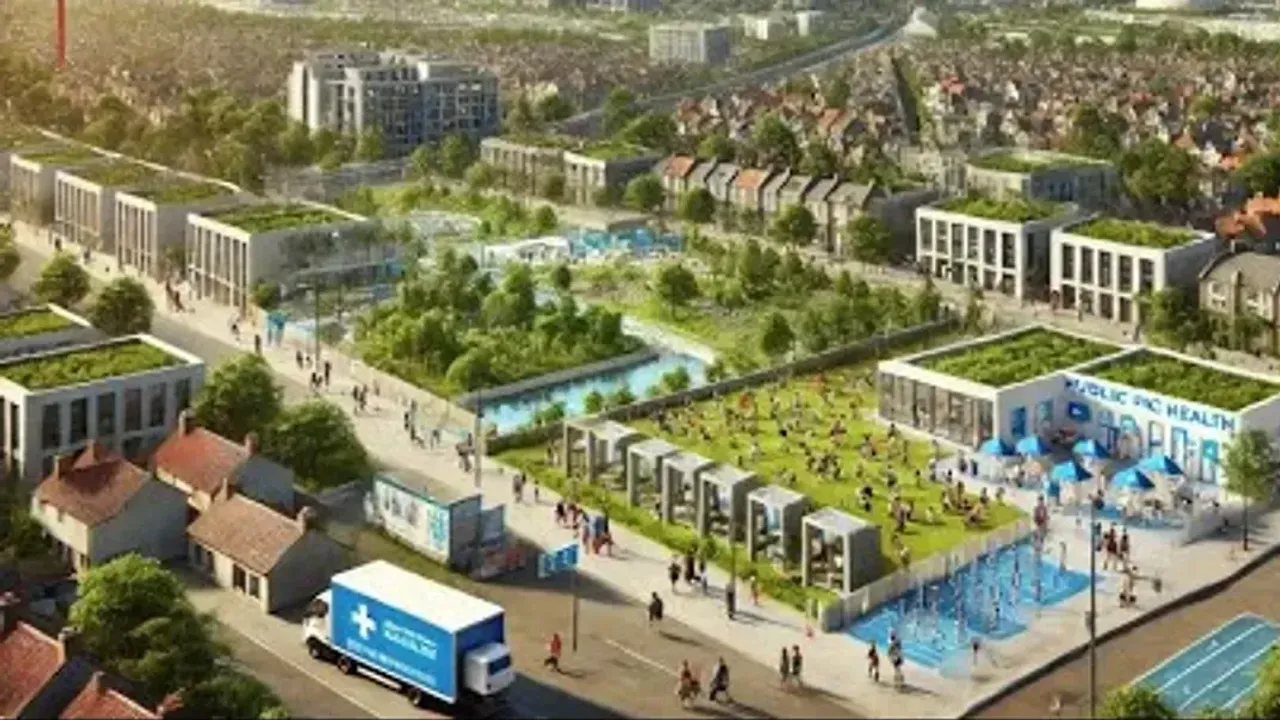
Urban public health policies decide air, water, housing and transport. What David Satterthwaite and Julian Agyeman…
2 min read