Key points
- The postcode predicts life expectancy better than the genetic code, according to the WHO Commission of 2008.
- Satterthwaite: mortality in informal settlements stems from lack of sanitation, not lack of hospitals.
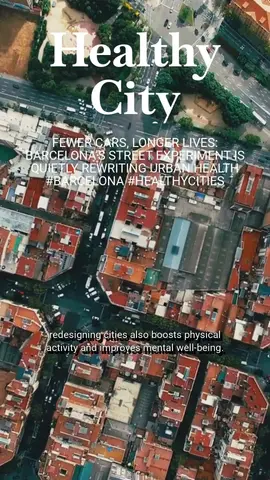
- Barcelona's full superblock plan would prevent some 667 premature deaths a year, according to ISGlobal.
Urban public health policies are the decisions about air, water, housing, transport, green space and health services that determine how long and how well a city's residents live, and their premise, established since the sanitary reforms of the nineteenth century, is that health is produced mostly outside the hospital. Two authors have connected that tradition with justice: David Satterthwaite, a researcher at the International Institute for Environment and Development in London, who documented environmental health in Global South cities for four decades, and Julian Agyeman, a professor at Tufts University, who formulated just sustainabilities to join the environmental agenda with equity. Both argue that health inequalities between neighbourhoods are the most measurable consequence of urban inequalities.
From Chadwick and Snow to the WHO: health is produced in the city
History confirms it. Edwin Chadwick's 1842 report on the sanitary condition of the British labouring population and John Snow's cholera map of Soho in 1854 founded public health as urban intervention: sewers, safe water, ventilated housing, and a Public Health Act in 1848. A century and a half later, the World Health Organization revived that link with the Healthy Cities network of 1986 and the Commission on Social Determinants of Health of 2008, which concluded that the postcode predicts life expectancy better than the genetic code. In London, the difference between neighbouring underground stations reaches several years of life.
David Satterthwaite: sanitation and primary care in the settlements
Satterthwaite supplies the evidence from the South. His studies show that about a billion people live in informal settlements without safe water, sanitation or waste collection, and that child mortality, diarrhoea, respiratory infections and injuries concentrate there for lack of infrastructure, not for lack of hospitals. His proposal is a public health that starts with sanitation, primary care in the neighbourhoods, disaggregated data that make settlements visible and the participation of residents' organisations, such as the federations of Slum Dwellers International he has worked with, in planning services.
Julian Agyeman: air, just sustainabilities and green gentrification
Agyeman puts air and environment at the centre. The WHO estimates that air pollution causes some seven million premature deaths a year and that almost the entire world population breathes air exceeding its 2021 guidelines, and that burden is unjustly distributed: poor and racialised neighbourhoods live beside motorways, industry and landfills. Just sustainabilities require that environmental policies, low-emission zones, greening, active transport, be designed to narrow that gap rather than displace it, avoiding the green gentrification that expels those who were meant to benefit.
Superblocks, low-emission zones and health in all policies
Cities that have acted show results. The 2019 study by the Barcelona Institute for Global Health estimated that full deployment of the superblocks would prevent some 667 premature deaths a year through less pollution, noise and heat and more physical activity. London's Ultra Low Emission Zone cut nitrogen dioxide in the centre from 2019. Neighbourhood primary care networks, healthy housing programmes against damp and cold, and health in all policies, from planning to budget, are the tools with which urban public health moves from treating disease to preventing it.
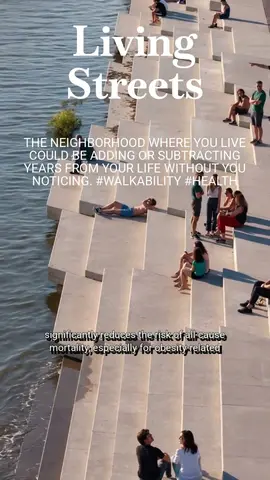
The lesson of Satterthwaite and Agyeman is that a healthier city is a fairer city, because the same interventions, universal sanitation, clean air, walkable streets, decent housing, nearby green space, reduce disease and inequality at once. Urban public health policies are not the business of hospitals but of planning, and their measure of success is the difference in life expectancy between the neighbourhood that lives longest and the one that lives least.
Frequently asked questions
What are urban public health policies?
They are the decisions about air, water, housing, transport, green space and health services that determine how long and how well a city's residents live, on the premise, established since the nineteenth-century sanitary reforms, that health is produced mostly outside the hospital.
Why is urban health a question of justice?
Because health inequalities between neighbourhoods reflect urban inequalities: settlements without sanitation concentrate child mortality, poor neighbourhoods breathe the dirtiest air and life expectancy varies by several years between neighbouring underground stations, as Satterthwaite and Agyeman show.