Le Corbusier
1887–1965
Swiss-French architect whose ideas shaped — and gave a bad name to — twentieth-century urbanism across half the world.
Le Corbusier proposed solving the industrial city with towers set apart in large green spaces, traffic segregated by level and strictly divided uses: dwelling, working, circulating and recreation, each in its place. The Athens Charter turned that scheme into international doctrine.
The built result is the main source of criticism of modern urbanism: isolated blocks with no street, no local shops and no life between buildings. He is still worth reading in full, because his diagnosis of the unhealthy nineteenth-century city was right; what failed was the solution.
Charles-Édouard Jeanneret, born in Switzerland in 1887 and later a French citizen, took the name Le Corbusier in the 1920s and became the most influential architect of the twentieth century. Vers une architecture (1923) proclaimed the house as a machine for living in; the Plan Voisin (1925) proposed demolishing central Paris to raise cruciform towers among motorways and parks, and the Ville Radieuse (1935) generalised that model: separate functions, raise density in towers, free the ground for greenery and the car. The Athens Charter, drafted after the 1933 CIAM congress and published in 1943, turned those ideas into the doctrine of postwar planning.
The Unité d'Habitation in Marseille (1952) and the capital of Chandigarh, in India, were his great built works, and the tower estates of Europe and Latin America their impoverished heirs. Jane Jacobs named him the origin of the city without streets, and James C. Scott took him as the example of the high modernism that imposes the scheme on life; the critique is fair and also incomplete, because mass postwar social housing would not have existed without his model. He died in 1965 swimming in the Mediterranean.
On Le Corbusier in this archive (4)
- Public space
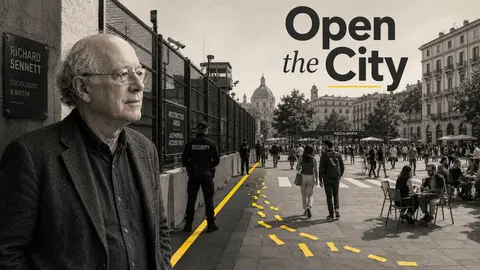
Richard Sennett's Open City: Open or Close the Public Space?
Richard Sennett defends the open city, designed for encounters with strangers, against closed enclosures. Ville and…
Richard Sennett 3 min read - Urban history
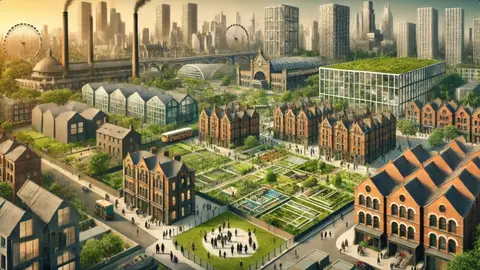
Peter Hall's Cities of Tomorrow: A History of Urban Planning
Cities of Tomorrow (1988) by Peter Hall traces the twentieth century's planning ideas, from Howard to Le Corbusier,…
Peter Hall 2 min read - Urban geopolitics
James Scott: Why the State's Grand Plans Fail
James C. Scott explains in Seeing Like a State why high modernist plans fail: legibility, Le Corbusier, Brasília…
James Scott 2 min read - Urban history
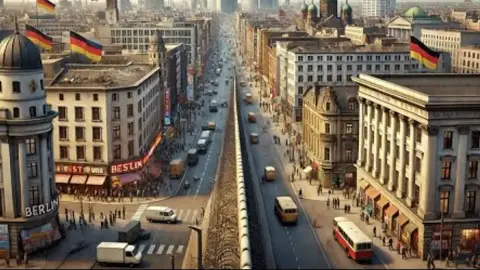
Divided Berlin: The History of a Fractured City, 1945-1989
Berlin Divided City, edited by Philip Broadbent and Sabine Hake, explains how the Cold War produced two Berlins.…
Philip Broadbent 3 min read