Key points
- Sennett: the closed city of enclosures and separated functions works well and is lived badly because it admits nothing unforeseen.
- Living borders, like Nehru Place market in Delhi, teach coexistence with difference; boundaries avoid it.
- Against Songdo and Masdar, the open city is built with incomplete forms and seeds that spread if they work.
The open city is the concept with which the sociologist Richard Sennett, a professor at the London School of Economics and in New York, defends a city designed for encounters with strangers and for the unexpected, against the closed city of controlled enclosures, separated functions and finished forms that avoid difference. Two strangers sharing a bench while a third crosses the square need not know each other, but something happens because their lives brush against one another, and Sennett places that friction at the centre of urban experience. His question, developed from The Uses of Disorder (1970) to Building and Dwelling (2018), is what we lose when we design the city to reduce uncertainty.
Ville and cité: the built city and the lived city
Sennett distinguishes the ville from the cité: the built city, streets, buildings, infrastructure, and the lived city, the practices, perceptions and relationships of those who inhabit it. Modern planning, from Haussmann to Le Corbusier and to the master plans of smart cities, has tried to make the ville determine the cité, and the result is spaces that work well and are lived badly, because they admit no unforeseen uses. The open city seeks the opposite: incomplete forms, porous edges and ambiguity that leave room for urban life to produce relationships the plan did not foresee. Open does not mean formless, but formed in a way that accepts change.
Living borders against boundaries: the market of Nehru Place
The first mechanism is the edge. Sennett distinguishes the boundary, the border that separates, from the living border, the zone of contact where two conditions mix, like the shoreline between forest and meadow where life is richest. The walls of gated compounds, shopping malls and fenced estates are boundaries; market streets, neighbourhood squares and active ground floors are borders. His example of Nehru Place in Delhi, an informal electronics market where traders, customers, street vendors and people of different castes and religions coexist, shows how a disorderly space teaches people to live with difference.
Incomplete forms and seeds against Songdo and Masdar
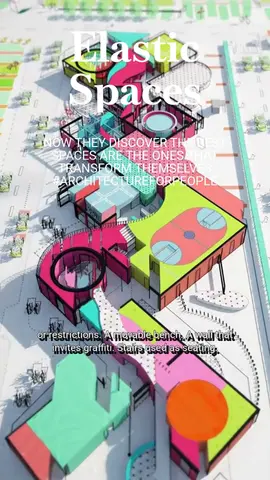
The second mechanism is the incomplete form. Sennett proposes building types that can be transformed, such as the expandable houses of incremental housing or buildings with flexible structures, and planning by seeds rather than master plan: small interventions that spread if they work. His critique targets new-build smart cities such as Songdo in Korea or Masdar in Abu Dhabi, where everything is resolved in advance and inhabitants become users of a system they cannot modify. Against that prescriptive city, he defends technology that coordinates, such as real-time transport systems, without deciding for people.
Practised tolerance: the square as a school of coexistence
The third mechanism is practised tolerance. In the square, the person waiting, the one talking and the one passing through learn to share presence with those of different rhythms and customs, and that coexistence without intimacy is, for Sennett, the school of democratic citizenship. His work with Medellín, where libraries and cable cars connected the comunas with the centre, and his reading of Jane Jacobs, whom he reproaches for preferring the neighbourhood to the metropolitan scale, show that openness requires design: steps, benches, corners and thresholds that invite people to pause beside strangers.
Sennett's lesson is that closing the city to avoid conflict also removes what makes it valuable. A city of enclosures, algorithms and separated functions produces safety and comfort at the cost of the capacity to live with the different, and that capacity is not taught in the abstract: it is practised in streets and squares where difference is present. Opening public space, with porous edges, incomplete forms and mixed uses, is how urban design contributes to a society able to live with strangers.
Frequently asked questions
What is the open city according to Richard Sennett?
It is a city designed for encounters with strangers and for the unexpected, with porous edges, incomplete forms and mixed uses that leave room for relationships the plan did not foresee, against the closed city of controlled enclosures, separated functions and finished forms that avoid difference.
What is the difference between ville and cité?
The ville is the built city, streets, buildings and infrastructure, and the cité the lived city, the practices and relationships of its inhabitants; Sennett criticises planning that tries to make the former determine the latter and proposes designing so that urban life can modify the form.