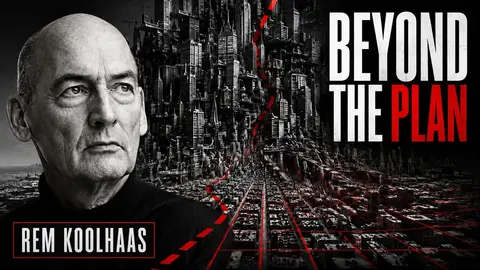
Rem Koolhaas
1944
Dutch architect and theorist who read Manhattan as a manifesto of congestion and made the generic city a subject of architecture.
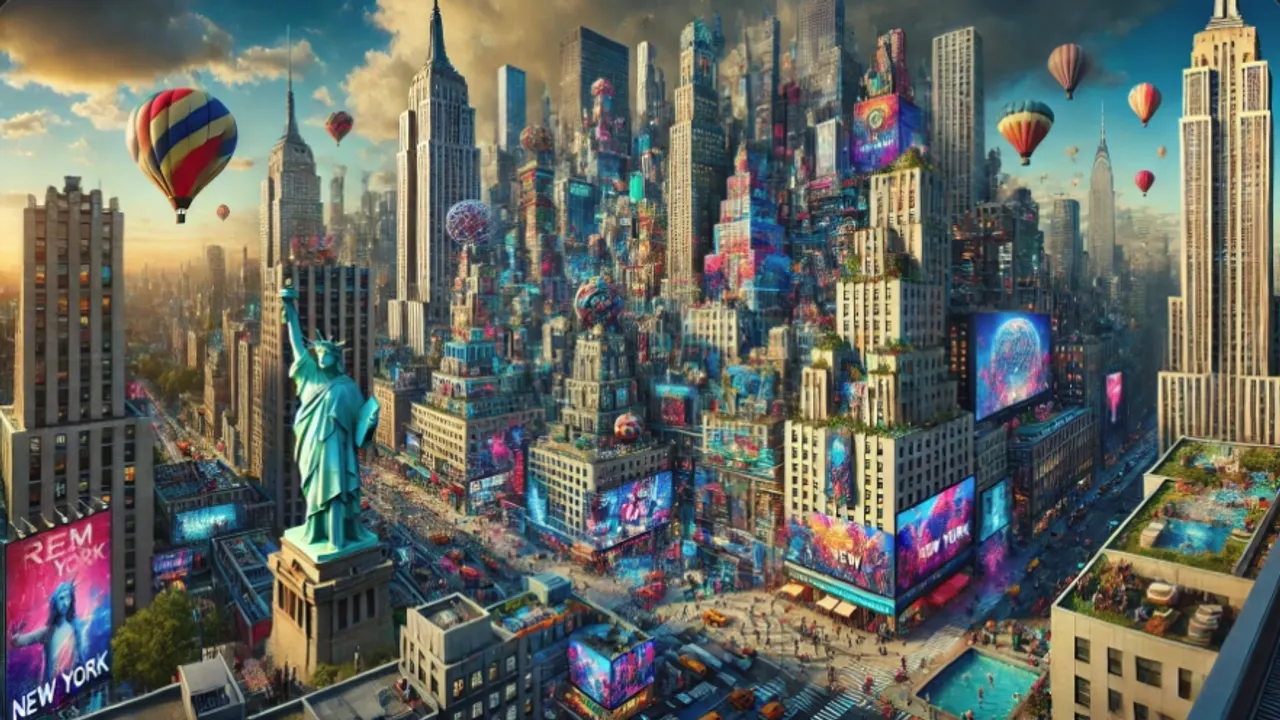
Born in Rotterdam in 1944 and raised partly in Indonesia, Koolhaas was a journalist and screenwriter before studying architecture at the Architectural Association in London, and that training explains why his written work weighs as much as his built one. Delirious New York (1978), written before he had built anything, read Manhattan as a retroactive manifesto: the grid, the skyscraper and extreme density had produced, without theory, a culture of congestion that modern European architecture had denied.
In 1975 he founded OMA, the Office for Metropolitan Architecture, with which he has built the Casa da Música in Porto, the Chinese television headquarters in Beijing, the Seattle library and the Kunsthal in Rotterdam, always with a parallel research: S,M,L,XL (1995), with Bruce Mau, fixed the concept of bigness, the scale at which the building stops responding to context, and the essay The Generic City described the Asian metropolis without identity or centre as the future Europe did not want to see. Junkspace (2002) did the same with the space of the shopping mall and the airport.
Pritzker Prize winner in 2000 and director of the 2014 Venice Biennale, devoted to the elements of architecture, Koolhaas has been accused of celebrating what he criticises, the market city, scale without limit, and of serving authoritarian regimes. His defence is that architecture must describe the world as it is before judging it; his influence on urban theory lies in having made the ordinary, generic, congested city an object worthy of thought.
Videos on Rem Koolhaas (2)
- Urban geopolitics
Rem Koolhaas: Manhattanism, Bigness and the Generic City
Rem Koolhaas explains what happens when the city grows faster than the planner's control: Manhattanism, Bigness,…
Rem Koolhaas 3 min read - Urban form
Rem Koolhaas: Delirious New York and the Culture of Congestion
Delirious New York, Rem Koolhaas's retroactive manifesto: the culture of congestion, Rockefeller Center as a city…
Rem Koolhaas 2 min read