Key points
- Manhattanism: the 1811 grid organised the ground without determining the congestion that grew within each volume.
- Bigness: beyond a certain scale the building stops conversing with the street and becomes a city.
- The Generic City, without centre or history, is what globalisation and speed produce; Koolhaas refuses to mourn it.
The uprooting of the city from the planner's control is the theme running through the theoretical work of Rem Koolhaas, the Dutch architect who founded OMA, from Delirious New York (1978) to The Generic City (1995) and Junkspace (2001): a perfectly ordered grid ends up covered by towers, traffic, crowds and programmes nobody fully controls, and the plan remains visible but the city has outgrown it. His question is what happens when the city grows faster than the traditional capacity to direct it, and his answer is not an ideal model but an urban realism that accepts density, congestion, large scale and globalisation as at once productive and problematic.
Manhattanism: the grid that admits congestion
Delirious New York formulated the first concept, Manhattanism. The grid of 1811 imposed a simple rule on Manhattan, equal blocks and numbered streets, and within that rule an extraordinary complexity grew: skyscrapers stacking unrelated uses, hotels with swimming pools on the twentieth floor, Rockefeller Center as a city within the city. Koolhaas called that phenomenon the culture of congestion and presented it as a retroactive manifesto: Manhattan had proved, without theory, that order and lack of control coexist, and that a grid can organise the ground without determining what happens in each volume.
Bigness: when the building becomes a city
The second concept is Bigness, formulated in S,M,L,XL (1995). Beyond a certain scale, Koolhaas argues, a building stops obeying the rules of architecture: its interior can no longer be read from the façade, lifts replace composition, the programme becomes autonomous from context and the building becomes a city. Bigness is at once the end of traditional urbanism, because those containers do not converse with the street, and the only way to operate in a city that can no longer be controlled block by block. His buildings, from the Seattle library to the headquarters of Chinese television in Beijing, apply that idea.
The Generic City and Junkspace
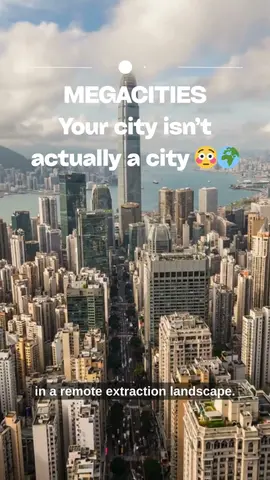
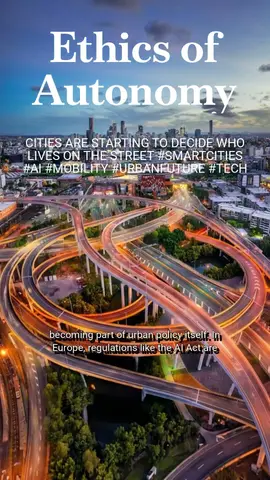
The third concept is the Generic City. In his 1995 essay, Koolhaas described the cities of Southeast Asia, the Middle East and peripheries everywhere as cities without identity, without centre, without history, made of interchangeable airports, highways, towers and shopping malls, and refused to mourn them: the Generic City is what globalisation and speed produce, and nostalgia for the European historic centre does not help to understand it. Junkspace carried the diagnosis indoors: the continuum of air conditioning, escalators and false ceilings that is now the planet's dominant space.
Pearl River Delta and Lagos: the Project on the City and its critics
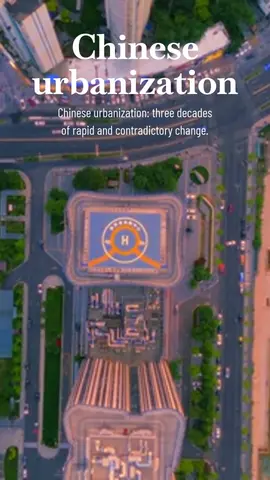
His research at Harvard, with the Project on the City, applied that gaze to China's Pearl River Delta and to Lagos. In the delta he documented an urbanization without recognisable planning, made of special economic zones, factories and towers at unprecedented speed; in Lagos he read the apparent chaos as a self-organising system of enormous efficiency. That second reading earned him harsh criticism for aestheticising poverty and omitting the power and inequality that produce those cities, an objection he has partly accepted.
Koolhaas's lesson for planning is uncomfortable and useful at once. Uncomfortable because it renounces the promise of control: the contemporary city is a continuous construction where economy, mobility, architecture and uses combine in unforeseen ways, and the plan operates within forces that exceed it. Useful because it forces us to look at the real city, that of containers, peripheries and congestion, rather than the ideal one, and to ask what design can do once it can no longer dominate. His answer, Bigness, is debatable; his diagnosis of uprooting remains the starting point.
Frequently asked questions
What is Manhattanism according to Rem Koolhaas?
It is the culture of congestion that Delirious New York (1978) discovered in Manhattan: a simple grid of equal blocks within which skyscrapers stacking unrelated uses grew, proving that order and lack of control coexist and that the plan organises the ground without determining what happens in each volume.
What is the Generic City?
It is the concept with which Koolhaas described in 1995 the cities without identity, centre or history, made of interchangeable airports, highways, towers and shopping malls, that globalisation and speed produce in Asia, the Middle East and peripheries worldwide, and that nostalgia for the European historic centre cannot explain.