Sabine Hake
desde 1985
Historian of German culture who read the architecture of Weimar Berlin as a device for producing a new social class: the salaried employees.
Topographies of Class (2008) is her most important book for anyone studying cities. Hake argues that the modern architecture of 1920s Berlin — department stores, offices, cinemas, housing estates — did not merely accommodate the new class of white-collar employees: it helped manufacture it, giving it the settings, rhythms and images through which it learned to recognise itself.
Her method is to read together what is almost never read together: the building, the press photograph, the popular novel, the advertisement and the film. Out of that combination comes a picture of urban modernity very different from the one architectural histories offer, because it includes the people who used the buildings and not only those who designed them.
A historian of German culture born in Germany and based in the United States, Hake holds the Texas Chair of German Literature and Culture at the University of Texas at Austin. She is one of the world's leading specialists in German cinema, author of German National Cinema (2002), the standard textbook, and of studies on Weimar and Third Reich film.
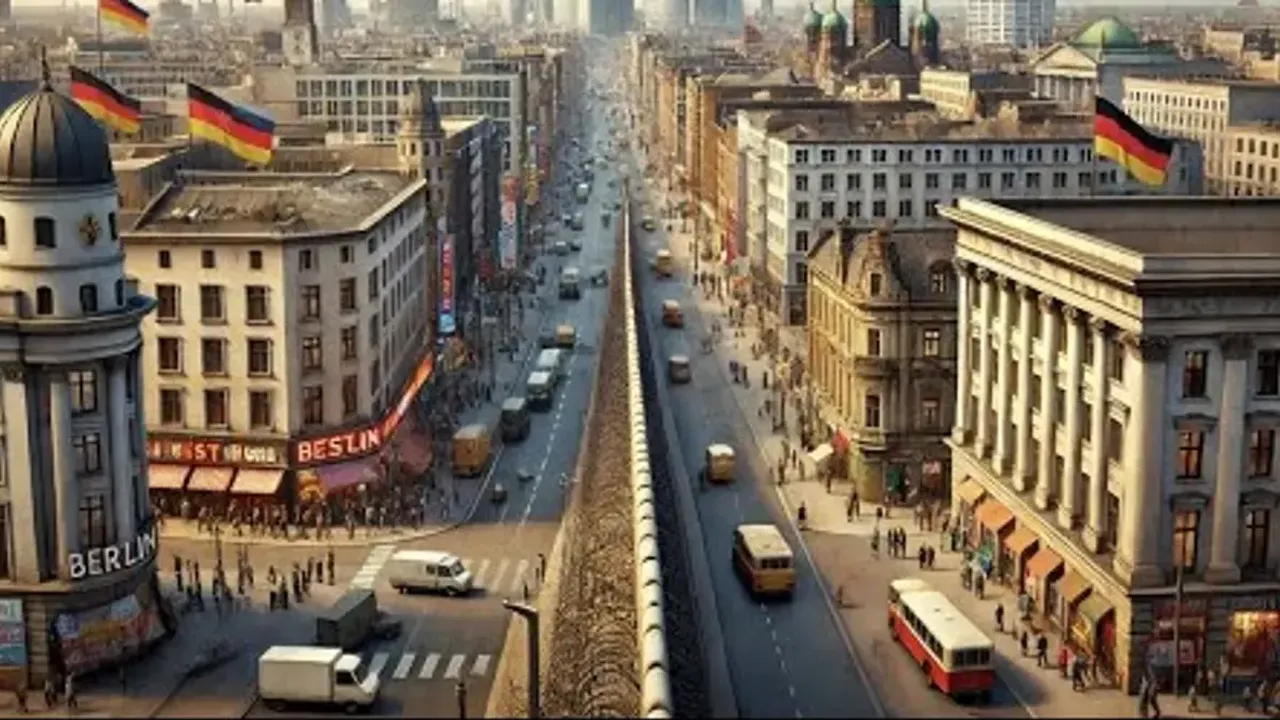
With Philip Broadbent she edited Berlin Divided City, 1945-1989 (2010), on the memory and representation of the partitioned city. Her work matters to urbanism for a concrete reason: it shows that built forms and the images circulating about them are not two separate things, and that you cannot understand a district without knowing how its inhabitants told it to themselves.
On Sabine Hake in this archive (1)
- Urban history
Divided Berlin: The History of a Fractured City, 1945-1989
Berlin Divided City, edited by Philip Broadbent and Sabine Hake, explains how the Cold War produced two Berlins.…
Philip Broadbent 3 min read