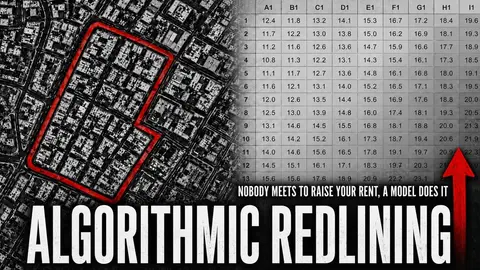
Housing financialisation is the process by which a home stops being valued mainly for what it does, which is house people, and starts being valued mainly for what it yields. Once that happens, the price of a flat stops depending on local wages and starts depending on interest rates, on the returns funds require, and on what similar assets fetch in Berlin or Toronto. It is why rents rise in cities where neither population nor employment has grown.
This guide explains how it happened, who the actors buying housing at industrial scale are, what measurable effects it has on rents and residential stability, what happens in the cities capital does not enter, and what governments that have tried to slow it down have attempted, with their results and their failures.
What financialising housing means
A home has always had two values at once: use value, which is shelter, an address, a school and neighbours, and exchange value, which is what it can fetch when sold or let. To financialise is for the second to systematically rule the first, not in an isolated deal but in the normal working of the market.
The Dutch geographer Manuel Aalbers, who gave the field its most used definition in The Financialization of Housing (2016), describes it as the increasing weight of financial markets, financial actors and financial logic in the provision of housing. The decisive change is one of scale and distance: whoever sets your rent may never have set foot in your city, and their criterion is not what your neighbours can pay but what capital yields in other asset classes.
The practical consequence is that housing behaves like a traded commodity. It rises when money is cheap, even where flats sit empty; it can keep rising while household incomes fall; and it responds to events with nothing to do with the neighbourhood, such as a central bank decision or a flight to safety against inflation.
How it happened: from housing policy to capital markets
The starting point is the 1980s. Western states cut public housebuilding and replaced it with access to credit: instead of building homes, they made mortgages easier. Britain sold off its council stock through right to buy, Spain dismantled protected renting almost entirely, and the United States turned mortgage credit into an instrument of social policy.
The second step was technical and decisive: securitisation. A bank that issues a thousand mortgages can package them and sell the right to collect on them to an investor anywhere in the world. The bank gets its money back instantly and can lend again, and global savings enter a market that used to be local. Between 1990 and 2007 that mechanism flooded land and construction with credit across half the planet.
The 2008 crisis did not reverse the process: it deepened it. Millions of foreclosed homes came onto the market very cheaply and with almost free financing, and those able to buy at scale were funds, not families. What in 1985 was a market of individual owners and small landlords came to include owners of tens of thousands of homes.
Who is buying: funds, REITs and automated landlords
The characteristic actor is the real estate investment fund. In the United States, Invitation Homes, created by Blackstone out of foreclosures, came to own tens of thousands of single-family rental homes. In Germany, Vonovia and Deutsche Wohnen concentrated hundreds of thousands of flats, largely from the sale of municipal stock. In Spain, socimis, listed vehicles with tax advantages created in 2009 and reformed in 2012, perform a similar function.
Their way of operating differs from the traditional landlord in three respects. They buy in bulk, so a single purchaser can change the terms of a whole district. They manage through software: the geographer Desiree Fields has studied what she calls the automated landlord, in which pricing, tenant selection, late fees and the start of eviction are decided by a system following identical rules in every city. And they answer to investors who demand a specific annual return, which turns each rent increase into a contractual obligation rather than a personal decision.
To this are added less visible forms: land bought by pension funds, build-to-rent developed expressly for investors, flats bought as a store of value in safe cities and left empty, and the conversion of housing into tourist accommodation, which is financialisation in its most literal form, because it turns residential use into a daily income stream.
What effects it has, and on whom
The most studied effect is on price and stability. Research on large institutional owners in the United States consistently finds somewhat higher rents, more service fees and a markedly higher probability of eviction than with small landlords, even comparing similar homes in the same neighbourhoods. The explanation is not malice but procedure: where a small landlord negotiates over a late payment, an automated system applies the rule.
The second effect is the disconnection between price and the local economy. Raquel Rolnik, the Brazilian architect who was UN special rapporteur on the right to housing from 2008 to 2014, documented in Urban Warfare (2015) how the same mechanisms produce displacement in São Paulo, New York, Johannesburg and Barcelona despite very different economies and cultures. When capital sets the price, what local people earn stops being the limit.
The third effect is political and less discussed. Saskia Sassen called it expulsion: it is not only that housing is expensive, but that entire households leave the market and the city, and with them goes the possibility of complaint, because those who have gone no longer vote or organise there. Financialisation empties out conflict by moving it away.
The reverse: cities capital does not enter
Attention concentrates on expensive cities, but the same process produces its opposite. In shrinking cities, those losing population and industry, capital does not compete for land: prices fall, the stock ages, owners stop investing in maintenance because they will not recover it, and the council loses its tax base exactly when it most needs social spending.
Detroit, Leipzig before 2000, Liverpool, the cities of inland Spain and those of the former East Germany are the usual cases. What has worked best has not been waiting for the market to return but selective demolition with rehousing and an orderly shrinking of the urban perimeter, concentrating population and services in a smaller, more sustainable city. Leipzig is the most studied example.
It is worth seeing both phenomena together, because they are the same logic: capital seeks returns and concentrates where it finds them, leaving scarcity in some places and abandonment in others. A housing policy that looks only at Madrid or Barcelona does not understand the problem of Zamora, and the other way round.
What has been tried and what happened
Rent control is the most debated measure. The available evidence is nuanced: second-generation regulation, which caps increases within a tenancy but allows adjustment between tenants, effectively protects those already living there, and its long-run effect on supply depends greatly on how it is designed. Berlin's rent cap, the Mietendeckel of 2020, was struck down in April 2021 by the Federal Constitutional Court on jurisdictional rather than substantive grounds, and Catalonia's 2020 cap met a similar fate in 2022.
The route with the best sustained results is having enough public stock. Vienna houses more than half its population in municipal or subsidised housing, so the public sector does not regulate the market from outside: it is the market. That model cannot be improvised, it was built over a century, but it explains why rents in Vienna have not followed the curve of other European capitals.
There are also measures aimed specifically at financial purchase: the tax on non-resident buyers in Vancouver and New Zealand, the municipal right of first refusal allowing a council to buy a building at the offered price, limits on tourist letting, and surcharges on empty homes. Berlin's 2021 referendum to expropriate large landlords was won by the yes vote with more than 56%, though it was non-binding and has not been implemented.
How to recognise it in your city
There are fairly reliable signs. The first is a divergence between house prices and local average wages sustained over years: if both rise together, the market is tight; if price pulls away, money is coming from outside. The second is the appearance of branded rental listings, with a standard contract, a centralised service line and zero room to negotiate.
The third is concentrated ownership: in many countries the land registry lets you check how many properties on a street belong to the same company. The fourth is empty housing in expensive areas, which only makes sense if the asset was bought to hold value rather than to let. And the fifth is turnover: financialised neighbourhoods show far higher residential mobility, because contracts are short and increases push people to move.
None of this makes financialisation inevitable or a conspiracy. It is the result of specific and reversible decisions about taxation, about what can be securitised, about how much public housing is built and about what rights a tenant has. Brett Christophers has insisted that the problem is not that capital exists, but that housing has been allowed to become the most profitable and least risky asset in the system.
Frequently asked questions
- What is housing financialisation?
- The process by which housing comes to be valued mainly as a financial asset rather than as a place to live. Its defining feature is that price stops depending on the local economy and starts depending on interest rates and the returns investors require.
- Why do rents rise when population does not?
- Because price is no longer set by the balance between residents and flats but by the return the owner can obtain. If capital demands a given annual yield and financing is cheap, rents rise even where local demand is flat.
- Does rent control work?
- Regulation capping increases within a tenancy protects existing residents and does that job well. General price caps have had mixed results and were struck down by the courts in Berlin and Catalonia. No regulation substitutes for having enough public housing.
- What is a socimi?
- A Spanish listed real estate investment company, created in 2009 and reformed in 2012, which pays 0% corporation tax in exchange for distributing most of its profit as dividends. It is the vehicle through which institutional capital entered Spanish rental housing.
- Which city has resisted it best?
- Vienna, for a structural reason: more than half its residents live in municipal or subsidised housing, so the public sector does not compete with the market, it sets it. That is the result of a century of continuous policy, not of a single measure.