Key points
- Gago shows that neoliberalism survives as a way of life in popular economies, not only as elite policy.
- La Salada and the textile workshops combine exploitation with a promise of progress: that ambivalence is the key.
- Neither pure resistance nor passive victims: popular sectors calculate and negotiate with the dominant logic.
Neoliberalism from below is the concept with which the Argentine philosopher Verónica Gago explains how neoliberal logic is not only imposed by governments, banks and international agencies but is also reproduced in the everyday practices of the popular sectors that survive at the margins of the formal economy. She develops it in La razón neoliberal (2014), translated as Neoliberalism from Below: Popular Pragmatics and Baroque Economies (2017), through a study of La Salada, the largest informal market in Latin America, on the outskirts of Buenos Aires, and of the clandestine textile workshops that supply it.
La Salada and the textile workshops as a laboratory
La Salada occupies former swimming pools and railway land in Lomas de Zamora and draws tens of thousands of buyers every week from across the country and neighbouring states. It sells clothing made in home workshops, many staffed by Bolivian migrants under conditions of debt bondage, and copies of global brands. Gago reads it neither as an anomaly nor as mere criminal economy but as a way of calculating, risking and enterprising that matches neoliberal rationality point by point: every stall is a micro-enterprise, every family an investment unit, every working day a calculation of costs and opportunities.
Vitalist pragmatics: neoliberalism as a way of life
Gago's thesis is that neoliberalism survived in Argentina the crisis of 2001 and the governments that claimed to have buried it because it had settled in as a way of life. She calls it a vitalist pragmatics: a way of inhabiting precarity that turns the absence of rights into business opportunity and exploitation into a promise of progress. The textile workshops exploit, but they also allow migrants to save and open their own workshop; the market precarises, but it gives income to people the formal market rejects. That ambivalence is what heroic or condemnatory readings of the popular economy fail to see.
Baroque economies and women's work
Gago describes these economies as baroque, in the sense that they mix logics that theory keeps apart: business calculation with community reciprocity, exploitation with the promise of upward mobility, festivity with piecework, legal with illegal. In that mix, she says, forms of organisation are invented that the state does not recognise and the formal market cannot replicate: informal credit systems, self-organised transport, care networks that sustain twelve-hour shifts. Women hold up much of that infrastructure, a question Gago would later develop in Feminist International (2020).
What neoliberalism from below changes in urban studies
The concept has marked Latin American urban studies because it breaks with two comfortable narratives. The first, that of pure resistance, presents the popular sectors as opposed by nature to neoliberalism. The second, that of the passive victim, sees them only as the excluded waiting for the state to integrate them. Gago shows subjects who negotiate, calculate and appropriate the dominant logic in order to survive, and warns that any policy that ignores that capacity for agency, whether repressive or welfarist, will fail.
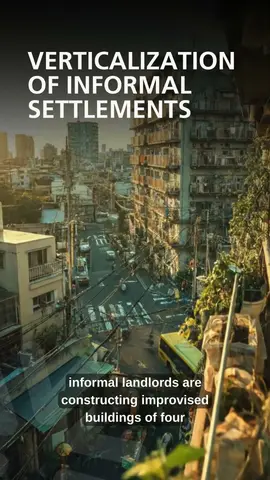
For the city, neoliberalism from below explains why informal markets, self-built settlements and platform economies grow alongside formalisation policies, and why it is not enough either to prosecute them or to romanticise them. Recognising that there is work, investment and organisation there, and contesting their conditions, labour rights, credit, public space, is the path Gago's work opens for thinking about a popular economy with rights rather than a popular economy without them.
Frequently asked questions
What is neoliberalism from below?
It is Verónica Gago's concept for how neoliberal rationality, calculation, risk, individual enterprise, is reproduced in the everyday practices of popular sectors surviving in the informal economy, and not only in the policies of governments and markets.
What is La Salada and why does Gago study it?
It is the largest informal market in Latin America, in Lomas de Zamora, Buenos Aires, supplied by clandestine textile workshops; Gago uses it as a laboratory to show how exploitation, reciprocity and the promise of mobility coexist in the popular economy.