Key points
- Batty: the city is a process emerging from the bottom up, not a finished object designed from the top down.
- Urban fabrics are fractal and city sizes follow Zipf's law: traces of millions of adjusted decisions.
- Models do not predict exactly; they are thought experiments that isolate mechanisms and anticipate unintended effects.
Models reveal the hidden essence of cities because they let us see what no static plan shows: streets that fill and empty, activities that change place, millions of decisions that produce recognisable patterns. Michael Batty, a geographer and director of the Centre for Advanced Spatial Analysis at University College London, has spent five decades building those models, and in Cities and Complexity (2005), The New Science of Cities (2013) and Inventing Future Cities (2018) formulated his thesis: the city is not a finished object but a process, a complex system of flows, networks and relations that emerges from the bottom up, and to understand it one must simulate how simple interactions, repeated millions of times, generate urban form.
Emergence: Zipf, densities and fractal cities
The mechanism is emergence. A person chooses a route, an activity occupies a location, other movements respond, and over time those relations modify flows and forms without any central action controlling the whole. Batty shows that cities share regularities that betray that process: the distribution of city sizes follows Zipf's law, densities decline from the centre in predictable shapes, and urban fabrics are fractal, with the same branching structure at the scale of block, neighbourhood and region, as he documented in Fractal Cities (1994) with Paul Longley. Nobody designed those regularities: they are the trace of millions of decisions adjusting to one another.
The laboratory: spatial interaction, cellular automata and agents
Models are the laboratory. Batty developed spatial interaction models, which distribute trips and locations according to distances and attractions; cellular automata, which simulate how land changes use according to its neighbours; and agent-based models, in which thousands of simulated individuals choose where to live, work or shop. None reproduces every detail of the city; they build simplified versions to examine which rules produce which patterns, change conditions and observe consequences. Their value, he insists, lies not in predicting exactly but in working as thought experiments that isolate mechanisms impossible to isolate in the real city.
Networks, flows and scaling laws: The New Science of Cities
The New Science of Cities adds networks and flows. Batty proposes studying the city not through its places but through its relations: the networks of streets, transport, communications and transactions, and the flows of people, goods and information that run through them, with tools from network science and big data from travel cards, phones and sensors. His work with Luís Bettencourt and Geoffrey West on scaling laws showed that when population doubles, cities more than proportionally multiply their output, patents and also their crime, while needing less infrastructure per resident, regularities that explain why agglomeration attracts.
Limits of models and what they bring to planning
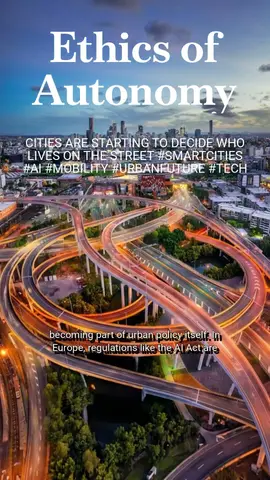
Criticism points at the limits. Models depend on the data available and the rules they are given, and can reproduce the biases of both; simulating the city as a physical system leaves out power, conflict and institutions, which decide who can choose where to live; and scaling laws describe averages that hide internal inequalities. Batty accepts those objections and replies that models do not replace politics but inform it, and that planning that ignores how complex systems behave produces unintended effects, as the motorways that generate the traffic they were meant to relieve show.
Batty's lesson is that the city is better understood as process than as plan, and that models are the way to see that process. For planning, that means designing rules and conditions rather than final forms, anticipating how millions of decisions will respond to each intervention and accepting that total control is impossible. The hidden essence of cities, his work suggests, is that they make themselves from below, and planning is learning to intervene in a system that never stops moving.
Frequently asked questions
What does Michael Batty argue about cities?
That they are complex systems of flows, networks and relations emerging from simple interactions repeated millions of times, with regularities such as Zipf's law, declining densities and fractal fabrics that nobody designed, and that understanding them requires simulating them with spatial interaction, cellular automata and agent-based models.
What are urban models for if they do not predict exactly?
They work as conceptual laboratories: they build simplified versions of the city to examine which rules produce which patterns, change conditions and anticipate how millions of decisions will respond to an intervention, avoiding unintended effects such as motorways that generate the traffic they were meant to relieve.