Key points
- Neoliberalism turned housing and transport into commodities before they were ever treated as rights.
- The right to the city is not physical access but power over decisions.
- Housing protests and occupations are claims to collective control over urban space.
The right to the city, as David Harvey understands it, is the collective right to decide how the city is produced and transformed, not merely the right to live in it. Harvey, a British geographer and one of the central figures of critical urban studies, takes the term Henri Lefebvre coined in 1968 and turns it into a tool for reading contemporary urban struggles. His book Rebel Cities (2012) is the starting point: there he explains why the city has become the main arena of conflict between capital and people's lives, and what citizens can do about it.
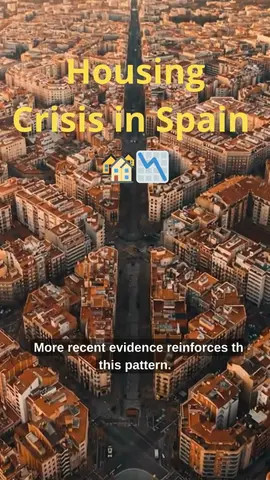
To understand his proposal one has to begin with his critique of neoliberalism. Harvey describes it as a system that privatises common goods and shrinks the state's role in providing public services. Carried into the city, that means housing, transport and land treated as commodities, real estate speculation, and urban development oriented towards private profit rather than the needs of the majority. The result, documented in dozens of cities, is greater inequality and the displacement of low-income communities, pushed out of their neighbourhoods when the cost of living there rises.
What the right to the city means
The right to the city is not reducible to physical access to its streets and services. Harvey defines it as the capacity to take part in producing and transforming the urban environment: deciding what gets built, for whom and with whose money. His diagnosis is that this control has been monopolised by economic and political elites, while most of the population is left out of the decisions that shape its daily life. To claim the right to the city is therefore to demand that urban planning be democratised and that the city become once again a space of inclusion and social justice.
This is why social justice is, for Harvey, an essential component of urbanism rather than an add-on. The modern city is a field of conflict between the interests of capital and the needs of those who inhabit it, and neoliberal policies have settled that conflict in favour of economic gain, producing deep divisions between social groups. Harvey calls for rethinking urban policy from the standpoint of justice: collective interests should prevail over private ones, and access to urban resources and services should be equitable. It is the question he was already asking in Social Justice and the City (1973): who wins and who loses with every decision about space.
Urban struggles as resistance
Urban struggles sit at the heart of Rebel Cities. Harvey reads protests for the right to housing, the occupation of squares and neighbourhood movements as expressions of discontent with the commodification of the city, and he considers them decisive for building a more democratic and equitable one. By defending their right to the city, citizens do not only challenge the neoliberal order: they discover their collective power to transform urban space. That power exists, Harvey insists, because the city concentrates the people who produce it every day — workers, neighbours, carers — and that concentration is also a capacity to organise.
Harvey remains relevant because his question is still open. Every rent increase, every neighbourhood turned into a tourist product and every privatised square repeats the mechanism he describes: capital reorganises the city and the city answers back. His work invites us to read those decisions for what they are — decisions, not natural laws — and to fight for a city in which people, and not capital, sit at the centre of the debate.
Frequently asked questions
What is the right to the city according to David Harvey?
For Harvey it is not simple physical access to the city, but the capacity of citizens to actively participate in producing and transforming the urban environment.
How does neoliberalism affect cities?
It promotes the privatization of common goods and commodifies housing and transport, favouring real estate speculation and displacing low-income communities from their neighbourhoods.