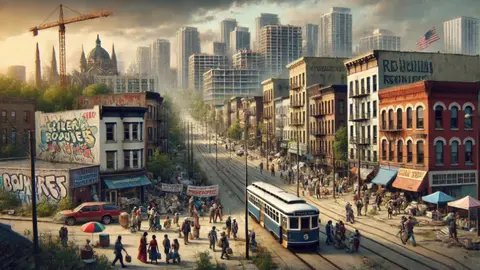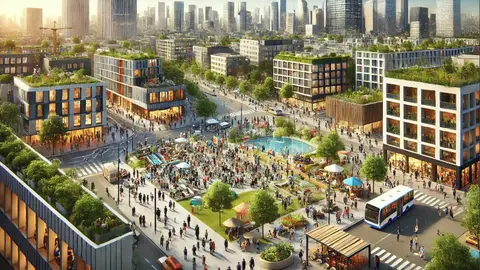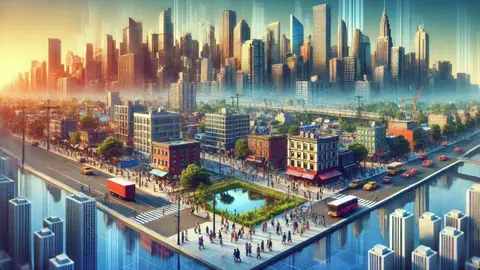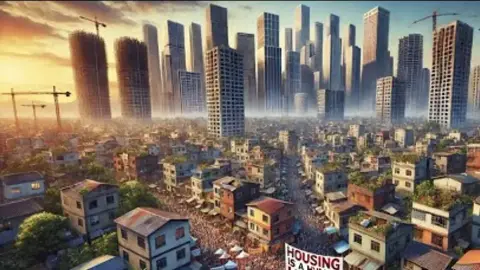
Gentrification is the process by which a low-income neighbourhood receives investment and new, higher-income residents, its prices rise and its original inhabitants end up displaced. The word was coined by the sociologist Ruth Glass in 1964 to describe what she saw in Islington, London, and sixty years later it names one of the most widespread urban conflicts in the world, from Brooklyn to Lavapiés, from Kreuzberg to Roma Norte in Mexico City.
This guide gathers what urban research knows about the phenomenon: how it is defined, which economic mechanism produces it, what types exist, what effects it has on those who leave and those who stay, and what the cities that have tried to stop it have done. At the end it links the channel's videos on each aspect, more than sixty pieces on gentrification, evictions, touristification and speculation.
What gentrification is: Ruth Glass's definition and what came after
Ruth Glass, a German-born sociologist who fled to London and founded the Centre for Urban Studies at University College, wrote in the introduction to London: Aspects of Change (1964) that the middle classes were invading London's working-class districts one after another, buying the shabby Victorian houses, renovating them and pushing out their occupants until the social character of the district changed completely. She called the process gentrification, after the gentry, the small rural nobility of England, with an irony that has been lost in translation.
Glass's definition had three elements that remain the core of the concept: a change in the social composition of the neighbourhood toward higher incomes, reinvestment in the built stock and the displacement of previous residents. What has changed since then is the scale and the actors. The gentrification of Islington was done by families buying a house; today's is done by investment funds, developers, short-term rental platforms and, often, public administrations that call it regeneration.
Loretta Lees, Tom Slater and Elvin Wyly, authors of the textbook Gentrification (2008), propose understanding it as a class process: the transformation of a working-class space into a middle-class space, whatever form it takes. That broad definition makes it possible to recognise the phenomenon in the rehabilitation of a historic centre, in the replacement of a social housing estate by market-rate developments or in the conversion of a port district into a financial district.
Why it happens: Neil Smith's rent gap versus the explanation by taste
During the 1970s gentrification was explained by demand: young professionals who preferred to live in the centre, valued old architecture and rejected their parents' suburb. David Ley, a Vancouver geographer, developed that cultural reading, and it remains partly true. But taste does not explain why capital arrives in a particular neighbourhood at a particular moment, nor why gentrification has spread to cities where there is no new middle class demanding it.
Neil Smith gave the supply-side explanation in 1979, at twenty-five, in an article that remains the most cited in the field: the rent gap theory. Every piece of land yields a rent under its current use and could yield another, larger one under its best possible use; when a neighbourhood is disinvested for decades, the actual rent falls while the potential rent holds or rises, and a moment comes when the difference is so large that reinvesting becomes profitable. Then capital returns, renovates, replaces and captures the gap. Prior disinvestment is no accident: it is the condition of later gentrification.
The two explanations are not exclusive. The rent gap says when a neighbourhood is gentrifiable; cultural demand, urban policy and marketing say which one is gentrified first and with what story. What Smith added later, in The New Urban Frontier (1996), is the political dimension: the revanchist city that reconquers central neighbourhoods by expelling the poor, the homeless and minorities through policing and the cleansing of public space, and that presents gentrification as a frontier to be civilised.
Types of gentrification: residential, commercial, tourist, green and new-build
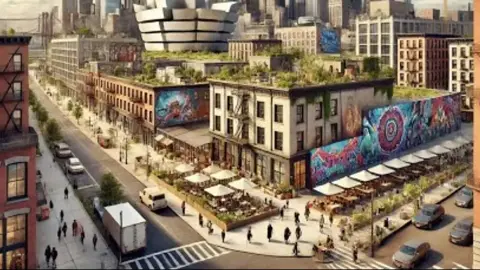
Classic gentrification is residential: higher-income households replace the previous ones in the same housing stock. But research has identified variants that work by their own logic. Commercial gentrification replaces local shops, the hardware store, the grocer, the old bar, with speciality cafés, design stores and restaurants for visitors, and expels residents through services before rents: the neighbourhood stops serving them even if they still live in it.
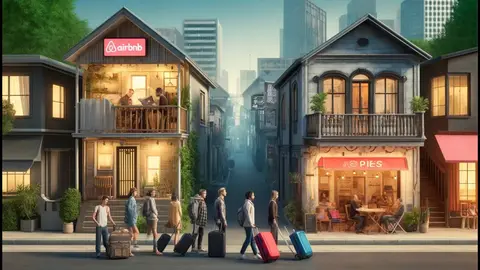
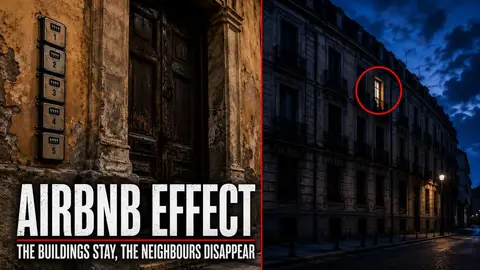
Touristification is the variant that has grown most in the last decade. Short-term tourist rental yields two or three times more than residential rental, so owners switch use, rental supply shrinks and prices rise for everyone; studies of Barcelona, Lisbon or Venice show historic centres losing population while multiplying tourist beds. David Wachsmuth and Alexander Weisler described it in 2018 as a rent gap opened by the platforms.
Green gentrification happens when a park, a restored river corridor or a renaturalised waterfront raises the value of its surroundings and expels those who lived next to the degraded space; New York's High Line is the most cited case, and Isabelle Anguelovski has documented it in dozens of cities. New-build gentrification, studied by Mark Davidson and Loretta Lees along the London Thames, builds luxury developments on industrial land or demolished estates and changes the social composition of the neighbourhood without renovating a single old home. And state-led gentrification, common in Asia and Latin America, is carried out by governments and large developers through renewal plans, not by middle-class pioneers.
What effects it has: direct, indirect and exclusionary displacement
The central effect is displacement, and Peter Marcuse proposed in 1985 the typology still used to measure it. Direct displacement is the eviction, the non-renewal of the lease or the rise that forces a move. Pressure displacement is slower: residents leave when the shops, services and networks that made the neighbourhood liveable disappear. And exclusionary displacement is invisible because nobody is seen leaving: it is the households that can no longer move into a neighbourhood where they would once have lived.
Quantitative studies debate how much direct displacement gentrification produces, and some, such as Lance Freeman's in New York, found exit rates not much higher than in non-gentrifying neighbourhoods. Critics reply that those studies do not measure pressure or exclusion, and that for the families affected the difference between leaving because of an eviction or because they cannot afford the new supermarket is small. What nobody disputes is the rise in rents and the loss of affordable housing in gentrified neighbourhoods.
There are also effects on those who stay: the loss of local shops, the replacement of neighbourhood networks by a rotating population, the feeling of being a foreigner on one's own street that residents of touristified historic centres describe, and a loss of local political power when new residents have other priorities. And effects on the whole city: the gentrification of centres pushes poverty toward peripheries with worse transport and services, and inequality, instead of shrinking, changes map.
Cases: Barcelona, Berlin, New York, Mexico City and Lisbon
Barcelona shows tourist gentrification in its purest form. The Gothic Quarter and Barceloneta lost thousands of residents while tourist rental beds outnumbered neighbours on some blocks; the city froze licences in 2014, approved a land-use plan banning new accommodation in the centre and announced in 2024 that it will renew none of its ten thousand licences from 2028. Residents, meanwhile, protested with water pistols against tourists in the summer of 2024.
Berlin lived through the fastest gentrification in Europe after reunification: the eastern districts and Kreuzberg, cheap and empty in the 1990s, attracted artists, students and then capital, and rents doubled between 2010 and 2020. The city responded with Milieuschutz, the protection of the social composition of whole neighbourhoods, with a rent cap in 2020 that the Constitutional Court struck down in 2021, and with a referendum that same year in which 56 % voted to expropriate the big landlords. No single measure has been enough on its own.
New York is the original laboratory: the SoHo Sharon Zukin described in Loft Living (1982), Harlem, Williamsburg and the Lower East Side of Smith's revanchist city. Mexico City has seen in the last decade how Roma Norte and Condesa became neighbourhoods of digital nomads paying in dollars, with resident protests in 2025. And Lisbon, after the 2011 crisis, combined golden visas, tourist rental and a law that liberalised old leases to produce in ten years one of the fastest price rises in Europe, until the government suspended new tourist licences in 2023.
How to stop it: what works and what does not
Gentrification is not stopped by preventing a neighbourhood from improving, but by separating improvement from displacement. The policies with the best results act on housing: a public and affordable rental stock large enough to set a reference price, as in Vienna, where more than half the population lives in public or limited-profit housing and gentrification exists but does not expel; rent regulation with protection against eviction; and community land trusts, which take homes off the market for good.
On tourist rental cities have learned fast: night limits, such as Amsterdam's thirty a year; mandatory registration and bans in strained areas; and the obligation for platforms to share data, approved by the European Union in 2024, without which no rule can be enforced. Against commercial gentrification, protection of historic shops, regulated commercial rents and municipal markets as neighbourhood anchors work.
What does not work, or works in reverse, is equally documented: social mix as an excuse to demolish public housing and replace it with mixed developments to which a minority of the former residents return, as Lawrence Vale studied in Chicago and Atlanta; regeneration based on a cultural icon or creative district without housing protection; and the talent-attraction policies Jamie Peck called fast policy. The rule that comes out of the research is simple to state and hard to apply: every public investment in a neighbourhood should come with a permanence measure of equal size.
How to tell whether your neighbourhood is gentrifying
There are early signs researchers use and anyone can observe. In housing: whole-building renovations, luxury estate agents' signs where there used to be handwritten ones, leases that are not renewed and flats appearing on short-term rental platforms. In retail: closures of long-standing shops replaced by businesses aimed at visitors or high incomes, and a rise in commercial rents that precedes the rise in residential ones.
In public data: the average rent by neighbourhood, which many cities publish, the median income by census tract, the share of tourist housing and the evolution of the residents' register. A neighbourhood where prices rise and registered population falls is emptying of residents, and one where median income rises without wages rising is changing inhabitants. And on the street: the neighbourhood starts appearing in lists of the trendiest, in guides and in features, a narrative that usually precedes investment by a few years.
No single sign proves anything, but several together do. And research shows that the moment to act is before, when the rent gap is opening and land is still cheap for the administration, not after, when every measure costs twice as much and reaches fewer people.
Frequently asked questions
- What is the difference between gentrification and touristification?
- Touristification is a form of gentrification in which residents are replaced by temporary visitors and local shops by tourist services; it shares the mechanism, the rent gap opened by short-term rental, but it is faster and easier to regulate, because it depends on licences and night limits the city government decides.
- Is gentrification always bad?
- The improvement of a neighbourhood is not bad; the displacement of those who lived there is. Research distinguishes between regeneration with permanence, when investment comes with affordable housing and protection for residents, and gentrification, when improvement is financed by expulsion. The difference lies in the policies that accompany it.
- Who coined the term gentrification?
- The sociologist Ruth Glass, in the introduction to London: Aspects of Change (1964), to describe how the middle class bought and renovated the Victorian houses of Islington and other working-class districts of London until their residents were pushed out.
- What is the rent gap?
- Neil Smith's theory (1979) according to which gentrification happens when the difference between the rent a plot of land yields under its current use and the rent it could yield under its best possible use becomes so large that reinvesting in the disinvested neighbourhood is profitable for capital.
- Which policies stop gentrification?
- Those that separate improvement from displacement: public and affordable rental stock at sufficient scale, rent regulation with protection against eviction, community land trusts, limits and registration for tourist rental, protection of local shops and the rule of accompanying every public investment in a neighbourhood with a permanence measure.