Key points
- Wu: land, tax and housing reforms look like state retreat but were institutional decisions defining how markets operate.
- State entrepreneurialism: municipalities act as developers but use market tools to pursue the state's own goals.
- Neoliberalisation hides the persistence and transformation of a state that has grown more capable, not less.
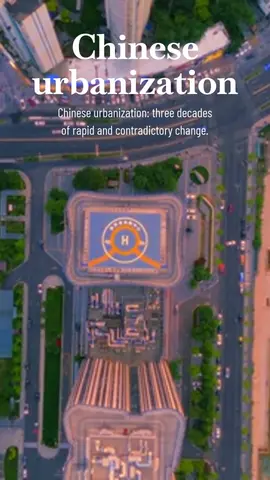
The Chinese state continues to lead urban transformation amid reform is the thesis of the geographer Fulong Wu, professor of planning at University College London, who in books such as China's Emerging Cities (2007), Planning for Growth (2015) and Creating Chinese Urbanism (2022) explained how the shift from state socialism to a socialist market economy changed the production of Chinese cities without removing the state from the centre. A crane lifts a tower above land whose value, use and future depend on political decisions, and the scene looks like a victory for the market; Wu's uncomfortable question is what happens when markets expand while the state still organises the conditions of that expansion, and his answer is that the state does not withdraw but changes its instruments.
Land, tax and housing reforms: institutional decisions, not state retreat
The mechanism begins with the rules that allow urban space to be produced. Land reform, from the 1988 constitutional amendment that allowed land use rights to be transferred, turned a resource allocated administratively into one that enters economic relations; the tax-sharing reform of 1994 pushed local governments to finance themselves through land; the housing reform of 1998 ended work-unit welfare housing and created a home market; and decentralisation gave municipalities capacity to guide transformation in their territories. Each step looks like state retreat, but each was an institutional decision that defined how markets could operate, and markets in China still need permissions, plans and governments to work.
State entrepreneurialism: municipalities as developers with their own goals
Wu's key concept is state entrepreneurialism. Chinese municipalities behave like developers, acquiring rural land, servicing it, leasing it to investors and using the revenue to build infrastructure and new districts, competing with one another for growth; but unlike the entrepreneurial city David Harvey described in the West, where local governments serve private capital, the Chinese state uses market instruments to pursue its own goals, growth, control, legitimacy and, more recently, quality of life and environmental targets. Investment expands and public authority keeps decisive functions, so market and state become intertwined in a process that changes both.
Governance: coordination, mobilisation and course correction
Governance is where the intertwining is visible. Urban transformation in China depends on how interests and decisions are coordinated among central ministries, provincial and municipal governments, state-owned developers, private firms and residents, and Wu shows that this coordination is neither command from above nor abandonment to the market but a reorganisation of capacities in which the state sets the frame, mobilises capital and, when it chooses, corrects course, as with the 2016 order to open gated superblocks, the crackdown on developer debt from 2020 or the urban renewal programmes that replaced demolition with regeneration.
Why neoliberalisation is not a sufficient explanation for China
The counterargument deserves a fair hearing. When cities adopt markets, land leasing and decentralisation, describing the process as neoliberalisation seems reasonable and allows comparison with other countries. Wu rejects that label as a sufficient explanation for China: it does not deny market expansion but hides the persistence and transformation of the state, and a concept associated with state retreat misreads a process in which the state has grown more capable, not less. His position has been debated by scholars who see convergence with global urban capitalism; Wu's reply is that Chinese urbanism must be explained on its own terms before being compared.
The lesson of Fulong Wu's work is that market-oriented cities can be state-led cities, and that the question is not how much state disappears but what kind of state emerges inside an economy oriented toward markets. For planning, China shows that the tools of the market, land leasing, developers, housing finance, can serve public goals when the state keeps the decisive functions, and also that state capacity without democratic accountability produces displacement, debt and cities built for growth rather than for their residents. Understanding that combination is the condition for reading Chinese urbanization without importing a story written elsewhere.
Frequently asked questions
What is state entrepreneurialism according to Fulong Wu?
It is the behaviour of Chinese municipalities that acquire rural land, service it, lease it to investors and use the revenue to build infrastructure and districts, competing for growth, but, unlike the Western entrepreneurial city that serves private capital, using market instruments to pursue the state's own goals of growth, control and legitimacy.
Why does Wu reject calling Chinese urban reform neoliberalisation?
Because the label, associated with state retreat, hides that market expansion in China coexists with the persistence and transformation of a state that sets the frame, mobilises capital and corrects course, so the relevant question is not how much state disappears but what kind of state emerges inside a market-oriented urban economy.