Key points
- Lefebvre: society is becoming completely urbanised, and the urban overflows the physical limits of the city.
- Urban space is produced by social relations and power, and it reflects and reproduces inequality.
- Capitalism survives by producing space, and technocratic planning serves that production while claiming neutrality.
The Urban Revolution (La Révolution urbaine, 1970; English translation 2003) is the book in which Henri Lefebvre thinks of urbanisation as a global process that overflows the physical limits of the city. He moves away from the view of cities as autonomous entities and proposes understanding urbanisation as a phenomenon that restructures physical space and social and economic relations on a world scale. His opening hypothesis, the complete urbanisation of society, was a provocation in 1970 and is a description in the twenty-first century.
Complete urbanisation: beyond the city
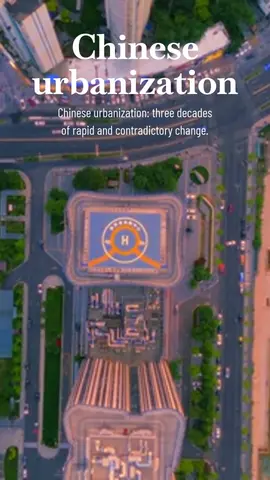
The central concept is that urbanisation is not limited to the physical expansion of cities: it involves a reorganisation of the whole of social space. The traditional distinctions between urban and rural fade in an era in which urbanisation encompasses everything. The urban revolution shows itself in the transformation of entire territories, where urban dynamics influence even areas far from the metropolises: the countryside, the periphery and industrial zones are part of an urban process that interconnects every corner of the planet. Neil Brenner would develop it decades later as planetary urbanisation.
Social relations and the production of space
Lefebvre also theorises how urbanisation has altered social relations. The production of urban space is not only physical planning: it is a social process, tied to power relations and to the distribution of resources. Urban developments and decisions about which areas are modernised and which are marginalised reflect and reproduce inequality. That critical dimension shows how capitalism has shaped cities to serve the interests of an elite while the working classes and vulnerable groups are pushed to the margins.
Urbanisation and capitalism
Another relevant aspect is that urbanisation has become one of the main features of modern capitalism. Cities are turned into centres of consumption and production where urban ways of life are designed to sustain the system. Through the control of space and the creation of market cities, urbanisation feeds the cycle of accumulation: modern urbanism prioritises real estate speculation, the expansion of consumption and the privatisation of public space, and in doing so sharpens class divisions and control over citizens. It is the thesis David Harvey would turn into his theory of the secondary circuit of capital.
The critique of technocracy
The book also contains a critique of technocracy and of planning that decides without the population. Technocratic urban policies, based exclusively on economic or functional criteria, have dehumanised cities until they become machines of production and consumption rather than places where people can develop fully. Against that, Lefebvre returns to the right to the city he had formulated two years earlier: an inclusive and democratic space where citizens' needs and desires weigh more than economic interests.
The Urban Revolution offers an understanding of urbanisation as a global and socially complex process: urban space is shaped by capitalism, and urbanisation affects every level of modern life, from planning to social relations. Lefebvre criticises the models of urbanism that neglect human needs and raises the urgency of rethinking cities as spaces of democratic participation, where everyone's right to inhabit and transform their environment is guaranteed. Together with The Right to the City (1968) and The Production of Space (1974), it completes the trilogy that founded critical urban studies.
Frequently asked questions
What is the urban revolution according to Henri Lefebvre?
The hypothesis, formulated in 1970, that society is becoming completely urbanised: the urban is no longer a place but a global process that restructures social and economic relations everywhere, beyond the physical limits of the city.
How does Lefebvre connect urbanisation and capitalism?
He argues that capitalism has survived by producing and occupying space, turning urbanisation into a field of accumulation, and that technocratic planning organises that production while presenting itself as neutral; the right to the city is the response he proposes.