Key points
- Castells: the network economy creates a space of flows that dominates the space of places where people live.
- Shields: every place carries a social mythology that Instagram, TripAdvisor and Google Maps now produce.
- The divide is no longer connected versus disconnected but who governs the digital layer versus who endures it.
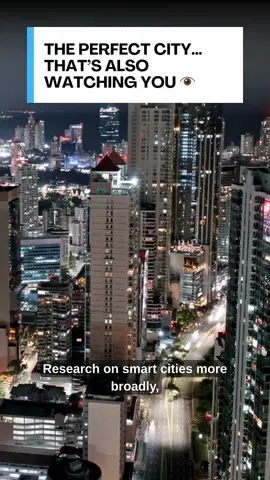
Hybrid urban space is what results from the overlap of the physical and the digital in the contemporary city: the street walked with a map on the phone, the square where an app decides who meets whom, the neighbourhood whose value depends on how many reviews and photos it accumulates, the restaurant that exists at once in its premises and on three delivery platforms. There is no longer urban space without a digital layer or digital space without an urban anchor, and understanding that convergence requires two references: Manuel Castells, who in The Rise of the Network Society (1996) described the shift from the space of places to the space of flows, and Rob Shields, who in Places on the Margin (1991) showed how places are built from meanings that circulate beyond their geography.
Manuel Castells: space of flows and space of places
Castells formulated the thesis in the mid-1990s, before the smartphone. The network economy, he argued, is organised in a space of flows, that of the networks of information, capital and decisions connecting nodes across the planet, and that space dominates the space of places where people live their daily lives. Elites inhabit the space of flows and everyone else remains tied to places, and the city splits between the two. Castells warned of the risk of a structural schizophrenia between the two logics, and proposed that urban politics build bridges between them. Twenty years later, hybridisation has turned that separation into superimposition.
Rob Shields: the social mythology of places
Shields supplied the cultural dimension. His study of marginal places, Brighton, Niagara Falls, the north of England, the Canadian Arctic, showed that every place carries a social mythology, a set of images and meanings produced by media, tourism and discourse, that decides how it is used and by whom. That idea, older than the internet, describes exactly what platforms do today: Instagram, TripAdvisor or Google Maps produce the image of a neighbourhood, direct flows of visitors and capital toward it and transform its use. Shields anticipated that hybridisation begins in the imaginary and ends on the ground.
Navigation, platforms and code/space: concrete effects
The concrete effects are visible. Navigation apps reorganise traffic and send cars down residential streets that were once quiet. Accommodation platforms turn homes into hotels and neighbourhoods into destinations. Home delivery empties street shops and fills pavements with couriers. Geolocated games and networks produce sudden concentrations of people in places nobody planned for them. And the digital twins with which cities simulate their functioning increasingly decide where investment goes. Rob Kitchin and Martin Dodge called this code/space: places that no longer work without the software that manages them.
New inequalities and how to plan both layers
Hybridisation also produces new inequalities. Those with a phone, data, a card and digital skills access the augmented city; those without remain in a space of places ever poorer in physical services, with closed offices and procedures available only online. The data the digital layer generates belong to private platforms, not to the city or its inhabitants, and the decisions taken with them are opaque. Castells foresaw it: without a politics that governs the space of flows, it subordinates the space of places. The divide is no longer between connected and disconnected but between those who govern the digital layer and those who endure it.
For planning, hybrid space requires planning both layers at once. Regulating platforms as part of urban infrastructure, with open data and rules on accommodation, delivery and mobility. Maintaining physical services for those who cannot or do not want the digital. Designing public space that withstands the platform's mythology and keeps serving those who live there. Castells and Shields teach that the city is produced with flows and meanings as much as with bricks, and that governing it requires understanding all three.
Frequently asked questions
What is Manuel Castells's space of flows?
It is the space of the networks of information, capital and decisions connecting nodes across the planet which, according to Castells in The Rise of the Network Society, dominates the space of places where people live their daily lives, splitting the city between the two logics.
What is hybrid urban space?
It is what results from overlaying the physical and the digital: streets walked with phone maps, neighbourhoods whose value depends on reviews and photos, homes turned into hotels by platforms or traffic redirected by apps; places that no longer work without the software that manages them.