Urban data
Urban data are the records the city generates by functioning —transit cards, sensors, phones, cadastre, social media— that make it visible in real time and at the scale of the individual. They are the raw material of the smart city and the new asset in dispute: who collects them, who keeps them and who decides with them.
Michael Batty argues for a science of cities built on models and data; Rob Kitchin warns that data are never raw: someone decided what to measure. Open data portals and citizen data trusts are attempts to keep information from resting only with the platform or the vendor.
Videos on this term (4)
- Urban AI
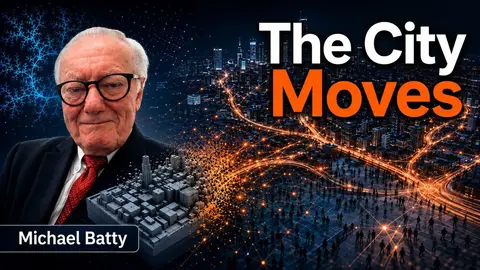
Michael Batty: How Models Reveal the Hidden Essence of Cities
Michael Batty explains the city as a complex system emerging from millions of decisions: fractals, scaling laws,…
Michael Batty 3 min read - Urban AI
Hybrid Urban Space: Physical and Digital (Castells and Shields)
Hybrid urban space overlays the street and the platform. What Castells's space of flows and Shields's mythology of…
3 min read - Public space
Intersectionality in Urban Space: A City for Everyone
Intersectionality, formulated by Kimberlé Crenshaw, shows that gender, race, class, age and disability produce…
3 min read - Mobility
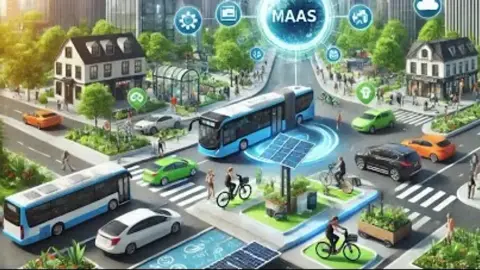
Mobility as a Service (MaaS): Whim's Promise, Failure and What Works
Mobility as a Service integrates public transport, bikes and taxis in one app. What Whim promised in Helsinki, why…
3 min read