Michel Foucault
1926–1984
French philosopher whose analysis of power underpins almost everything written today on surveillance and the control of space.
Foucault showed that modern power works less by prohibiting than by organising: it distributes bodies in space, sets timetables, makes visible and classifies. The prison panopticon served him as a figure for something far broader, a society that polices itself because it knows it is watched.
For the city he left two tools. His idea of «biopolitics» explains urban hygiene, sanitation and population management as acts of government; and «heterotopias» name those places — the cemetery, the hospital, the ship, the theme park — that run on their own rules inside the city.
A French philosopher, professor at the Collège de France from 1970 until his death in 1984, Foucault did not write about planning and yet few thinkers have influenced more how the city is studied. Discipline and Punish (1975) took Bentham's panopticon, the prison where everyone can be seen without seeing the guard, as the model of a society that disciplines through the gaze, and that model has since been applied to cameras, shopping centres and gated communities. His 1967 lecture on other spaces, published in 1984, introduced heterotopias, places such as the cemetery, the ship or the garden that suspend the ordinary order.
His 1977 and 1978 courses at the Collège de France, Security, Territory, Population, analysed the city as the place where modern government is born: eighteenth-century planning, with its markets, quarantines and circulations, is where power learns to manage populations instead of only punishing bodies. From there comes governmentality, which urban studies use to analyse the smart city, security and planning as ways of conducting conduct. Paul Rabinow, Christine Boyer and surveillance studies are his urban heirs.
On Michel Foucault in this archive (3)
- Urban history
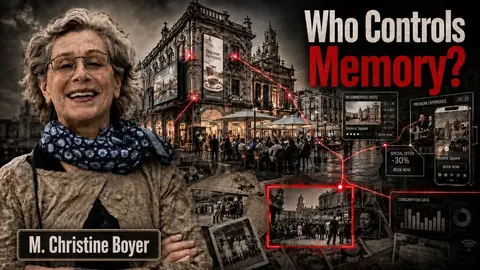
Christine Boyer: How the City Turns Memory into a Tool of Power
M. Christine Boyer shows in The City of Collective Memory that heritage and urban images are selected and…
Christine Boyer 3 min read - Urban form
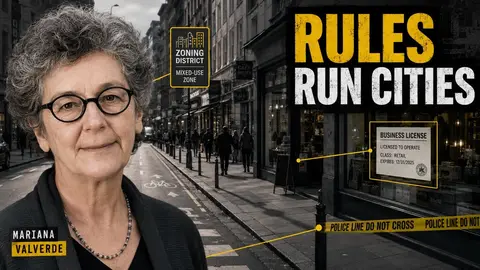
Mariana Valverde: How Small Rules Order Our City
Mariana Valverde shows that licences, zoning, regulations and policing produce urban order decision by decision.…
Mariana Valverde 3 min read - Public space
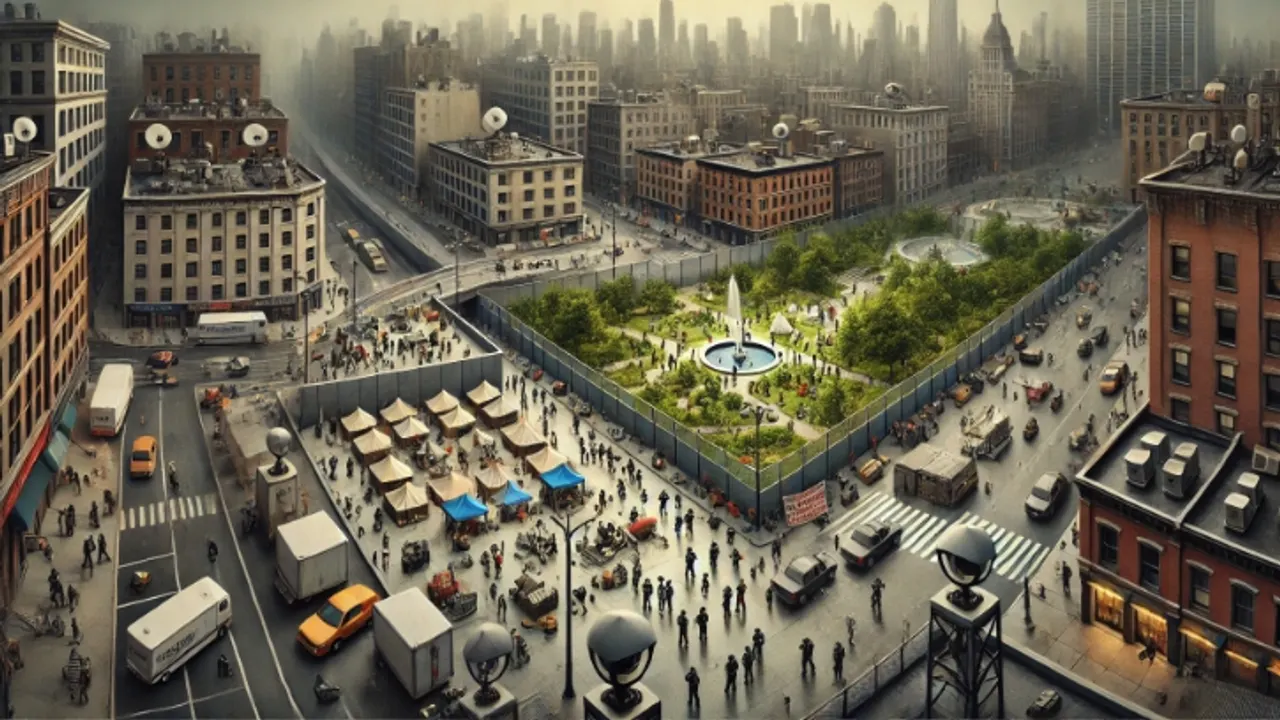
Urban Space and Power: Foucault, Massey and Soja Explained
Urban space is an instrument of power and a field of resistance. What Foucault's panopticon, Massey's power…
2 min read