Peter Marcuse
1928–2022
American planner and lawyer whose whole body of work turns on one question: who is planning for.
Marcuse worked all his life on the border between law and urbanism, and held that planning is never technical: every plan distributes, and every distribution has winners. His distinction between the exclusion of the poor and the «walling in» of the rich remains one of the most useful tools for reading a plan.
Against an urbanism justified by competitiveness or attracting investment, he defended a criterion that is simple to apply: a city is just when the benefit goes to those who need it most, not to those who can best pay for it.
The son of the philosopher Herbert Marcuse, born in Berlin in 1928 and dead in 2022, Peter Marcuse was a lawyer for twenty years before taking a doctorate in planning and teaching at Columbia University, where he directed the urban planning programme. His 1985 typology of displacement, which distinguishes direct, pressure and exclusionary displacement, remains the tool with which what gentrification does to residents is measured, and his comparative studies of New York and Berlin joined housing research on both sides of the Atlantic.
Globalizing Cities (2000, with Ronald van Kempen) asked whether cities fragment alike under globalisation; Searching for the Just City (2009) and Cities for People, Not for Profit (2012) gathered critical urban theory; and his 2009 article on the right to the city asked whose right it is and to what city. In Defense of Housing (2016, with David Madden) was his last and most widely read book: housing is at once home and commodity, and the crisis is what happens when the commodity wins.
Videos on Peter Marcuse (1)
- Urban economy
Peter Marcuse: Social Justice and Urbanism Against Neoliberalism
Peter Marcuse explained how neoliberalism put planning at the service of capital and what a just city requires.…
Peter Marcuse 2 min read

Where Peter Marcuse is cited (12)
- Urban history
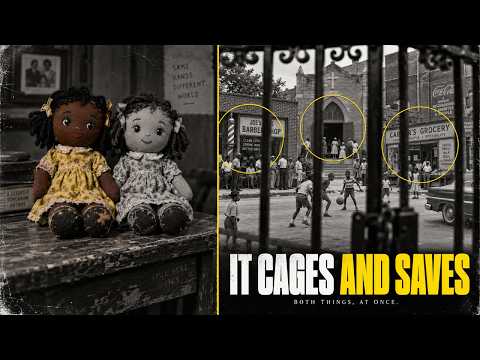
Ghetto: the cage that also worked as a shield
Wacquant, Wirth, Sennett and Kenneth Clark: how forced enclosure in Venice, Rome and Chicago also ended up…
7 min read - Urban geopolitics
The City Written by Speculative Funds: Why Planning Lost the Pen
How investment funds, not planners, order the city: Madrid's price surge, public housing sold to funds and Harvey's…
3 min read - Urban history
Friedrich Engels and the Industrial City: The Origins of Urban Justice
Engels described in 1845 how Manchester hid its workers and in 1872 why housing cannot be solved by reform. His…
Friedrich Engels 3 min read - Housing
Tom Slater: The Critique of Gentrification and Displacement
Tom Slater argues that gentrification is a policy, not a natural process, and that its real cost is displacement.
Tom Slater 2 min read - Urban economy
Critical Urbanism: What It Is and What Harvey and Brenner Propose
Critical urbanism analyses the city as a product of power and capital. What David Harvey and Neil Brenner…
2 min read - Public space
Interstitial Spaces: Resistance and Creativity in the City's Gaps
Interstitial spaces, vacant lots, warehouses and motorway undersides, are where the city reinvents itself.
3 min read - Public space
Margit Mayer and the Struggle for the Right to the City
Margit Mayer explains how urban movements win the right to the city and how neoliberalism co-opts them with mottos…
Margit Mayer 3 min read - Housing
Housing Challenges in Cities: Rolnik, Marcuse and Madden
Why housing is ever less accessible in contemporary cities: financialisation according to Rolnik, Marcuse's just…
3 min read - Housing
Gentrification and Displacement: Smith, Lees and Slater
Gentrification raises neighbourhood values and displacement pushes residents out. What Neil Smith, Loretta Lees and…
3 min read - Public space
The Right to the City: Lefebvre, Harvey and Marcuse Explained
The right to the city, formulated by Henri Lefebvre in 1968, is the right to decide how the city is produced.
3 min read - Housing
Affordable Housing: Policies That Work According to Marcuse and Rolnik
Affordable housing depends on public decisions, not the market. What Peter Marcuse and Raquel Rolnik propose and…
3 min read - Housing
Social Housing and Rent Regulation: What Works and Why
Social housing and rent regulation are the keys to urban affordability. What Raquel Rolnik and Peter Marcuse…
3 min read