Key points
- Urban neoliberalism is not less state but a state in the service of real estate valorisation.
- Marcuse distinguishes direct, exclusionary and pressure displacement; only the first is measured.
- The right to the city requires asking whose, to which city and how, so that it does not remain a slogan.
Peter Marcuse is the planner who best explained how neoliberalism transformed the city and what a planning oriented toward social justice would require. Son of the philosopher Herbert Marcuse, a lawyer and emeritus professor of urban planning at Columbia University, Marcuse devoted half a century to housing, segregation and the right to the city, and co-edited with Neil Brenner and Margit Mayer the volume Cities for People, Not for Profit (2012), the manifesto of critical urban theory. His constant question was simple: if everyone makes the city, why do only a few receive its benefits.
What urban neoliberalism is according to Marcuse
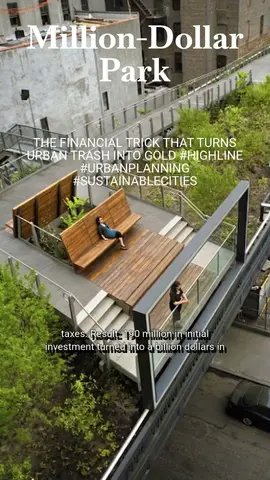
Marcuse describes urban neoliberalism as the set of policies that from the 1980s replaced public provision with the market: sale of social housing, rent deregulation, public-private partnerships for large projects, tax incentives for developers and competition between cities to attract capital. The result was not less state but a state in the service of real estate valorisation. In that framework, planning stops protecting residents and starts facilitating investment, and the spatial inequality it produces is not a failure but the normal working of the system.
The 1985 typology of displacement
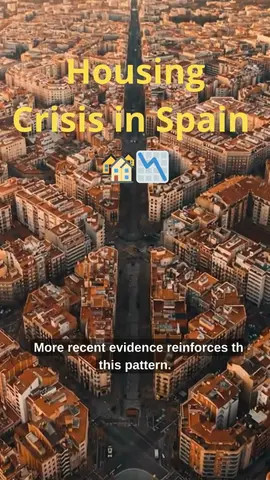
His most cited contribution is the typology of displacement he formulated in 1985, still the reference for measuring gentrification. To direct displacement through rent rises or demolition he adds exclusionary displacement, when low-income people can no longer move into a neighbourhood that was once accessible to them, and displacement pressure, when the environment of shops, services and networks that made the place liveable disappears even if one still lives there. Only the first shows up in statistics, which is why studies that rely on them minimise the damage. Marcuse insisted that counting displacement properly is the first act of justice.
Right to the city: whose, to which city and how
On the right to the city, Marcuse introduced in 2009 the questions that keep the concept from becoming a slogan: whose right, to which city and how it is exercised. His answer distinguishes the excluded, deprived of essentials, from the discontented, alienated even with a roof and a job, and holds that the city being claimed is not the existing one but a future one to be built. In Searching for the Just City (2009), co-edited with other authors, he applied that lens to planning and proposed a working sequence: expose the causes of injustice, propose alternatives and politicise those who suffer it.
Advocacy planning against participation without power
Marcuse was also a critic of participatory planning when it stops at consultation. He argued that participation without redistribution of power legitimises decisions already made, and that the task of the committed planner is not to mediate between unequal interests but to side with those who have least, bringing technical knowledge to housing movements, tenants and threatened neighbourhoods. That model of advocacy planning, inherited from Paul Davidoff, guided his own practice as a lawyer and adviser to communities in New York.
Marcuse's legacy is in the toolbox of any just urban policy: public housing that is not sold off, rent regulation, honest measurement of displacement, planning that attends first to the excluded and a right to the city understood as collective decision-making power. His work shows that neoliberal urbanism is not the only one possible, and that the alternatives are not utopias but decisions cities can take when justice, not profit, sets the criterion.
Frequently asked questions
Who is Peter Marcuse?
He is an American lawyer and planner, emeritus professor at Columbia University, a reference in critical urban theory for his work on housing, displacement and the right to the city, and co-editor of Cities for People, Not for Profit (2012).
What kinds of displacement did Marcuse define?
Direct, through rent rises or demolition; exclusionary, when low-income people can no longer move into a formerly accessible neighbourhood; and displacement pressure, when the shops, services and networks that made the place liveable disappear.