Robert Moses
1888–1981
New York's builder for forty years: the textbook case of how much an unelected official can change a city.
Moses built motorways, bridges, parks and housing on a scale with no equivalent, without ever winning an election. His power came from accumulating posts in autonomous authorities with their own budgets, beyond the mayor's control and public scrutiny.
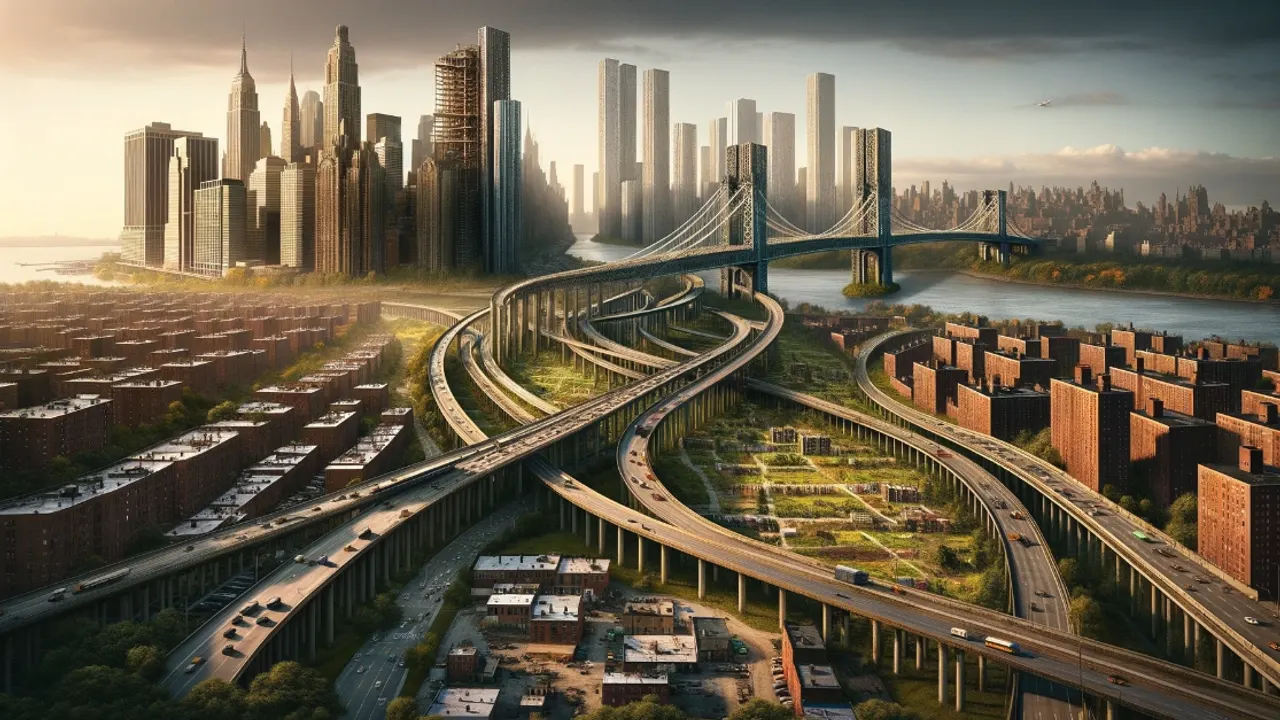
His works cut through entire neighbourhoods, displaced hundreds of thousands of people and tied New York to the car for generations. His clash with Jane Jacobs over the Lower Manhattan Expressway is the founding episode of modern urbanism: she won, and with her a different way of deciding.
Born in 1888 and dead in 1981, Moses accumulated between the 1920s and the 1960s up to twelve simultaneous offices, none elected, from New York parks commissioner to chairman of the Triborough Bridge and Tunnel Authority, whose tolls gave him a budget of his own beyond the mayor's control. With that power he built Jones Beach, hundreds of playgrounds, thirteen bridges, hundreds of miles of expressways, Lincoln Center and the 1964 World's Fair, and demolished whole neighbourhoods, such as those on the path of the Cross Bronx Expressway, displacing hundreds of thousands of people, almost always poor and Black.
His fall began in the 1960s, when the residents of Greenwich Village, led by Jane Jacobs, stopped the Lower Manhattan Expressway, and it was fixed by The Power Broker (1974), Robert Caro's Pulitzer-winning biography that made him the symbol of car-centred planning and unchecked power. Later historians, such as Hilary Ballon and Kenneth Jackson in 2007, have qualified the portrait by recalling the pools, parks and public housing he left; the debate over his legacy is the debate over what a city may do without asking its residents.
Videos on Robert Moses (1)
- Urban history
Robert Caro and Robert Moses: The Legacy of The Power Broker
The Power Broker, by Robert Caro, tells how Robert Moses transformed New York without ever being elected: parks,…
Robert Caro 3 min read
Where Robert Moses is cited (6)
- Urban ecology
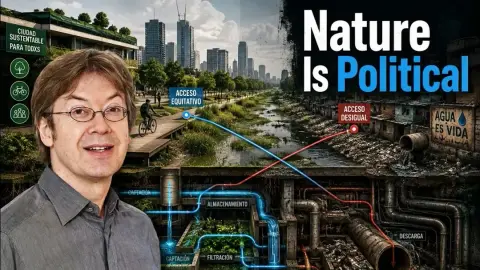
Matthew Gandy: Urban Nature Reveals Power in the City
Matthew Gandy shows that water, waste, parks and expressways are nature produced by political decisions: urban…
Matthew Gandy 3 min read - Urban economy
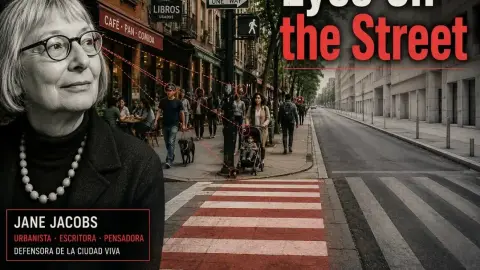
Jane Jacobs: How Life on the Streets Builds Safe and Vibrant Cities
Jane Jacobs argued that mixed uses, small blocks, old buildings and density keep streets alive and safe through…
Jane Jacobs 3 min read - Urban history
Peter Hall's Cities of Tomorrow: A History of Urban Planning
Cities of Tomorrow (1988) by Peter Hall traces the twentieth century's planning ideas, from Howard to Le Corbusier,…
Peter Hall 2 min read - Housing
Naked City by Sharon Zukin: Gentrification and Urban Authenticity
Naked City (2010) by Sharon Zukin shows how the search for authenticity gentrifies New York's neighbourhoods.
Sharon Zukin 2 min read - Public space
Jane Jacobs: the street as the engine of the city
Jane Jacobs showed in 1961 that mixed uses, density and active streets keep a neighbourhood safe better than any…
Jane Jacobs 2 min read - Urban form
The Horizontal City and Suburbanisation: Fishman and Hall on Sprawl
The horizontal city grows outward with low density, cars and highways. How Robert Fishman and Peter Hall explain…
3 min read