Key points
- Gandy: nature does not begin where the asphalt ends; it circulates through networks that decide who has access and who bears the consequences.
- In New York, water, Central Park, Moses's expressways and incinerators distributed benefits and harms unequally.
- The spontaneous ecology of Berlin's lots disappears when speculation fills them: urban nature is a field of dispute.
Urban nature reveals power dynamics in the city because turning on a tap, taking out the rubbish or walking through a park are acts that depend on networks, decisions and inequalities that the separation between city and nature conceals, and Matthew Gandy, a geographer at the University of Cambridge, has devoted his work to dismantling that separation. In Concrete and Clay (2002), on New York, and The Fabric of Space (2014), on water in six cities of the world, he argued that nature does not begin where the asphalt ends but circulates through networks that cross buildings, streets and bodies, and that urban environmental problems are also problems of power: one must follow the flows, where they come from, who controls them, who has access and which territories bear their consequences.
Urban metabolism: infrastructure produces nature
The mechanism is urban metabolism, the city understood as a set of material flows, water, energy, food, waste, that enter, circulate, are transformed and leave through concrete infrastructure. Gandy, with Erik Swyngedouw and Maria Kaika, insists that this metabolism is not a natural organism separate from society: technical networks decide where a resource flows and connect some places more intensely than others, so infrastructure socially produces urban nature. Two neighbourhoods of the same city need water every day, and if one receives different connections the environmental question immediately acquires a social dimension; a pipe is a geography of access.
Concrete and Clay: water, parks, expressways and environmental justice in New York
Concrete and Clay showed it in New York. Gandy reconstructed how the city built its water system with aqueducts and reservoirs that expropriated whole valleys upstate, how Central Park manufactured a natural landscape over demolished settlements, how Robert Moses's expressways cut through the Bronx and how the environmental justice movements of the 1980s and 1990s denounced that waste plants and incinerators concentrated in Black and Latino neighbourhoods. New York's nature, from tap water to parks, is the result of political decisions that distributed benefits and harms unequally.
The Fabric of Space: six cities, six modernities of water
The Fabric of Space extended the analysis to water in Paris, Berlin, Lagos, Mumbai, Los Angeles and London, and showed six different hydraulic modernities: Haussmann's sewers as bourgeois order, Berlin's urban ecology among ruins, Lagos without a universal network where water is bought from vendors, Mumbai with its monsoon hydrology and its settlements, Los Angeles and its river boxed in concrete, London and its floods. In each case, water infrastructure embodies a project of government and a distribution of power, and its failure or absence reveals who counts in the city. His concept of cyborg urbanization, with the city as a hybrid of bodies, networks and nature, sums up that gaze.
Natura Urbana: the spontaneous ecology of Berlin's vacant lots
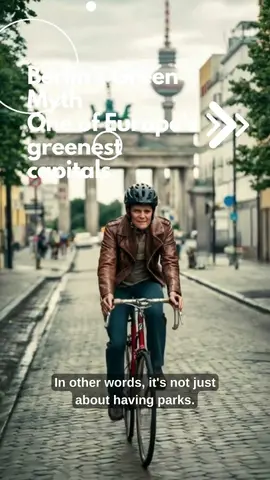
His recent work changes scale. In Natura Urbana (2022), a book and film about Berlin, Gandy follows the spontaneous ecology of vacant lots, abandoned railways and wastelands, where plants and animals colonise the city's gaps, and shows that this undesigned nature, valued by botanists and residents, disappears when speculation fills the lots. Urban nature, in that reading, is also a field of dispute between the ecology that emerges on its own and the designed green that is sold, and between those who use the gaps and those who build on them.
Gandy's lesson is that looking at a city's nature is looking at its power: who decided where the water, the park, the incinerator and the expressway would go, and who lives beside each. A city that understands its metabolism as a political question can distribute its flows and risks better; one that treats it as a technical question repeats, with every network, the inequality its pipes already draw.
Frequently asked questions
What is urban metabolism according to Matthew Gandy?
It is the city understood as a set of material flows, water, energy, food and waste, that enter, circulate, are transformed and leave through concrete infrastructure, and that does not work as a natural organism separate from society because technical networks decide where each resource flows and connect some places more than others.
How does urban nature reveal power dynamics?
Because every decision on where the water, the park, the incinerator or the expressway goes distributes benefits and harms among neighbourhoods, as Gandy showed in New York with the aqueducts, Central Park, Robert Moses's expressways and the waste plants concentrated in Black and Latino neighbourhoods.