Key points
- Ealham shows that segregation between the Eixample and working-class districts created the conditions for conflict, and conflict rewrote the map.
- Via Laietana, the 1929 Exhibition and the myth of the Barrio Chino were public order disguised as planning.
- The 1936 revolution tried to invert forty years of class geography and 1939 restored the earlier order.
Barcelona's class struggle between 1898 and 1937 is the subject of the work of the British historian Chris Ealham, who in Class, Culture and Conflict in Barcelona, 1898-1937 (2005) and in Anarchism and the City (2010) reconstructed how Europe's most conflict-ridden industrial city produced the world's most powerful anarcho-syndicalist movement and how that movement in turn produced a city of its own. His thesis is that urban geography and social struggle made each other: the class segregation of the Eixample and the working-class districts created the conditions for conflict, and conflict, strikes, riots, occupations, rewrote the map of the city.
Two cities: the bourgeois Eixample and the working-class districts
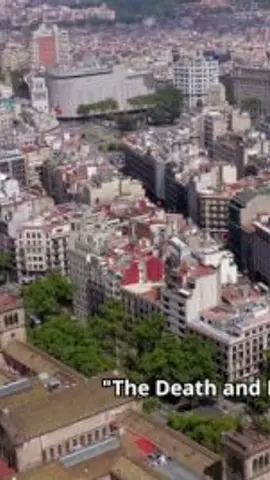
Ealham starts from the divided city that industrialisation left at the end of the nineteenth century. The bourgeoisie settled in Cerdà's Eixample, turned into the showcase of the modern city, while workers crowded into the Raval, the Barceloneta, Poble Sec and the shanty towns of Montjuïc and the beaches, with densities and mortality among the worst in Europe. That physical distance was also cultural: two cities with different languages, leisure and morals that met only in the factory and the street. Ealham shows that Barcelona's working class built a culture of its own, athenaeums, rationalist schools, cooperatives, newspapers, that made the organisation of the CNT in 1910 possible.
From the Tragic Week to the rent strike of 1931
The book follows the great explosions. The Tragic Week of 1909, when protest against conscription for Morocco became insurrection and the burning of convents. The La Canadiense strike of 1919, which paralysed the city and won the eight-hour day. The years of pistolerismo, between 1919 and 1923, when employers, police and unions killed each other in the streets. And the rent strike of 1931, in which tens of thousands of families stopped paying and the CNT organised resistance to evictions. Ealham reads each episode as a dispute over the control of space: who rules the street, the neighbourhood, the port.
Public order as urbanism: Via Laietana, Montjuïc and the Barrio Chino
His most original contribution is the analysis of public order as urbanism. The authorities treated the working-class city as territory to be conquered: the opening of Via Laietana in 1908 demolished whole districts of the old town in the name of hygiene and circulation, the 1929 Exhibition expelled the shanty dwellers of Montjuïc and the police patrolled the Raval as enemy ground. Ealham shows that the discourse of the Barrio Chino, invented by journalists in the 1920s, served to criminalise the whole Raval and justify its surveillance. The working class answered by appropriating the street, with demonstrations, pickets and a sociability of bars and street corners that the bourgeoisie regarded as disorder.
The 1936 revolution and the end of the working-class city
The Revolution of July 1936 is the climax. After defeating the military coup, the unions took the city: collectivised factories, hotels turned into canteens, churches into warehouses, the Ritz into a people's dining hall. Ealham describes that revolutionary Barcelona as the attempt to invert forty years of class geography, and also its limits: the rebuilding of the Republican state and the May Days of 1937 returned control to the institutions, and the Francoist victory of 1939 restored the earlier order with a repression that erased the memory of the working-class city for decades.
For urban studies, Ealham offers a model of how to write a city's history from below, combining social geography, popular culture and political conflict. His Barcelona is proof that urban form is not a backdrop but a weapon: whoever designs streets, demolishes districts or patrols squares is doing class politics, and those who occupy the street know it. That reading is still alive in today's Barcelona, where disputes over housing, tourism and public space reproduce, with other actors, the geography of struggle Ealham reconstructed.
Frequently asked questions
What does Chris Ealham argue about Barcelona?
That between 1898 and 1937 urban geography and class struggle made each other: the city divided between the bourgeois Eixample and the working-class districts produced anarcho-syndicalism, and its strikes, riots and occupations contested control of streets, neighbourhoods and port.
What was Barcelona's rent strike of 1931?
It was a movement in which tens of thousands of working-class families stopped paying rent, organised by the CNT, which resisted evictions and made housing a central terrain of Barcelona's social struggle.