Key points
- Cities must integrate sustainability into urban planning to enhance resilience against climate change.
- Resilience is a continuous process requiring flexible and inclusive urban strategies.
- Sustainability strategies must address social inequalities to ensure equitable access to resilient infrastructure.
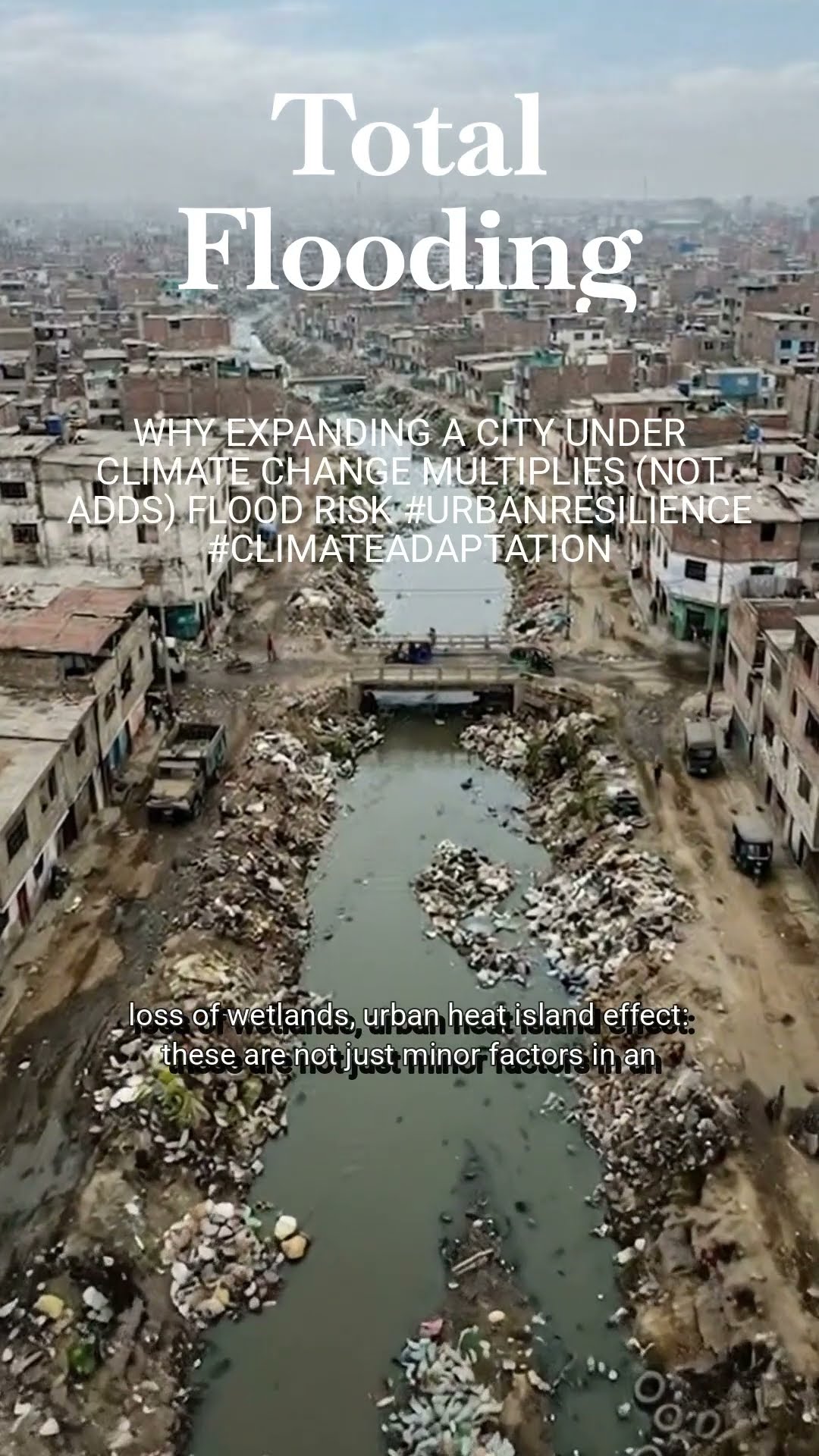
Catherine McGuirk, an Australian researcher and expert in urban studies, has dedicated her career to studying how cities can adapt to the challenges of climate change and promote sustainability. Her work focuses on urban resilience, a concept that refers to the ability of cities to recover from and adapt to extreme climate events, such as floods, heat waves, and storms, which are becoming increasingly frequent due to climate change. Through her research, McGuirk has contributed a critical and practical perspective on how cities can become more resilient and sustainable, protecting both their infrastructure and their inhabitants. One of McGuirk’s main contributions is her focus on integrating sustainability into urban planning.
Catherine McGuirk's Focus on Urban Resilience
She argues that cities should be understood as interconnected systems, where climate change adaptation policies address not only environmental issues but also social, economic, and political dimensions. In this sense, she maintains that urban strategies should be inclusive, involving local communities and prioritizing the well-being of the most vulnerable populations, who are often the most affected by the impacts of climate change. McGuirk has also researched how cities can design public policies that promote urban resilience. For her, resilience is not a fixed state but a continuous process that requires flexible and adaptable planning.
Sustainable Infrastructure and Social Justice
Cities must anticipate and mitigate climate risks by implementing sustainable infrastructure, such as efficient drainage systems, urban green spaces that absorb heat and water, and buildings that reduce energy consumption. Her approach also emphasizes the importance of encouraging collaboration among the different actors involved in urban management, from local governments to private companies and civil society. A key aspect of her work is the relationship between social justice and sustainability. McGuirk has pointed out that although many cities have adopted policies to address climate change, these initiatives often fail to adequately address existing social inequalities.
People with fewer resources, who often live in areas more exposed to climate risks and have limited access to resilient infrastructure, are the most affected. For her, any sustainability strategy must ensure that these communities also have access to the benefits of a more resilient city, such as safer housing, effective emergency services, and healthier urban environments. Another of McGuirk’s contributions is her emphasis on urban climate governance, which involves coordination across multiple levels of government and the active participation of communities in decision-making. She advocates for a decentralized approach to climate management, in which local authorities play a key role in implementing sustainable policies.
This approach is particularly relevant in the context of climate change, as many of the most effective solutions must be adapted to the specific characteristics of each city and the particular needs of its inhabitants. In conclusion, Catherine McGuirk has developed a comprehensive and multidimensional approach to urban resilience and sustainability, highlighting the importance of cities proactively adapting to climate change. Her research proposes solutions that not only address environmental problems but also promote social justice and equity. McGuirk invites us to rethink urban planning so that it becomes more inclusive, resilient, and sustainable, ensuring that everyone, regardless of their social or economic circumstances, can benefit from safer cities that are better prepared to face climate challenges.
Frequently asked questions
How does Catherine McGuirk approach urban resilience?
McGuirk emphasizes integrating sustainability into urban planning and prioritizing inclusive, flexible strategies for resilience.
Why is social justice important in urban sustainability?
Social justice ensures that vulnerable communities have access to resilient infrastructure and benefits of sustainable cities.