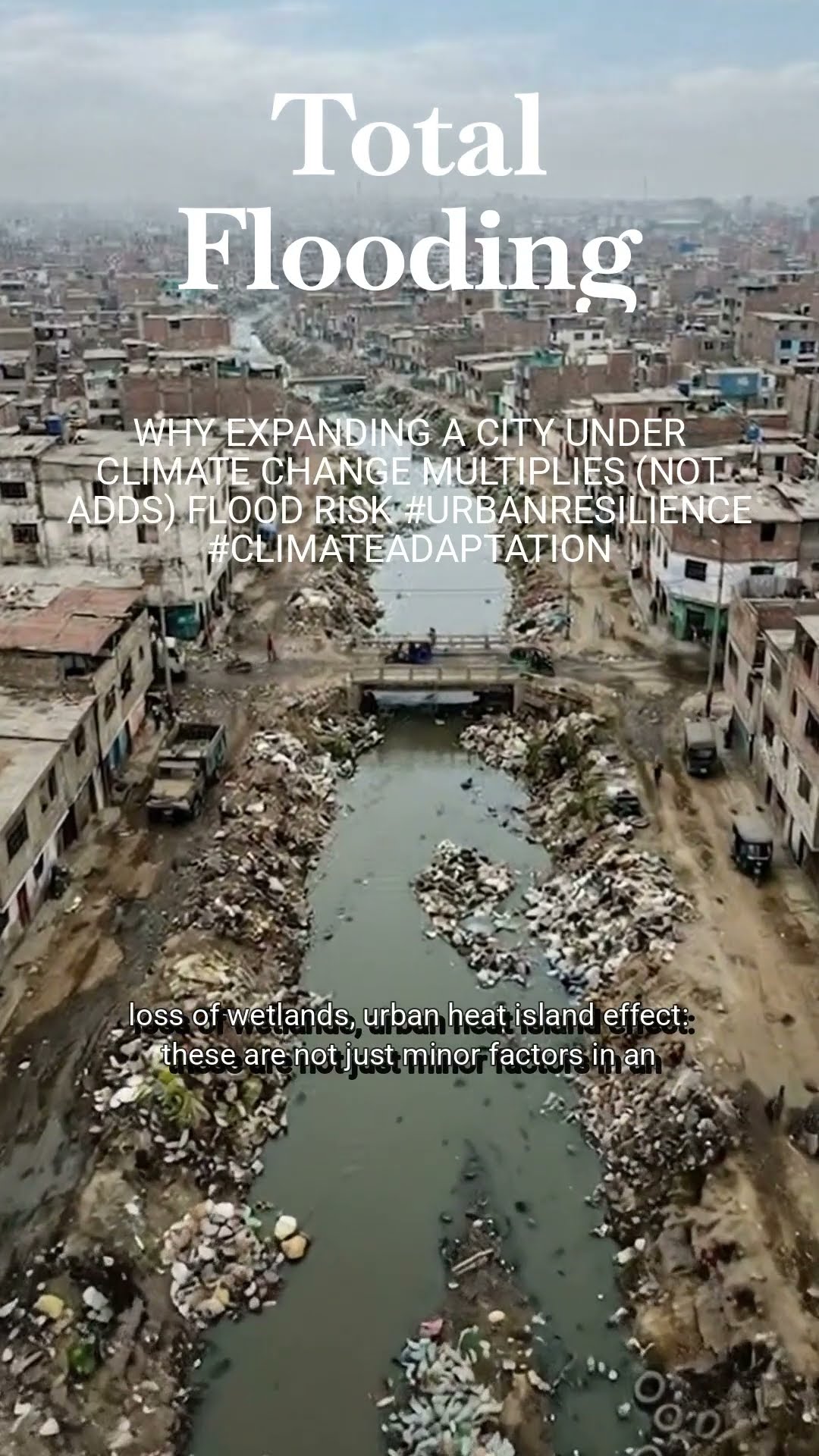
The book *Extreme Cities: The Peril and Promise of Urban Life in the Age of Climate Change* (2017) by Ashley Dawson explores how climate change is affecting cities and highlights the need for them to adapt in order to prevent disasters related to extreme weather events. Dawson argues that cities, due to their high concentration of population and economic activity, are on the front lines of climate change impacts, facing challenges such as rising sea levels, heat waves, and increasingly intense storms. The book emphasizes that extreme weather events disproportionately affect the most vulnerable urban populations. In many cities, low-income communities and marginalized neighborhoods are located in flood-prone areas that are poorly equipped to withstand the consequences of climate change.
As natural disasters intensify due to global warming, these populations face a greater risk of losing their homes, livelihoods, and, in many cases, their lives. Dawson argues that “coastal cities” are particularly vulnerable. With rising sea levels, many major cities such as New York, Miami, and Shanghai face an existential threat if immediate measures are not taken to protect them. Critical infrastructure in these areas, including ports, transportation systems, and power plants, is at risk of flooding, which could have devastating consequences for the global economy.
The book also discusses the “ineffectiveness of current adaptation policies.” Dawson criticizes infrastructure-centered approaches, such as the construction of seawalls and coastal barriers, arguing that these technical solutions fail to address the underlying causes of climate vulnerability, such as social and economic inequality. Rather than simply reinforcing physical defenses, Dawson proposes a more comprehensive approach that includes the redistribution of resources and improvements in living conditions for the most vulnerable. In addition, *Extreme Cities* explores how cities, despite being at risk, can also serve as laboratories for innovative solutions to climate change.
Dawson highlights the importance of “community mobilizations” and social movements in the fight against climate change, arguing that these urban movements can lead the transformation toward a more just and sustainable future. Cities can become spaces of “climate resilience,” where sustainability and equity are prioritized in urban planning. In conclusion, Dawson’s book emphasizes that cities must adapt more effectively and equitably to address the challenges posed by climate change. By tackling both immediate threats and underlying structural inequalities, cities have the opportunity to transform themselves into more resilient and just spaces in a world facing increasingly frequent and severe climate crises.