There's a promise that gets repeated at every conference, in every municipal brochure, in every press release: this city is smart, and here is the number that proves it. Fourteenth place. Seventh place. Third in the world. And the question almost nobody asks out loud is the most elementary one of all: smart for whom? The great smart city rankings present themselves as neutral thermometers of a measurable reality. They are not. They are instruments of government dressed up as statistics. You only have to lift the hood on the methodology to see the ideological machinery running at full throttle. Let's start with the most uncomfortable part: indicators do not describe the city, they define it. When a ranking decides that urban intelligence is measured by sensor density, by bandwidth, by digitized paperwork, by connected parking spaces, it is decreeing what a city ought to pursue. And everything left off the spreadsheet simply ceases to exist for public policy. Informality is not measured. The care work that sustains the daily metabolism of any metropolis is not measured. The silent displacement of the neighbours who can no longer afford the very neighbourhood they made livable is not measured. Power is not measured. Rob Kitchin warned us with a clarity we still haven't digested: urban data is never raw, it always comes cooked, and somebody chose the recipe. The second problem is textbook. Most of these indices are built on the availability of data, not on its relevance. They measure whatever exists in a downloadable format, in an open portal, behind an automated access interface. The result is a brilliant tautology: the most digitized cities score highest on digitization, and cities of the global south land systematically at the bottom of the list, not because they work worse, but because they don't produce their data in the format the ranking knows how to read. It is a geography of statistical privilege dressed up as technological merit. The third problem is weighting. That magical moment, almost always buried in a methodological annex nobody reads, when someone decides that connectivity counts three times as much as housing. Change those weights and the podium reshuffles entirely. A ranking is not a finding. It is an opinion with decimal points. And when that opinion becomes the target, we get what we have known for a long time: the measure stops being a good measure. City councils start optimizing the indicator instead of the city. Smart streetlights go up on the main avenue while the periphery still has no night transport, because the streetlight scores points and the bus does not. And now we reach the heart of the matter. These indices don't come from nowhere. Ola Söderström and his colleagues showed how the smart city functions as corporate storytelling, a narrative built by technology vendors who first manufacture the metric and then sell the solution that metric demands. The ranking is the catalogue. The consultancy that publishes it and the company that installs the sensors share the same ecosystem, the same sponsorship, the same vocabulary. Shoshana Zuboff would call it by its name: data extraction turned into an infrastructure of accumulation. Robert Hollands was already asking, back when almost nobody was listening, whether the real smart city would have the decency to stand up. And Paolo Cardullo, together with Kitchin himself, showed that on the participation ladder of these models the citizen is almost never a citizen. He is a user. He is a consumer. He is a data generator. He is never the one who decides. So what should we be measuring? Perhaps the real time it takes a person without a car to reach a public hospital. Perhaps how many households were evicted in the last year. Perhaps what share of the municipal technology budget is locked into proprietary licences the council can neither audit nor abandon. Perhaps who owns the data the city produces every second. None of those questions fit on a podium. And that is precisely why they are missing. So the next time your mayor celebrates climbing four places in a global smart city ranking, hold the applause. Ask who built the ruler, who is selling it, and who has been left outside the frame. Because the city that goes unmeasured does not disappear. It simply stops counting. And that, and nothing else, is the most political decision ever made inside a spreadsheet.
Smart for whom? The other side of smart city rankings
Shorts
 ’s Green Myth One of Europe’s capitals…
 Killer heat
 Sponge Cities The city that stopped fighting water
 Cities Are Hiding SECRET Jungles on Their Walls!
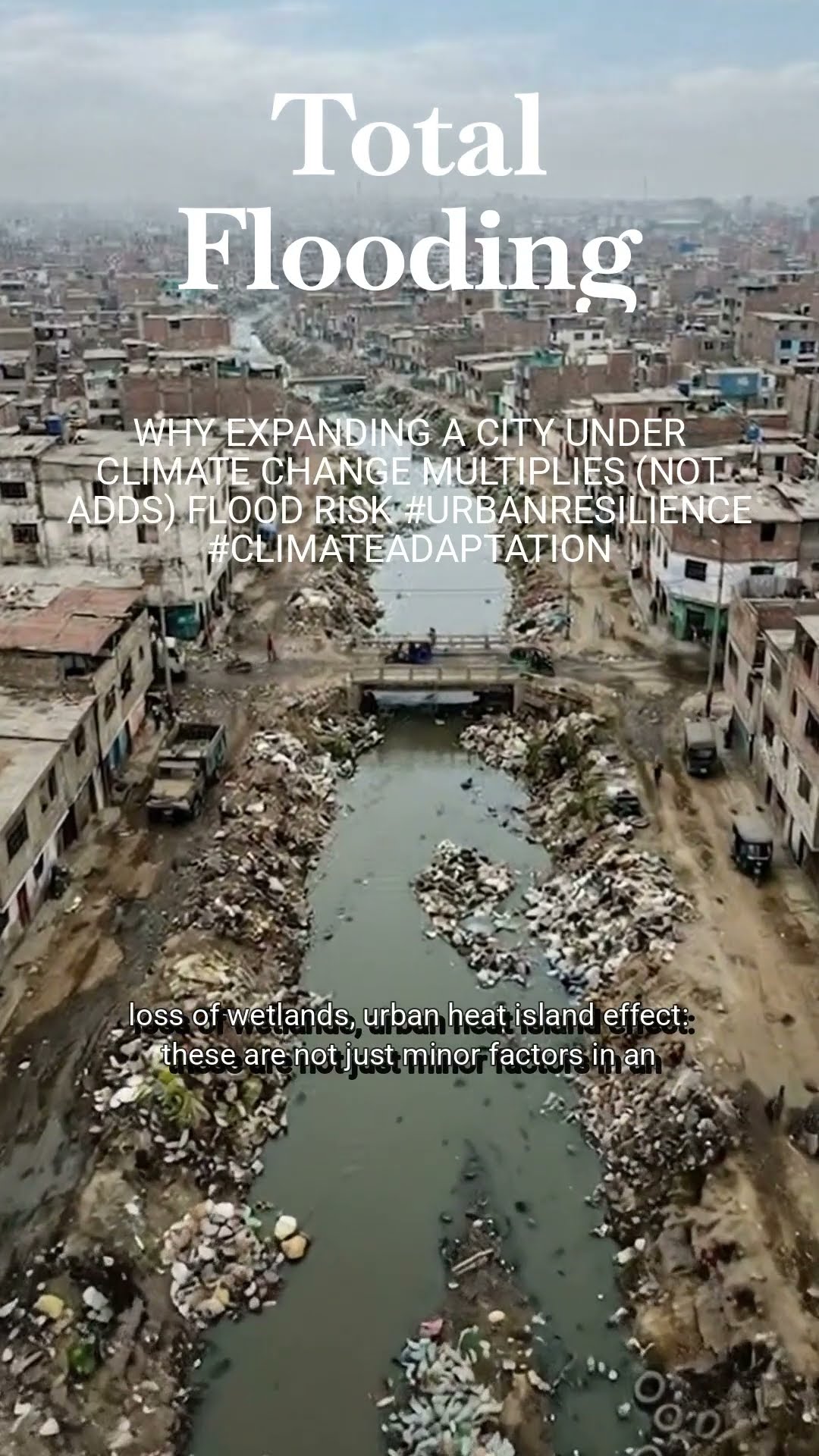 Total flooding. Why expanding a city under climate change multiplies flood risk
 HafenCity. The Futuristic District That Quietly Redefined a City
 Underground Cities. The climate solution isn’t above us… it’s hidden beneath our feet
 Color and Climate. The color that cools cities without air conditioning
 Healing parks. A tree on your street isn't decoration. It's a medical intervention
 Invisible infrastructures. The city’s most powerful highway can’t be seen
 Cities Are Running Out of Land… So They’re Building on Water
 vs Highways. Imagine a highway. Now imagine your city destroys it
More from the channel ↗