A working-class neighbourhood finally gets what it asked for over years. A new park, trees, a green corridor where there was once asphalt and noise. The neighbours celebrate. At last, clean air and shade for their children. A few years pass and something has changed. The park is still there, beautiful. But many of the neighbours who fought for it no longer live nearby. Rents went up. New faces and different shops arrived. The environmental improvement that was meant to protect them ended up pushing them out. This is the uncomfortable paradox of the sustainable city. The question that holds this video together is hard. Can a green improvement become a silent form of expulsion? To answer, we must look at the mechanism before the outrage. A green space does not only clean the air. It also changes the price of the land around it. A home facing a park is worth more than the same home facing an empty lot. Experts call it the green premium. When a neighbourhood is renaturalised, that extra price activates. Owners raise rents. Estate agents use the park as a selling point. And someone renting on a tight income can no longer pay. Green does not displace on its own. It displaces because it lands in a market with no price control. The environmental improvement enters a machine that turns it into private profit. The most famous case is in New York. An old elevated rail line was turned into a linear park between buildings. It was called the High Line effect and travelled the world. The green walkway drew tourists, luxury towers and galleries. The surroundings, once industrial and modest, became some of the most expensive in the city. The green space kept its aesthetic and environmental promise. But it also sent the value of the land around it soaring. The long-standing neighbours watched their district fill with people of another purchasing power. The ecological postcard became, at the same time, a postcard of exclusion. In Europe there is an equally clear case. In a district with an industrial past in Barcelona, a large and long-desired park opened. The researcher Isabelle Anguelovski studied it closely. Within a very small radius around the park, the number of neighbours with a university education multiplied several times over in a few years. In other words, the population changed profile. Low-income residents were replaced by others with more resources. Anguelovski coined the term green gentrification precisely to name this. The green that gentrifies. A lung everyone would want behind their home, but one that ends up deciding who gets to stay nearby and who does not. It might seem we are talking about isolated cases. We are not. Anguelovski's team analysed almost thirty cities across nine countries in Europe and North America. In more than half of them, the creation of new green spaces drove processes of gentrification. The pattern repeats on both sides of the ocean. In North American cities, it is usually parks and gardens that push the price up. In European ones, green corridors and promenade axes play that role. The conclusion of the research is uncomfortable to accept. Greener cities tend to become more unequal too, unless someone prevents it in time. It is worth pausing here and presenting the opposite argument fairly. Urban green is not the enemy. Parks improve the physical and mental health of those who live nearby. They lower the temperature, clean the air and reduce stress. No serious person proposes to stop renaturalising the city. The problem is not the tree. It is the absence of policies that accompany the tree. Where there is no rent control or public housing, green becomes a luxury. Where there is, the park benefits those who already lived there. Anguelovski herself insists on this nuance. The failure lies not in the environmental improvement, but in the lack of justice in how it is shared. And here appears the most uncomfortable idea of all. Environmental improvement can work as a silent mechanism of segregation. It makes no noise. It does not expel with evictions or with fences. It expels with beauty, with trees and with sustainable discourse. It can be argued that this is its greatest political risk. An eviction is seen and sparks protest. A slow rise in rents beside a new park looks like progress. The data show displacement. The official story shows sustainability. And that distance between what is seen and what happens is exactly what lets the process advance with barely any opposition. The moral paradox is complete. Let us return to the opening question.
The green that pushes out original residents
Shorts
 ’s Green Myth One of Europe’s capitals…
 Killer heat
 Sponge Cities The city that stopped fighting water
 Cities Are Hiding SECRET Jungles on Their Walls!
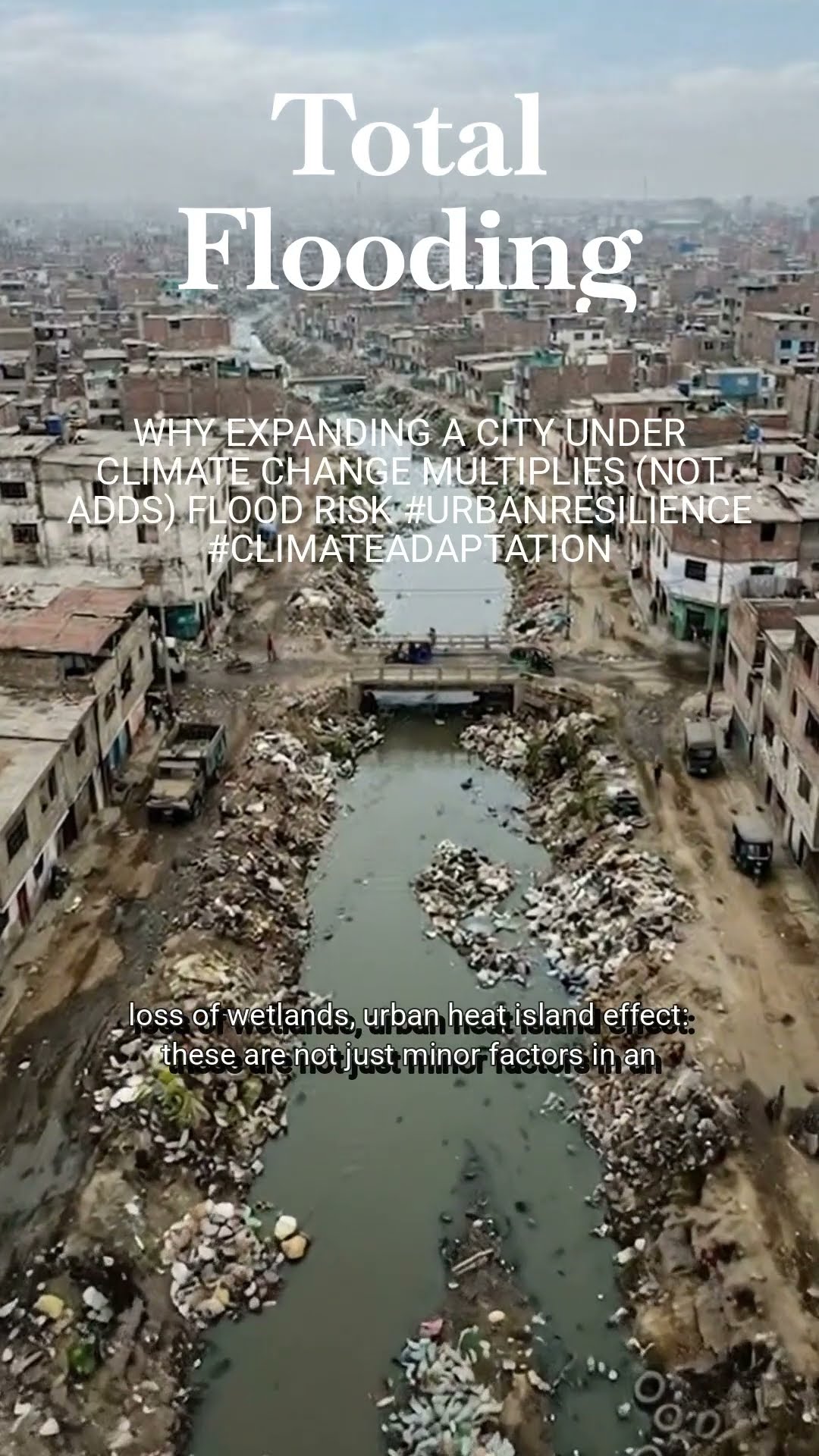 Total flooding. Why expanding a city under climate change multiplies flood risk
 HafenCity. The Futuristic District That Quietly Redefined a City
 Underground Cities. The climate solution isn’t above us… it’s hidden beneath our feet
 Color and Climate. The color that cools cities without air conditioning
 Healing parks. A tree on your street isn't decoration. It's a medical intervention
 Invisible infrastructures. The city’s most powerful highway can’t be seen
 Cities Are Running Out of Land… So They’re Building on Water
 vs Highways. Imagine a highway. Now imagine your city destroys it
More from the channel ↗