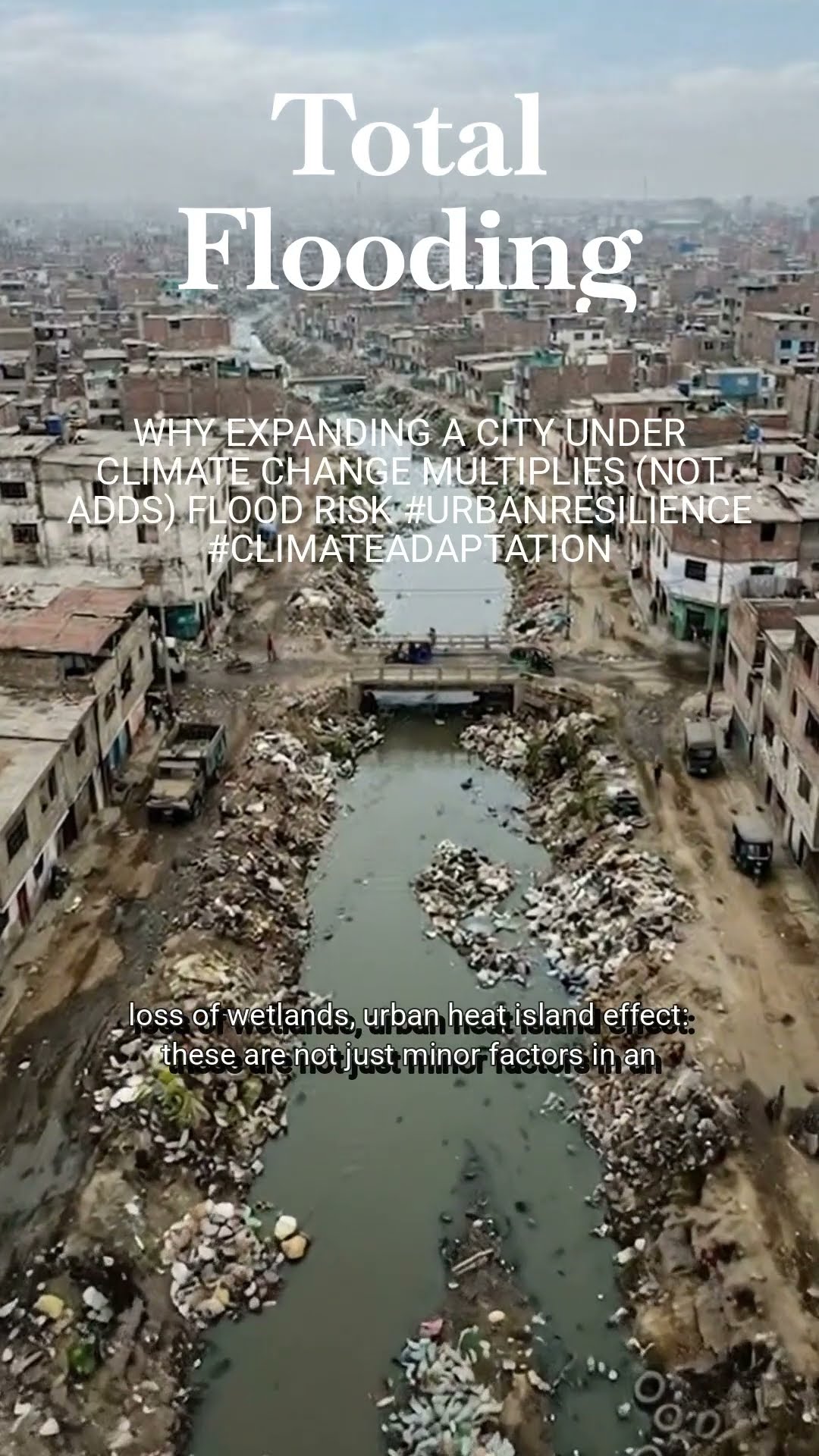
Urban political ecology is an interdisciplinary field that examines the interaction between ecological systems and social dynamics in cities, emphasizing how power relations, urban policies, and structural inequalities shape access to natural resources such as water, clean air, and green spaces. This perspective challenges the idea that urban environmental problems are purely technical issues and instead interprets them as deeply political questions. Scholars such as Erik Swyngedouw, Maria Kaika, and Nik Heynen have played a central role in developing this field, demonstrating how unequal access to environmental resources in cities reflects and reinforces existing power structures. Erik Swyngedouw, in Social Power and the Urbanization of Water, examines how urban water systems are shaped by political and economic power relations.
He argues that water, although essential for urban life, is often treated not as a common good but as a commodified resource subject to privatization and market dynamics. As a result, water infrastructures frequently benefit wealthier urban groups, while poorer and marginalized populations struggle to access reliable drinking water and sanitation services. For Swyngedouw, these inequalities are not due to natural scarcity but to governance systems designed to serve particular interests. Maria Kaika expands this analysis in City of Flows, where she explores how urban infrastructures—such as water, electricity, and energy networks—are embedded within broader social and ecological processes.
Kaika argues that the modernization of these infrastructures has transformed both nature and urban society, often prioritizing economic growth and real estate development over environmental protection. This dynamic creates a growing disconnection between urban residents and the ecological systems that sustain urban life, while simultaneously intensifying inequalities in access to resources. Meanwhile, Nik Heynen focuses on environmental justice within cities. In works such as Injustice in the Urban Forest, Heynen demonstrates how access to green spaces and recreational areas is unevenly distributed across urban populations.
Wealthier neighborhoods often benefit from better environmental conditions, while marginalized communities—frequently composed of working-class populations and ethnic minorities—face higher exposure to pollution and limited access to parks and green infrastructure. For Heynen, these environmental disparities are not merely ecological issues but the product of urban policies that reproduce social inequalities. A central argument of urban political ecology is that environmental problems in cities are never neutral or apolitical. Swyngedouw, Kaika, and Heynen all emphasize that urban planning and environmental policies are shaped by political and economic interests that privilege certain groups over others.
This unequal distribution of environmental benefits and burdens leads to what scholars describe as environmental injustice, where disadvantaged communities bear the greatest environmental risks while receiving the fewest ecological benefits. Furthermore, these scholars argue that urban environmental problems cannot be effectively addressed without confronting the structural causes of social inequality. Building sustainable and equitable cities requires rethinking how natural resources are managed and distributed so that all residents—regardless of class, ethnicity, or location—have fair access to essential resources such as water, clean air, and green spaces. In conclusion, the field of urban political ecology demonstrates that ecological issues in cities are deeply intertwined with power relations and social inequality.
As highlighted by Swyngedouw, Kaika, and Heynen, urban policies shape not only the management of natural resources but also the reproduction of social hierarchies. Achieving truly sustainable cities therefore requires environmental and urban policies that prioritize equity, justice, and universal access to essential ecological resources. 🌱🏙️⚖️