Key points
- Urban resilience is a city's capacity to absorb crises — climate, pandemics, disasters — and recover.
- Beatley joins sustainability and resilience: cut the environmental footprint while preparing cities for climate change.
- Rodin argues in The Resilience Dividend that preparing for crisis is also an opportunity for improvement.
Urban resilience is a city's capacity to absorb a crisis — a flood, a heatwave, a pandemic — and keep functioning, recover and reorganise without losing what is essential. In a world increasingly hit by climate change and disasters it is a critical issue, and doubly so because crises strike vulnerable communities disproportionately, since they tend to lack the resources to adapt or recover quickly. Two authors help to understand how to build resilience without leaving anyone behind: Timothy Beatley and Judith Rodin.
Beatley: sustainable and resilient cities
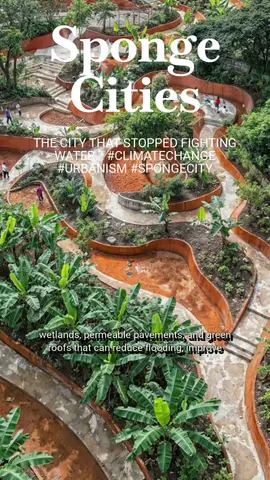
Timothy Beatley, a professor of planning at the University of Virginia and author of Green Urbanism (2000) and Biophilic Cities (2011), has stressed the importance of sustainable and resilient cities in the face of climate change. Cities must reduce their environmental footprint and at the same time strengthen their capacity to withstand extreme events: planning has to include both mitigation and adaptation to changes that are already unavoidable. Copenhagen and Amsterdam have rolled out green infrastructure and nature-based solutions — floodable parks, canals, green roofs — to adapt to sea-level rise and torrential rain, and they show that sustainability and resilience combine through proactive urban design.
Rodin: the resilience dividend
Judith Rodin, former president of the Rockefeller Foundation and driving force behind the 100 Resilient Cities programme, argues in The Resilience Dividend (2014) that resilience is not only the capacity to recover from disasters but the opportunity to grow and transform through them. She describes it as a process: anticipating shocks, preparing to face them and adapting to the reality they leave behind. That includes building flexible systems that absorb impact and reduce inequality, so that the most vulnerable communities also benefit from the measures. The dividend is that those investments pay off even when the crisis never comes.
Social and ecological factors
Resilience strategies must consider social as well as ecological factors. Research on climate planning in Asia shows the importance of involving local communities in adaptation, especially those most affected by poverty and marginalisation. Policies cannot focus only on infrastructure: they must empower communities to take part in the decisions that shape their environment and their livelihoods, because whoever knows the neighbourhood knows where it floods before the model says so.
Resources, governance and justice
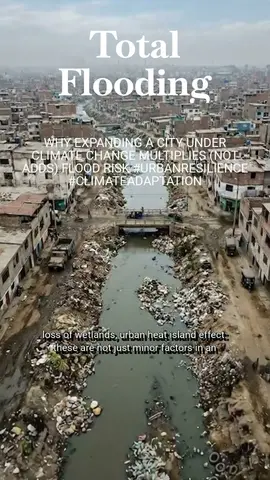
Implementing resilience is not without problems. Policies tend to run into a lack of resources and weak governance, and in many cases the efforts benefit prosperous areas more — which already had levees, insurance and trees — and leave marginalised communities even more exposed. To counter that, Rodin and other researchers call for integrating social justice into resilience strategies: policies designed to reduce inequality and share the benefits fairly, not only to protect the value of what is already protected.
Urban resilience and adaptation are essential for facing present and future challenges, from climate change to pandemics. Beatley's and Rodin's approaches insist on inclusive and equitable planning that not only protects cities but strengthens their most vulnerable communities. As cities prepare for what is coming, resilience should become a guiding principle of urban development, on one condition: that nobody is left behind.
Frequently asked questions
What is urban resilience?
A city's capacity to absorb a shock — a flood, a heatwave, a pandemic, an economic crisis — and keep functioning, recover and reorganise without losing what is essential. The term came from ecology and now organises risk planning in many cities.
What is the resilience dividend?
Judith Rodin's idea that investing in resilience not only avoids damage but yields benefits even when no crisis comes: better infrastructure, more cohesive communities, more diverse economies. Resilience, she argues, is an opportunity for transformation and not just insurance.