Heat island
The urban heat island is the temperature difference —from two up to ten degrees— between a city and its rural surroundings, caused by asphalt and concrete absorbing heat by day and releasing it at night, the lack of vegetation, and heat from cars and machines. It is the most measurable and most lethal urban climate effect.
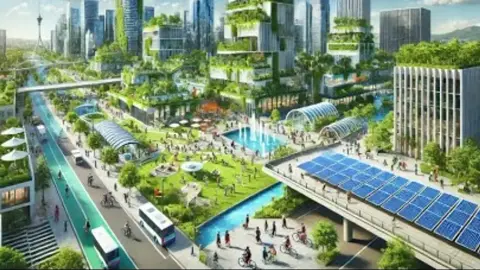
It is fought with trees, light surfaces, water and permeable ground, and it is unequally distributed: poor neighbourhoods have fewer trees and more asphalt. Satellite thermal mapping now shows street by street where shade is needed. The 2022 European heatwaves turned it into a public health priority.
Videos on this term (5)
- Infrastructure
Bent Flyvbjerg: Why Megaprojects Fail Despite a Rational Plan
Bent Flyvbjerg explains why megaprojects run over budget and time: power versus rationality in Aalborg, optimism…
Bent Flyvbjerg 3 min read - Climate change
Thomas Campanella: Urban Resilience in Times of Crisis
Thomas Campanella argues that a city's resilience is that of its citizens: New Orleans after Katrina, the green dot…
Thomas Campanella 3 min read - Climate change
Urban Resilience and Climate Change: Governing Climate with Justice
Urban resilience to climate change is a way of governing, not a technical attribute. What Pauline McGuirk's…
2 min read - Infrastructure
Critical Infrastructure: Urban Vulnerability per Stephen Graham
Critical infrastructure fails more often and in cascade. What Stephen Graham's Splintering Urbanism and Disrupted…
Stephen Graham 3 min read - Urban economy
Urban inequality and social justice: four fronts
Urban inequality and social justice explained on four fronts: gentrification, urban poverty, equitable access to…
2 min read