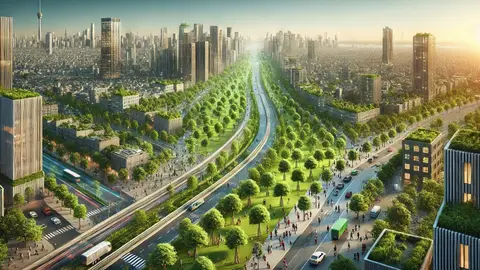
Urban trees
The urban forest is the set of trees on a city's streets, parks and lots, and it is the cheapest infrastructure there is: it gives shade, lowers temperature by several degrees, holds rainwater, filters particles and raises house prices on the street where it stands. It is measured as canopy cover: the share of ground under trees.
David Nowak quantified the value of urban forest services in the United States; the 3-30-300 rule —three trees visible from home, 30% canopy in the neighbourhood, a park within 300 metres— sums up the goal. Canopy follows income: poor neighbourhoods have half the trees of rich ones in almost any city.
Videos on this term (1)
- Urban ecology
Urban Reforestation: Benefits, Examples and How to Do It Right
Urban reforestation cools the city, retains water and improves health. What David Nowak, the Arbor Day Foundation…
3 min read