Key points
- Simone proposes reading the African city through the networks of people that sustain it, not through what it lacks.
- Roy shows that the state produces informality by deciding what is tolerated, demolished or legalised.
- In situ upgrading with participation, as in Favela-Bairro or Medellín, outperforms titling and clearance.
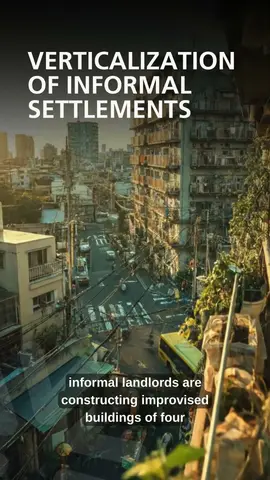
The informal economy and informal settlements are the two faces of the city that the Global South builds outside the law and outside planning. According to the International Labour Organization, six out of ten employed people in the world, some two billion, work informally, without contracts, social protection or registration; and more than a billion live, according to UN-Habitat, in self-built neighbourhoods without title deeds or complete services. Two authors have changed the way that reality is understood: the sociologist AbdouMaliq Simone, who studied African cities, and the planner Ananya Roy, who analysed India and planning theory from the South.
AbdouMaliq Simone: people as infrastructure
Simone, in his article People as Infrastructure (2004) on Johannesburg and in For the City Yet to Come on Dakar, Pretoria, Douala and Jeddah, proposes looking at the African city not for what it lacks, pipes, roads, formal jobs, but for what sustains it: the networks of people who lend each other money, information, shelter and contacts to make life possible where the state does not reach. That human infrastructure, flexible and provisional, allows millions of residents of Kinshasa or Lagos to eat, move and trade every day. It is not a deficiency that planning should correct but a capacity it should recognise and strengthen.
Ananya Roy: informality as a mode of urbanization
Roy, in Urban Informality: Toward an Epistemology of Planning (2005), took the decisive theoretical step: informality is neither a sector nor a place but a mode of urbanization produced by the state itself. It is governments that decide which occupations are tolerated, which are demolished and which are legalised, and that discretion is an instrument of power. Elites also urbanise informally, with unlicensed developments and tailor-made rezonings, but only the poor are treated as illegal. In Slumdog Cities (2011) Roy further criticises the image of the poor neighbourhood as catastrophe or as a reservoir of entrepreneurs, and calls for studying informality as a political practice.
Titling, clearance or upgrading: what has worked
Formalisation policies have had uneven results. The mass titling of property that Hernando de Soto proposed in The Mystery of Capital (2000) promised to turn informal homes into assets against which to borrow, but the evidence shows modest effects and, at times, sales to investors and expulsion. Clearance and resettlement programmes in peripheral blocks, from Mumbai to Nairobi, break the networks Simone describes and move people away from their jobs. The best results come from in situ upgrading with residents' participation, such as Rio's Favela-Bairro programme or Medellín's integral urban projects, which bring water, stairways, transport and public space without displacing anyone.
Exclusion from services and rights in informal settlements
Exclusion from basic services is the gravest consequence of informality. Without drinking water, sanitation or waste collection, child mortality and disease soar; without transport, formal employment is out of reach; without a recognised address, there is no access to credit, school or, in some countries, the vote. Roy and Simone agree that this exclusion is not a technical failure but a decision: the formal city needs the cheap labour of the informal one and, at the same time, keeps it outside its rights.
Recognising informality as a legitimate way of producing the city changes the task of planning. Instead of drawing the ideal city and treating the rest as deviation, the job becomes guaranteeing security of tenure, extending services to what has been built, protecting informal work with rights rather than prosecuting it and giving the networks Simone describes the resources to do what they already do better than anyone. The city of the Global South is not waiting to be planned: it is already built, and the question is whether its inhabitants will be treated as citizens.
Frequently asked questions
What does people as infrastructure mean according to AbdouMaliq Simone?
That in cities such as Johannesburg or Kinshasa the networks of people who lend each other money, information, shelter and contacts work as the infrastructure that sustains urban life where the state and the formal market do not reach.
Why does Ananya Roy say the state produces informality?
Because governments decide which occupations are tolerated, which are demolished and which are legalised; that discretion turns informality into an instrument of power that treats only the poor as illegal.