Key points
- Smith: gentrification happens where the gap between the land's current rent and its potential rent makes reinvestment profitable.
- The revanchist city is the policy that reconquers central neighbourhoods by expelling the poor, the homeless and minorities.
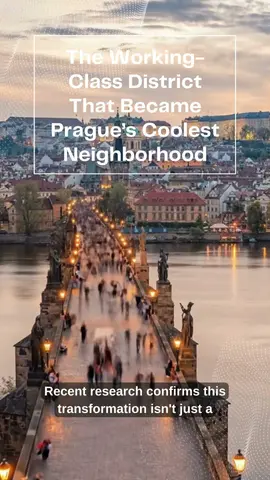
- What is presented as revitalisation is displacement, and gentrification has become a global urban strategy.
Neil Smith (1954–2012), a Scottish geographer based in New York, is the author who explained why gentrification happens. In The New Urban Frontier: Gentrification and the Revanchist City (1996) he offers a sharp critique of the phenomenon and of its relationship with contemporary urban policy. Smith was among the first to theorise gentrification as a process driven by capital rather than by the tastes of new neighbours: the displacement of working-class residents in favour of middle and upper classes, and a revanchist city in which elites reclaim the spaces they had earlier abandoned through exclusionary policies that privilege accumulation and speculation.
The rent gap: the engine of gentrification
His central tool is the rent gap, which he had formulated in 1979: the difference between what a piece of land yields in its current, run-down use and what it would yield in its best possible use. When that gap is wide enough, developers and investors identify the undervalued neighbourhood, revalue it and capture the difference. The mechanism creates a market favourable to investment and, at the same time, displaces the original residents, who cannot afford the rising cost of living. Gentrification, according to Smith, is not a local process: it is a global phenomenon tied to the dynamics of neoliberal capitalism.
The revanchist city
The revanchist city is his second concept. It names the punitive, zero-tolerance policies that accompany gentrification — Smith saw them in Giuliani's New York in the 1990s —: local governments seeking to retake control of run-down areas and justifying with it the expulsion of vulnerable populations, homeless people, immigrants, street vendors. That revanchism is the elites' response to the loss of control over cities in earlier decades, when capital abandoned whole neighbourhoods for the suburbs and now returns to claim them as a frontier to be conquered.
Revitalisation or displacement
Smith also criticises the discourse that presents gentrification as revitalisation. Some areas improve in infrastructure and services, but the social cost is high: low-income residents are displaced and their community networks destroyed. Beyond aesthetic or economic benefits, gentrification reinforces urban inequality and turns cities into exclusive spaces for those who can pay the price of neoliberal urbanisation. The word frontier in the title is no accident: it evokes the story of the pioneer civilising a wild territory, now applied to the poor neighbourhood.
Gentrification as a global process
Another relevant aspect is his analysis of globalisation. Gentrification is not an exclusively Western phenomenon: cities in Asia, Latin America and Africa undergo similar processes, driven by the flow of global capital and by urban policies that favour foreign investment over the needs of local communities. Smith called it gentrification as a global urban strategy, and Loretta Lees and others have since documented it as planetary gentrification.
The New Urban Frontier provides a structural critique of the urban policies that promote gentrification and displacement. The rent gap explains the engine; the revanchist city, the politics that accompanies it. Together they show how the interests of capital shape urban space and produce exclusion, which is why Smith's work remains fundamental for anyone studying urban development and the struggle for the right to the city.
Frequently asked questions
What is the rent gap according to Neil Smith?
The difference between the rent a plot of land produces under its current use and the rent it could produce under its best possible use; when that gap is large enough, capital returns to the disinvested neighbourhood, renovates and replaces residents, which Smith identifies as the engine of gentrification.
What is the revanchist city?
Smith's concept for the urban politics of 1990s New York and other cities, which reconquered central neighbourhoods for the middle classes through policing, evictions and the cleansing of public space, punishing the poor, the homeless and the minorities who lived there.