Key points
- Davis attributes slum growth to structural adjustment, the retreat of the state and urbanization without jobs.
- Clearance, property titling and NGO pilot projects never reached the scale of the problem.
- Roy and Angotti criticise its apocalyptic gaze; in situ upgrading shows alternatives the book barely sees.
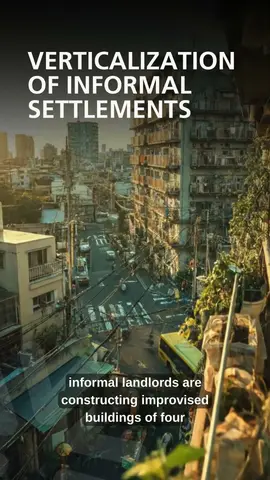
Planet of Slums (2006) is the book in which the historian Mike Davis gathered the data of the 2003 UN-Habitat report on informal settlements and turned them into an indictment: more than a billion people, one in six, were already living in neighbourhoods without services, secure tenure or formal jobs, and that figure was growing faster than any other population on the planet. Davis argues that this planet of slums is not an accident of urban growth but the product of concrete decisions: the structural adjustment of the 1980s, the retreat of the state and an urbanization without industrialisation that offers newcomers nothing but survival.
Urbanization without industrialisation and structural adjustment
The historical argument is the core of the book. In Europe and North America the urbanization of the nineteenth century was brutal but came with factories that absorbed migrants from the countryside. In Africa, Asia and much of Latin America, the urbanization of recent decades happens without that engine: people arrive in cities pushed out by agrarian crisis, war and drought, not pulled by jobs. Davis attributes the acceleration to the adjustment programmes of the International Monetary Fund and the World Bank, which cut public spending, liberalised agricultural trade and dismantled local industry, producing what he calls a surplus humanity confined to the peripheries.
Living conditions on the planet of slums
Davis devotes hard chapters to material conditions. Overcrowding in Kibera, Dharavi or Cité Soleil, the absence of sanitation that makes excrement the central health problem, the occupation of unstable hillsides, dumps and floodplains that exposes the poor to every disaster, and informal economies in which child labour, street vending and clandestine workshops replace employment. Against the image of the slum as a seedbed of entrepreneurs popularised by Hernando de Soto, Davis replies that informality is above all competition of the poor against the poor for ever smaller margins.
Critique of the responses: clearance, titling and NGOs
The book is also a critique of the responses. Clearance and resettlement programmes in peripheral blocks broke communities and produced new ruins. The property titling De Soto promised benefited speculators and expelled tenants. NGOs and international agencies, Davis argues, replaced a retreating state with pilot projects that never reached the scale of the problem. And religion, from Pentecostalism to political Islam, filled the political vacuum left by weakened popular movements. Davis closes with a warning about the militarisation of urban poverty, with armies preparing for war in the peripheries.
Critiques of the book and alternatives from below
Planet of Slums has been as influential as it has been contested. Ananya Roy, Tom Angotti and others reproach it for an apocalyptic gaze that reduces slum residents to victims without agency, ignores the organisation, creativity and improvements achieved from below, and treats very different realities as a single phenomenon. The UN-Habitat data Davis used have been revised and the trends are not uniform: the share of urban population in informal settlements fell between 2000 and 2015 even though the absolute number kept growing. Programmes such as in situ upgrading in Medellín, Rio or Bangkok show alternatives the book barely considers.
Even with those critiques, the book remains the most widely read account of the problem. Its value lies in having connected the global scale with political causes, and in having reminded us that the twenty-first-century city is, for most of its inhabitants, a self-built settlement. Facing the global urban crisis requires, in the reading that emerges from Davis and his critics, security of tenure, services brought to what is already built, decent work and a state that returns to the territories it abandoned, with communities as protagonists rather than as the problem.
Frequently asked questions
What does Mike Davis argue in Planet of Slums?
That more than a billion people live in informal settlements as a result of the structural adjustment of the 1980s, the retreat of the state and an urbanization without industrialisation that offers only informal survival to those arriving in cities.
What criticisms has Planet of Slums received?
That it reduces slum residents to victims without agency, ignores organisation and improvements achieved from below, lumps together very different realities and uses UN-Habitat data later revised; the share in informal settlements fell between 2000 and 2015.