Key points
- Since the 1980s a common recipe sold public housing, deregulated rents and turned the home into a mortgaged asset.
- As UN Rapporteur she documented evictions in the United States, Kazakhstan, Argentina, Indonesia and the United Kingdom.
- Minha Casa Minha Vida benefited developers and banks and left favelas without security of tenure.
The right to housing against financialization is the cause that has defined the career of Raquel Rolnik, a Brazilian architect and planner, professor at the University of São Paulo and United Nations Special Rapporteur on adequate housing from 2008 to 2014. Her thesis, set out in Urban Warfare: Housing Under the Empire of Finance (2019), first published in Portuguese in 2015, is that over the past four decades housing has stopped being a right and become a financial asset, and that this transformation, driven by states, banks and international agencies, has produced evictions, debt and exclusion on every continent. Defending housing, she argues, requires dismantling the empire of finance over land.
From right to asset: the neoliberal recipe of the 1980s
Rolnik locates the turning point in the 1980s. Until then, most rich countries and many in the South kept public housing stocks, regulated rents and controlled credit systems. The neoliberal wave dismantled that model with a common recipe: sell social housing, deregulate rents, promote ownership through mortgages and open the sector to capital markets. Ownership was presented as a universal ideal and a path to security, and households took on debt to reach it. Once credit was securitised and sold to global investors, housing came to depend on financial markets rather than on the needs of those who live in it.
UN Rapporteur: evictions from the United States to Kazakhstan
Her UN mandate allowed her to document the consequences first hand. She visited the United States in 2009, at the height of the subprime mortgage crisis, and described millions of families evicted by a system that had turned their home into a speculative instrument. She reported on forced evictions in Kazakhstan, Argentina, Indonesia and Rwanda, on privatisations in Croatia and on the bedroom tax in the United Kingdom in 2013, which penalised social housing tenants with spare rooms. Her conclusion was that the right to housing, recognised in international treaties, was being systematically violated in the name of market efficiency.
Brazil and Minha Casa Minha Vida: the critique of the model
The Brazilian case occupies a central place in her work. Rolnik analyses how the Minha Casa Minha Vida programme, launched in 2009 to build millions of homes, benefited above all developers and banks, produced estates in distant peripheries without services and consolidated mortgaged ownership as the only route of access, while favelas and occupations remained without security of tenure. Her critique is not of building housing but of the model: financing demand through private credit and handing supply to the market reproduces the inequality it claims to fight. Against it, she defends security of tenure in all its forms, including collective and community possession.
Funds, platforms and the second phase of financialization
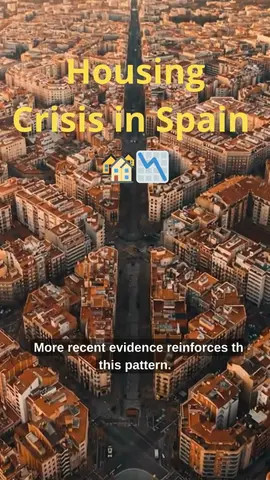
Rolnik has also identified a second phase of financialization after 2008: the investment funds that bought portfolios of foreclosed homes and turned them into market rentals, the short-term rental platforms and the instruments that treat whole neighbourhoods as assets. In Spain, the United States or Germany, those global actors have replaced individual landlords and intensified pressure on tenants. Her answer combines rent regulation, expansion of the public and cooperative stock, taxation of empty homes and, above all, a change of principle: treating housing as a right and a use good, not as a store of value.
Rolnik's contribution is to have given the housing debate a global scale and a rights framework. She showed that the affordability crisis is neither a local problem nor a technical failure but the result of a common policy applied worldwide, and that reversing it requires equally political decisions. Her slogan, housing is a right and not a commodity, has become the banner of tenants' movements on every continent, and her work remains the reference for anyone who wants to understand how finance colonised the place where we live.
Frequently asked questions
What does Raquel Rolnik argue in Urban Warfare?
That over the past four decades housing has stopped being a right and become a financial asset, through the sale of public housing, rent deregulation and securitised mortgage credit, and that this transformation has produced evictions, debt and exclusion worldwide.
What does Rolnik propose to guarantee the right to housing?
Security of tenure in all its forms, including collective tenure, rent regulation, expansion of the public and cooperative stock, taxation of empty homes and a change of principle that treats housing as a use good and not a store of value.