Key points
- Rolnik: since the 1980s housing stopped being a right and became a global financial asset.
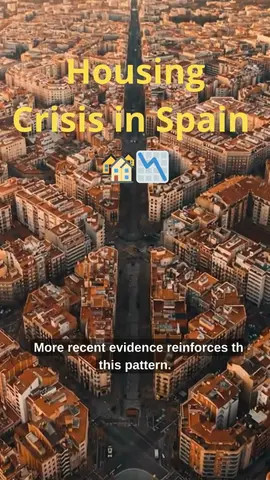
- Evictions in Madrid, peripheries in Santiago and removals in Rio obey the same logic.
- States facilitate financialisation; mortgage victims' and homeless movements have won moratoria and regulations.
Urban Warfare: Housing Under the Empire of Finance (Verso, 2019) is the book in which the Brazilian planner Raquel Rolnik, United Nations Special Rapporteur on the right to adequate housing from 2008 to 2014, described the conquest of housing by global financial capital, first published in Portuguese in 2015 as Guerra dos lugares. Her thesis is that since the 1980s housing stopped being treated as a social good and a right and became a financial asset, and that this transformation, driven by states and international organisations, has produced mass evictions, household debt, the expulsion of communities and a housing crisis that spans North and South.
From the welfare state to the securitised mortgage: the historical turn
Rolnik reconstructs the historical turn. After the Second World War, welfare states built public housing and regulated rents; from Thatcher and Reagan onward, with World Bank support, policy shifted toward mortgage-financed ownership, the sale of public stock and deregulation. Securitised mortgage credit turned every house into a product tradable on global markets, and the crisis of 2008 showed the result: millions of families evicted in the United States and Spain while investment funds bought at bargain prices the homes they had lost.
Chile, Brazil, Kazakhstan, Rio: financialisation around the world
The book follows that logic around the world. In Chile and Mexico, social housing was privatised into peripheral estates financed by demand subsidies that enriched developers and isolated families. In Kazakhstan and Eastern Europe, the transition to the market produced indebtedness and evictions. In Brazil, the Minha Casa Minha Vida programme repeated the model of developer-built peripheries. Rolnik also documents the other frontier: the removal of informal settlements for mega-events and projects, from Rio de Janeiro to Delhi, where land occupied by the poor is captured for real estate capital. The war of places of the original title is that global territorial dispute.
The human rights perspective: states that facilitate
Her experience as rapporteur brings the human rights perspective. Rolnik visited dozens of countries and found that states, instead of protecting residents, facilitate financialisation with tax advantages, public guarantees to banks, planning deregulation and repression of resistance, and that international bodies measure success by credit granted rather than security of tenure. Her 2012 report to the Human Rights Council on the financialisation of housing anticipated the later work of her successor Leilani Farha and the Shift campaign.
Resistance and decommodification: housing as a right
Rolnik devotes the final part to resistance. Spain's Platform for People Affected by Mortgages, Brazil's urban homeless movements, occupations of empty bank-owned homes, tenants' unions and struggles against removals show that housing as a right remains alive and that movements have won moratoria, regulations and legal recognition. Her proposal is to decommodify: public and cooperative stock, rent regulation, security of tenure for informal settlements and control over credit.
The contribution of Urban Warfare is to have united in a single narrative what seemed separate crises: the evictions in Madrid, the peripheries of Santiago and the removals in Rio obey the same logic of financial capital over land. For planning, the lesson is that no housing policy works unless it first decides whether housing is an asset or a right, and that this decision is fought, neighbourhood by neighbourhood, in the war of places.
Frequently asked questions
What does Raquel Rolnik argue in Urban Warfare?
That since the 1980s, with the support of states and international organisations, housing stopped being treated as a social good and a right and became a financial asset, and that this transformation has produced mass evictions, household debt, settlement removals and a global housing crisis.
What does Rolnik propose against financialisation?
Decommodifying housing with public and cooperative stock, rent regulation, security of tenure for informal settlements and control over credit, building on movements such as Spain's Platform for People Affected by Mortgages or Brazil's urban homeless movements.