Key points
- The space of flows describes cities shaped by networks of information, capital and people rather than by proximity.
- It concentrates power and resources in a few nodes — London, Tokyo, New York — and marginalises others.
- Technology lets economic and social activity happen instantly, overcoming distance.
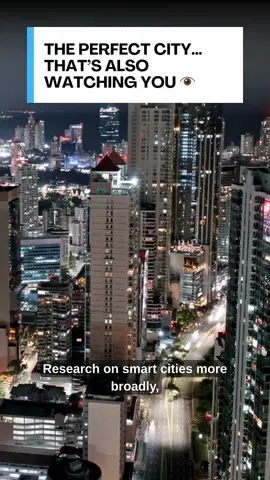
The space of flows is the concept with which Manuel Castells describes how global cities are increasingly organised by networks and flows of information, capital and people rather than by traditional patterns of proximity. He set it out in The Rise of the Network Society (1996), the first volume of The Information Age, in opposition to the space of places, that of everyday life anchored in a location. The idea challenges the assumption that physical space is what determines urban life: the global connections that run through a city weigh more in its structure and functioning than its local geography. Cities stop being closed entities and become nodes in a world network of exchange.
Networks instead of proximity
To understand the space of flows is to understand globalisation and its effect on cities. Instead of depending only on physical proximity, global cities are interconnected by technological and economic networks that allow the continuous flow of information and capital, so that they interact constantly with others on a world scale: transactions, data and corporate decisions happen at once in several places. A multinational's headquarters may be in New York while its production decisions are shaped by information flows arriving from Shanghai or São Paulo.
Power concentrates in a few nodes
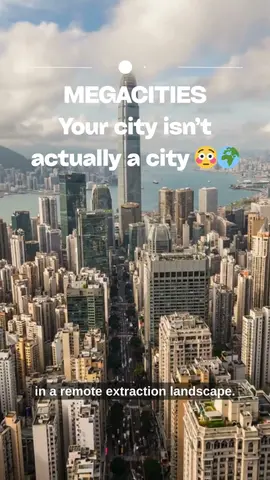
That shift brings transformations and challenges. The space of flows favours the concentration of power and resources in certain global cities while others are left behind: London, Tokyo or New York become strategic nodes that attract investment, talent and resources, which gives them a leading role in the world economy. The same process produces inequality, because many other cities, especially in developing countries, struggle to integrate fully into those networks and remain connected only as suppliers.
Time and space in daily life
The space of flows also alters the perception of time in daily life. Castells shows how technology and telecommunications allow economic, cultural and social activity to happen instantly, overcoming the barriers of time and distance, and he calls that timeless time: decisions taken in real time in several places at once. Global cities live at an ever faster and more connected pace, and that generates tension and inequality among the sectors that lack access to the technologies or networks needed to take part in those flows.
Infrastructure for flows
The concept also shapes how urban spaces are designed. Many cities have adapted their infrastructure to ease global flows: international airports, financial districts, data centres and digital networks that allow instant connectivity. That raises questions about the future of public space and the sense of community, because attention shifts from local, physical interaction to virtual and global connection; Castells warns of the risk of a city of elites connected to one another and disconnected from their own territory.
The space of flows thus offers a perspective for understanding how global networks of information, capital and people shape cities. It challenges traditional models of urban organisation and underlines the weight of global connections in urban life; and, although it opens opportunities, it also produces inequality and transforms the way cities operate and are experienced, with new challenges for those who plan them.
Frequently asked questions
What is the space of flows?
A concept by Manuel Castells describing how global cities are increasingly organised by networks and flows of information, capital and people rather than by physical proximity or local geography. Cities become interconnected through technological and economic networks.
What are the consequences of the space of flows for cities?
It concentrates power and resources in a few strategic nodes and leaves other cities on the margins; it alters how time and space are perceived in daily life; and it drives cities to build infrastructure — airports, financial districts, digital networks — designed for those flows.