Key points
- Graham: techniques and technologies of war return to cities as perimeters, cameras, drones and armoured police.
- Splintering Urbanism: privatised infrastructure produces premium enclaves and disconnected zones; security follows the same logic.
- Surveillance classifies citizens by risk and reproduces inequality in poor and racialised neighbourhoods.
The new military urbanism is the concept with which the British geographer Stephen Graham, a professor at Newcastle University, described in Cities Under Siege (2010) the transfer of techniques, technologies and doctrines of war into the everyday life of cities: cameras and facial recognition, barriers and perimeters, police equipped like armies, drones, simulations and a gaze that treats the city and its inhabitants as battlefield and as threat. His thesis is that since the 1990s, and faster after 2001, security has become the axis of urban planning, and that this securitisation reorganises space, reinforces inequality and turns particular neighbourhoods and groups into permanent targets of surveillance.
Splintering Urbanism: fragmented infrastructure and protected enclaves
Graham reached that idea through infrastructure. In Splintering Urbanism (2001), with Simon Marvin, he showed how the networks of water, energy, transport and telecommunications that unified the twentieth-century city fragment under privatisation into premium services for those who pay and degraded services for the rest, producing connected enclaves and disconnected zones. Security follows the same logic: protected bubbles with controlled access, gated communities, financial districts and policed shopping malls, beside neighbourhoods where the state's presence is mostly the police. Militarisation, in his reading, is fragmentation carried into control.
Cities Under Siege: from Baghdad and Gaza to London and New York
Cities Under Siege documents the circulation between war and city. The military doctrines of the Iraq war and the Palestinian territories, with the city as combat space, checkpoints, walls and aerial surveillance, return to London, New York or Paris as security rings, exclusion zones for summits and mega-events, missiles on rooftops during the 2012 Olympics, and police with armoured vehicles. The companies that sell those technologies to armies later sell them to city councils, and borders move inside the city, to airports, stations and identity checks that fall above all on migrants and minorities.
Surveillance and risk classification: calculated inequality
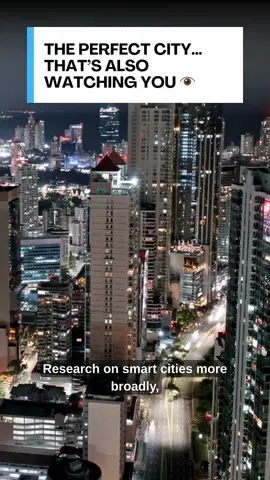
Surveillance is his second dimension. Graham shows that cameras, sensors, facial recognition and data analysis allow citizens to be classified by risk and behaviour to be anticipated, and that this classification reproduces existing inequalities: poor and racialised neighbourhoods receive more surveillance, more arrests and more data confirming their dangerousness. His book Vertical (2016) added the dimension of height, from drones and satellites to skyscrapers and basements, to show that control and inequality are also organised along the city's vertical axis.
Influence, criticism and what demilitarising the city means
His work converses with Mike Davis's fortress Los Angeles, Eyal Weizman's architecture of occupation and David Lyon's surveillance studies, and has influenced debates on militarised policing after Ferguson in 2014, on smart cities as infrastructures of control and on facial recognition moratoria. Critics note that the term militarisation may blur differences between democratic and authoritarian contexts; Graham replies that the circulation of techniques and companies is precisely what erases that difference if it is not watched.
Stephen Graham's lesson is that urban security is not neutral: every camera, barrier and perimeter decides who is protected and who is suspect, and a city planned from fear produces enclaves for some and surveillance for others. Demilitarising the city means reclaiming public space as a place of encounter rather than control, subjecting surveillance technologies to democratic limits and treating security as a result of equality rather than a substitute for it.
Frequently asked questions
What is the new military urbanism according to Stephen Graham?
It is the transfer of techniques, technologies and doctrines of war into the everyday life of cities, cameras, facial recognition, barriers, police equipped like armies and drones, which since the 1990s and especially after 2001 makes security the axis of planning and turns particular neighbourhoods and groups into permanent targets of surveillance.
How does securitisation reinforce urban inequality?
By producing protected bubbles with controlled access for those who pay, gated communities, financial districts and policed malls, beside poor and racialised neighbourhoods where the state's presence is mostly the police and where surveillance generates the data that confirm their supposed dangerousness.