Key points
- In Los Angeles white neighbourhoods had dozens of times more park space per child than Latino or Black ones.
- The urban green paradox: the park that reaches a poor neighbourhood raises rents and expels those who demanded it.
- Just green enough: green designed with residents, housing protection and success measured by who stays.
Urban environmental justice is the principle that all people, regardless of income or origin, should have equivalent access to the benefits of a healthy environment, parks, trees, clean air, and be equally protected from its risks, pollution, heat, flooding. The American geographer Jennifer Wolch, dean of the College of Environmental Design at Berkeley from 2009 to 2019, has been one of its leading researchers, and her most cited contribution is a warning: the urban green that corrects one injustice can create another if it raises neighbourhood values and expels the people it was meant to benefit.
Park poverty: inequality measured in Los Angeles
Wolch first documented the inequality. In a 2005 study of Los Angeles with John Wilson and Jed Fehrenbach she measured park access by neighbourhood and found that majority-white areas had dozens of times more park space per child than majority-Latino or Black ones, and that the city had one of the worst ratios of green space per resident in the United States. That park poverty, concentrated in the neighbourhoods that suffer most from heat and pollution, was not accidental: it reproduced decades of decisions about where to invest and whom to protect.
The urban green paradox and green gentrification
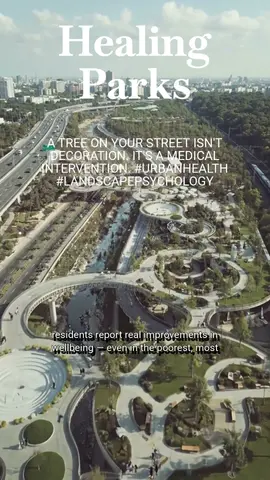
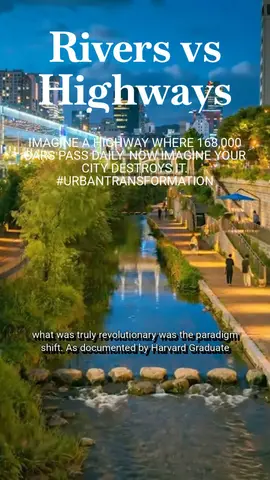
The correction raised a paradox that Wolch formulated in 2014 with Jason Byrne and Joshua Newell in the article on making cities just green enough. When a disadvantaged neighbourhood receives a large park or a green corridor, its rents rise, higher-income residents arrive and the original residents, who had demanded the space, end up displaced. New York's High Line, the linear park on an elevated railway, multiplied prices in Chelsea; restored rivers and large parks produce similar effects. Wolch called this the urban green paradox and proposed the just green enough strategy: environmental improvements designed for current residents, without turning them into a real estate draw.
Just green enough: rules for green that does not displace
That strategy has concrete rules. Design with the community what kind of green it wants, often small neighbourhood parks, gardens and street trees rather than flagship parks. Pair every intervention with housing protection: regulated rents, public housing or land trusts nearby. Keep existing uses and jobs, including industrial ones, instead of replacing them with upscale leisure. And measure success by who still lives in the neighbourhood years later, not by the rise in land value. Wolch shows that environmental justice and housing justice are inseparable.
Zoöpolis and the excluded of the planned city
Her earlier work had opened other fronts. With Michael Dear she studied in Landscapes of Despair (1987) how psychiatric deinstitutionalisation concentrated homeless people in city centres, and in Zoöpolis (1996) she proposed that planning recognise animals as inhabitants of the city, anticipating today's urban ecology. In every case her question is the same: who is left out of the city being planned, whether the poor, the sick or non-human species.
Wolch's influence shows in the urban greening policies of the past decade, which build in equity criteria, prioritising neighbourhoods with fewer trees and more heat, and safeguards against green gentrification in cities from Los Angeles to Barcelona. Her lesson is that planting trees is social policy, and that a just city is not the one with the most green but the one that distributes its benefits to those who need them most and lets them stay to enjoy them.
Frequently asked questions
What is green gentrification?
It is the process by which an environmental improvement, a park, a green corridor or a restored river, raises the value of a disadvantaged neighbourhood, attracts higher-income residents and displaces the original residents who had demanded it; Wolch called it the urban green paradox.
What does the just green enough strategy propose?
Environmental improvements designed for current residents, neighbourhood parks, gardens and street trees rather than flagship parks, paired with regulated rents, public housing and the retention of existing uses and jobs, and evaluated by who still lives there.