Jennifer Wolch
desde 1980
American geographer who showed that a new park makes a neighbourhood expensive, and coined the rule of keeping it «just green enough» so nobody is pushed out.
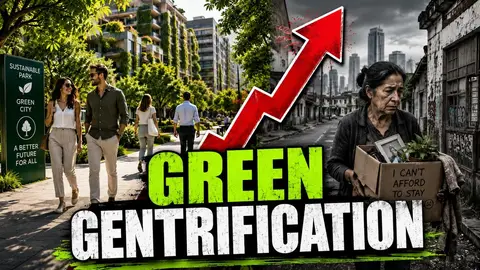
Wolch framed what we now call green gentrification in terms that are hard to argue with: a city that plants trees, restores a river or opens a park improves its residents' health and, at the same time, drives rents up until those residents can no longer pay. The environmental benefit and the displacement arrive together, and planners cannot pretend only the first one shows up.
Her answer is not to stop planting. It is the idea of «just green enough»: modest interventions, spread out, made with the people already living there, instead of the flagship park that attracts investment and photographers. A small park in every neighbourhood does more for public health than a spectacular one in the district that was going to appreciate anyway.
An American geographer and planner, Wolch was dean of the College of Environmental Design at the University of California, Berkeley, and before that spent almost three decades at the University of Southern California, where she directed the Center for Sustainable Cities. She began with urban poverty: with Michael Dear she wrote Malign Neglect (1993) on homelessness in Los Angeles, and in The Shadow State (1990) she described how the state offloads onto the voluntary sector the services it cuts, creating a parallel administration with no democratic control.
She then opened two fronts that look unrelated and are not. In Animal Geographies (1998) she proposed the «zoöpolis», the city conceived also for the animals that live in it. And since 2014, with Jason Byrne and Joshua Newell, she has set the agenda for equity of access to urban green: they measured who has a park within ten minutes' walk and who does not, and found the inequality you would expect by income and by origin. That work is now the obligatory reference for any green infrastructure plan that wants to call itself fair.
Videos on Jennifer Wolch (1)
- Urban ecology
Jennifer Wolch: Environmental Justice and Green Planning
Jennifer Wolch measured park poverty in Los Angeles and formulated the urban green paradox: the park that corrects…
Jennifer Wolch 2 min read

Where Jennifer Wolch is cited (4)
- Urban ecology
Animal city: planning for pigeons, rats and foxes
Jennifer Wolch, Donaldson and Kymlicka: what a city planned for pigeons, rats, foxes and buried rivers looks like,…
7 min read - Urban ecology
Green Gentrification: When Parks and Trees Push Residents Out
Green gentrification is the paradox of the sustainable city: the park that a neighbourhood fought for raises rents…
3 min read - Urban form
Michael Dear: Postmodernism and Critical Urban Planning
Michael Dear led the Los Angeles School and brought postmodernism into urban planning. What the postmodern city is…
Michael Dear 3 min read - Public space
Animal city: planning for pigeons, rats and foxes
Jennifer Wolch, Donaldson and Kymlicka: what a city planned for pigeons, rats, foxes and buried rivers looks like,…
1 min read