Key points
- Modernity made flows of water and energy invisible to produce the illusion of an autonomous home and a city separate from nature.
- The Athens drought of 1989 to 1991 was the moment the city discovered it depended on a nature it believed mastered.
- Kaika rejects the resilience agenda that makes the vulnerable responsible for absorbing crises they did not cause.
City of Flows: Modernity, Nature, and the City (2005) is the book in which the Greek architect and geographer Maria Kaika, a professor at the University of Amsterdam, explained how the modern city was built by domesticating nature and hiding that dependence behind walls, pipes and dams. Her thesis is that the water from the tap, the electricity at the socket and the drain that carries away waste are flows that cross the city and connect it with distant rivers, mountains and power plants, and that modernity made them invisible to produce the illusion of an autonomous home and a city separate from nature. When that illusion breaks, in a drought, a flood, a blackout, nature returns to politics.
The water of Athens: from the Marathon dam to the 1989 drought
Kaika follows the water of Athens as her thread. From the ancient springs to the Marathon dam, inaugurated in 1929 as a symbol of the modernisation of the Greek state, and the great works of the twentieth century, she shows how each infrastructure was at once a technical, a political and a cultural project: it promised progress, hygiene and control, was financed with debt and foreign capital, and reordered who received water and at what price. The drought of 1989 to 1991, which forced rationing and new transfers, is her central case: the moment the city discovered it depended on a nature it believed it had mastered.
The autonomous home and the domestic uncanny
The second part of the book enters the home. Kaika analyses how the modern dwelling was conceived as an autonomous refuge, sealed from the outside, where nature appears only domesticated, clean water, air conditioning, the potted plant, while untamed nature, rain, cold, waste, stays outside or under the floor. That separation produces what she calls the domestic uncanny: the anxiety that arises when the excluded returns, the pipe that bursts, the damp that rises, the supply cut. Invisible infrastructure is the condition of modern comfort and also its vulnerability.
Urban political ecology: the city as urbanised nature
The theoretical frame is the urban political ecology Kaika developed with Erik Swyngedouw. Nature and society are not separate domains but produce each other in the city: urban water is at once rain, reservoir, pipe, tariff and law, and managing it is always deciding for whom. Against an ecology that wants to return the city to a pure nature, Kaika proposes recognising that the city is urbanised nature and asking which nature is produced, with which infrastructures and for whose benefit. That question links her work on water with the debates on river restoration, green infrastructure and environmental justice.
Against resilience and iconic monuments: the later critique
In later work Kaika has applied the same critical gaze to new urban discourses. In a 2017 article titled Don't Call Me Resilient Again she rejected the resilience and smart city agenda that presents vulnerable communities as responsible for absorbing crises they did not cause, and proposed instead a politics that acts on the causes, inequality, financialisation, extraction. She has also studied large urban projects, from the Bilbao Guggenheim to iconic towers, as the new monuments with which cities stage their modernity, just as dams did a century earlier.
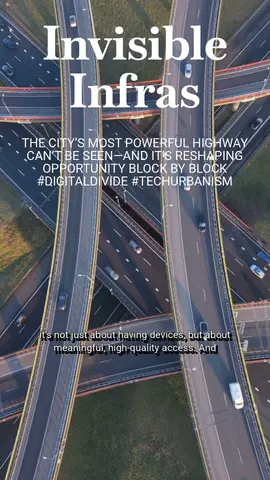
The contribution of City of Flows is to have taught us to see the city through its flows. Every turn of a tap connects the home with a territory, a history of works and debts and a geography of who has and who has not, and making that connection visible is the first step toward governing it justly. Kaika offers planners and citizens a simple rule: the infrastructures that cannot be seen are those that decide most, and urban politics begins by bringing them to light.
Frequently asked questions
What does Maria Kaika argue in City of Flows?
That the modern city was built by domesticating nature and hiding behind pipes, walls and dams the flows of water and energy that connect it with the territory, to produce the illusion of an autonomous home; when that illusion breaks, in droughts or blackouts, nature returns to politics.
What is the domestic uncanny according to Kaika?
It is the anxiety that arises when the nature excluded from the modern home returns, the burst pipe, the damp, the supply cut, and reveals that comfort depends on invisible infrastructures that are also its vulnerability.