Key points
- Nowak quantifies with i-Tree the carbon, pollution and water that each city's trees manage.
- Tree-lined streets are two to eight degrees cooler and reduce flooding and asthma.
- The 3-30-300 rule: three trees in view, 30 percent canopy per neighbourhood and green space within 300 metres.
Urban reforestation is the systematic planting and care of trees along streets, in squares, parks, school grounds and infrastructure edges to recover the canopy that urbanization removed. It is one of the climate adaptation measures with the best cost-benefit ratio, because a mature tree provides shade, cools the air, retains rainwater, filters pollutants and shelters wildlife all at once. Three references have measured and spread those benefits: David Nowak, a researcher at the United States Forest Service; the Arbor Day Foundation, the world's largest tree-planting organisation; and Karen Seto, a geographer at Yale and lead author of the IPCC chapters on cities.
David Nowak and i-Tree: measuring what trees do
Nowak has spent three decades quantifying what urban trees do. His team developed i-Tree, the free software with which cities around the world inventory their trees and calculate in dollars or euros the services they provide: carbon stored, pollutants removed from the air, runoff avoided, energy saved on cooling. A 2014 study of his estimated that trees in American cities remove more than 17 million tonnes of air pollutants every year, with a health value in the billions. Nowak insists that the benefit depends on species, size and survival: a tree that dies at five years is a cost, not an investment.
The Arbor Day Foundation and the Tree City model
The Arbor Day Foundation, founded in 1972, has planted hundreds of millions of trees and since 1976 has certified as Tree Cities the municipalities that meet four requirements: a department responsible for trees, a municipal ordinance, a minimum budget per resident and an annual Arbor Day celebration. Its Tree Cities of the World programme, with the FAO, extends that model to more than 200 cities. The foundation advocates planting native species adapted to the local climate, prioritising neighbourhoods with the least canopy, which are usually the poorest, and involving residents in watering and care during the first years.
Karen Seto and green infrastructure at planetary scale
Seto brings the planetary scale. Co-author of The Urban Planet (2018) and coordinator of the IPCC chapter on cities, she shows that the world's urbanised area could triple between 2000 and 2030, largely over farmland and areas of high biodiversity. Her proposal is to plan expansion with networks of parks and green corridors that connect the remaining fragments of nature, instead of planting isolated trees afterwards. Urban reforestation, in her framework, is part of the green infrastructure that must be designed together with transport and housing, not as decoration added later.
Measured benefits: heat, water, health and biodiversity
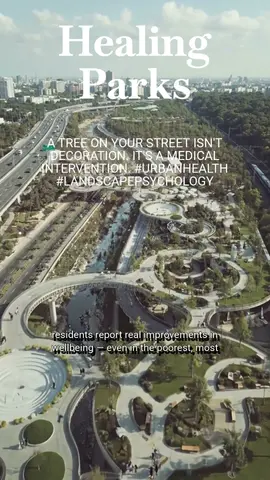
The measured effects are consistent. Shade and transpiration lower air temperature by two to eight degrees on tree-lined streets compared with bare ones, mitigating the heat island and reducing air-conditioning demand. Canopies intercept rain and roots improve infiltration, reducing floods. Health studies link tree cover with lower heat mortality, less asthma and better mental health. Medellín, with its 30 green corridors planted since 2016, measured drops of more than two degrees in the treated areas; Milan has set itself the goal of planting three million trees by 2030.
How to reforest well: the 3-30-300 rule
Reforesting well takes more than planting. It requires enough soil for the roots, watering during the first three years, species diversity to resist pests, pruning that respects the tree's structure and an inventory that records every specimen. The 3-30-300 rule, proposed by Cecil Konijnendijk in 2021, offers a clear target: every person should see three trees from home, every neighbourhood should have 30 percent canopy cover and nobody should live more than 300 metres from a green space. Nowak, the Arbor Day Foundation and Seto agree that urban reforestation is public infrastructure, and must be planned, funded and maintained as such.
Frequently asked questions
What are the benefits of urban reforestation?
It lowers air temperature by two to eight degrees, cuts air-conditioning demand, intercepts rain and reduces flooding, removes air pollutants, improves physical and mental health and provides habitat for birds and insects.
What is the 3-30-300 rule?
It is a target proposed by Cecil Konijnendijk in 2021 for urban green: every person should see at least three trees from home, every neighbourhood should have 30 percent tree canopy and nobody should live more than 300 metres from a park or green space.